
Velvet Realty Group Blog
Yard and Sprinkler Costs in San Antonio: Water Rules and HOA Limits
A lawn, a sprinkler system and big trees all cost money every month. In San Antonio and the I-35 corridor, the water provider at the address sets how often you can water and what the water costs, and Texas law limits what an HOA can demand. Here is what to budget, what to check, and where each rule comes from.
The short version. The recurring yard costs on a San Antonio-area home are irrigation water, the yearly backflow test on the sprinkler system, sprinkler repairs, tree care, and lawn care. Two of those are set by rules, not by choice. Your water provider decides which day and hours you may run sprinklers and how much each gallon costs. Most San Antonio Water System (SAWS) customers are under Stage 3 rules as of October 18, 2026: sprinklers once a week on the day set by the last digit of the address, 5 to 10 a.m. and 9 p.m. to midnight. SAWS and several nearby providers also require the sprinkler's backflow device to be tested every year. Texas law bars an HOA from banning drought-resistant landscaping, drip irrigation, or rain barrels. Since September 1, 2025, it also bars fines for a brown lawn during watering restrictions. Before your option period ends, get the seller's last 12 months of water bills, find out which provider serves the address, and run every sprinkler zone.
This guide is for buyers touring or under contract in San Antonio and the northeast and I-35 corridor: Live Oak, Universal City, Schertz, Cibolo and New Braunfels. It covers what we could confirm from each provider and from Texas law. We read every source on October 18, 2026. Drought stages change, so check the provider's page for the address before you rely on a stage.
What a yard costs, and who sets each cost
We do not publish a typical monthly figure for lawn care, sprinkler repair or tree work. No public source we found gives a reliable one for this area, and the real number depends on the yard. The table shows where each number comes from and how to get the real one for a specific house.
| Cost | Set by | What we could confirm | How to get the real number |
|---|---|---|---|
| Irrigation water | Your water provider's rates and drought stage | SAWS 2026 residential rates rise by usage block, from $0.907 to $5.669 per 1,000 gallons (details below). | The seller's last 12 months of water bills, read for summer against winter use. |
| Drought surcharge | Provider | SAWS charges $10.37 per 1,000 gallons above 20,000 gallons a month in Stage 3, and above 12,000 in Stage 4. | Check the bills for a surcharge line. |
| Backflow test | Provider and city code | Required every year by SAWS, Live Oak and Green Valley SUD. SAWS says testers charge "from $40 and up." | A quote from a licensed backflow tester. The last test report shows who tested it and when. |
| Sprinkler repair | The system's condition | Work done for pay must be done by a state-licensed irrigator. No cost source found. | A licensed irrigator's inspection and quote during the option period. |
| Tree care | The trees and their condition | Oak pruning has a recommended season (see trees, below). No cost source found. | A certified arborist's quote. |
| Lawn care | Your choice, within HOA rules | No cost source found. | Quotes from lawn services, or the cost of your own equipment. |
Who supplies the water at the address
The watering schedule depends on the address's water provider, not on the city printed on the mailing address. Several providers serve this corridor, and each runs its own drought plan. Some follow Edwards Aquifer levels and others draw on other supplies. The table shows what each provider's own website said on October 18, 2026.
| Provider | Posted status | Sprinkler schedule | What drives its stages |
|---|---|---|---|
| San Antonio Water System (most of Bexar County) | Stage 3 | Once a week by the last digit of the address, 5 to 10 a.m. and 9 p.m. to midnight | Edwards Aquifer 10-day average at the J-17 well |
| City of Live Oak (about two thirds of residents, per the city; SAWS serves most of the rest) | Stage 3; the city says it follows SAWS rules | Once a week by address, 5 to 10 a.m. and 9 p.m. to midnight | Edwards Aquifer, 640-foot trigger |
| City of Universal City | Stage 3, "effective 06/25/2024" | Once a week by the last digit of the address, 7 to 10 a.m. and 8 to 11 p.m. | Edwards Aquifer J-17, 640-foot trigger |
| New Braunfels Utilities | Stage 2, effective August 10, 2026 | Once a week by the last digit of the address, before 10 a.m. and after 8 p.m. | Edwards Aquifer levels or Comal Springs flow |
| Green Valley Special Utility District (parts of Cibolo, Schertz and nearby areas) | Stage 2 (posted graphic, no declaration date shown) | Once a week by the last digit of the address, midnight to 10 a.m. and 8 p.m. to midnight; no weekend sprinklers | Its Stage 2 follows Guadalupe-Blanco River Authority and Canyon Regional Water Authority notices |
| City of Schertz | No drought stage; the city says its Carrizo Aquifer supply is not under Stage 1 to 4 | Sprinklers any day, but never 10 a.m. to 8 p.m. | Carrizo Aquifer supply |
| City of Cibolo (parts of Cibolo; Green Valley SUD serves other parts) | No stage posted; year-round rules only | April 1 to October 31, no irrigation 10 a.m. to 8 p.m.; November 1 to March 31, none 10 a.m. to 2 p.m.; no sprinklers on Sundays | Canyon Regional Water Authority supply (Guadalupe River and Carrizo Aquifer), per the city |
Two of these postings are old enough to confirm by phone: Universal City's Stage 3 notice is dated June 25, 2024, and Green Valley SUD's Stage 2 graphic was posted in August 2025. Both still appeared as current on October 18, 2026.
How to confirm the provider for one address.
- Look at the seller's water bill. It names the provider.
- Use the Public Utility Commission of Texas water CCN viewer. Enter the address and click the number near it to see the certificated utility. A CCN (certificate of convenience and necessity) is the state's map of a utility's service territory. City-owned utilities do not always have one, so a blank result does not mean no service.
- Call the city. Live Oak and Cibolo each say two providers serve parts of the city and ask residents to call to find out which one serves an address. SAWS publishes a 2024 water service area map but no address lookup; its customer service line is 210-704-7297.
Our city guides cover more of what each address comes with: Universal City, Live Oak, and the New Braunfels utility checklist.
What Stage 3 means for a SAWS lawn
SAWS sets its drought stage from the 10-day rolling average of the Edwards Aquifer at the J-17 index well in Bexar County. Stage 1 starts when that average reaches 660 feet above sea level, Stage 2 at 650 feet, and Stage 3 at 640 feet. Stage 4 has no fixed level: the City Manager may declare it, and it limits sprinklers to once every other week. SAWS returned to Stage 3 on September 21, 2026.
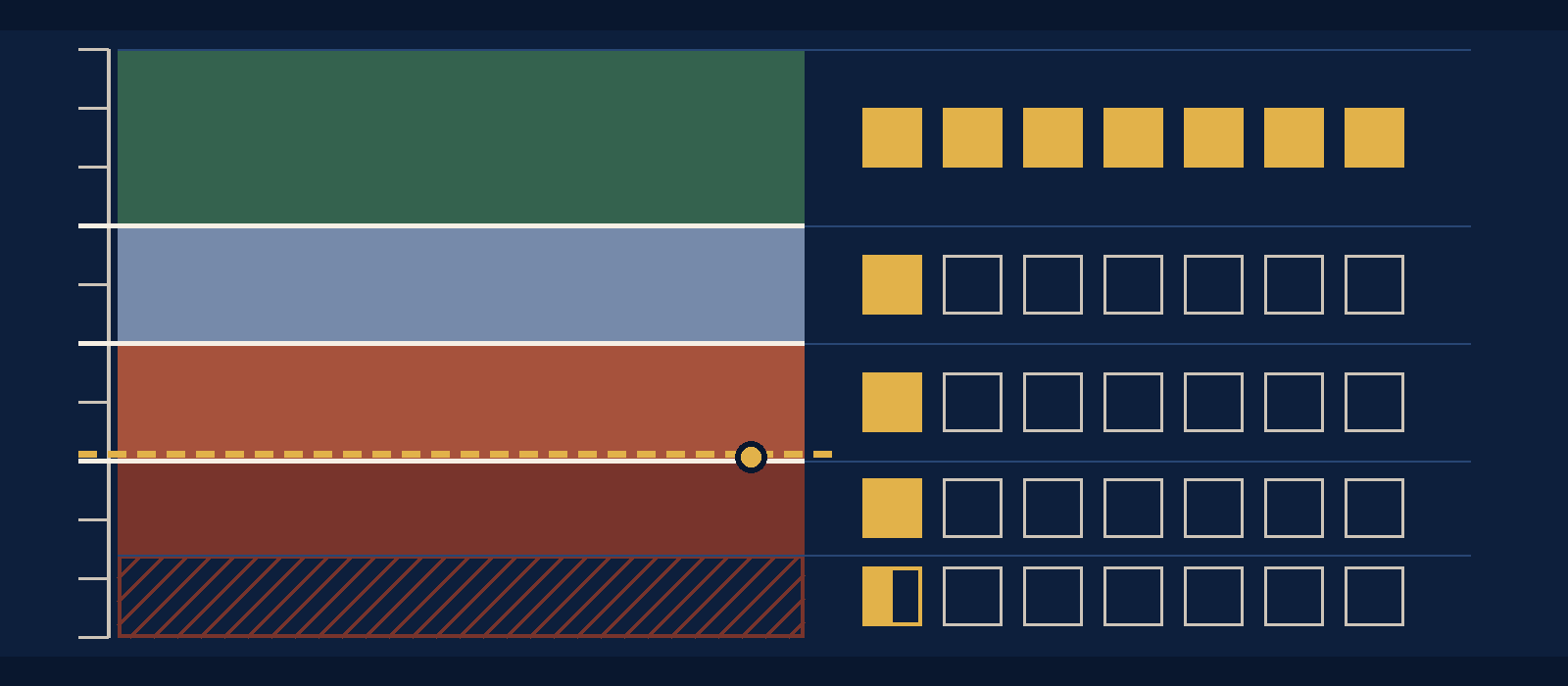
| Stage | Begins when the J-17 10-day average reaches | Sprinklers and soaker hoses |
|---|---|---|
| No stage | Above 660 feet | Any day, midnight to 10 a.m. or 9 p.m. to midnight |
| Stage 1 | 660 feet | Once a week, midnight to 10 a.m. and 9 p.m. to midnight |
| Stage 2 | 650 feet | Once a week, 5 to 10 a.m. and 9 p.m. to midnight |
| Stage 3 | 640 feet | Once a week, 5 to 10 a.m. and 9 p.m. to midnight |
| Stage 4 | Declared by the City Manager | Once every other week |
Your watering day. Under SAWS rules the last digit of the street address sets it: 0 or 1 Monday, 2 or 3 Tuesday, 4 or 5 Wednesday, 6 or 7 Thursday, 8 or 9 Friday. Areas with no street address, such as medians, water on Wednesday.
What else is allowed in Stage 3. A hand-held hose may be used any time on any day. Drip irrigation and tree bubbler zones may run every Monday and Friday, during the same morning and evening hours. Residential vegetable gardens may be watered by drip on Monday, Wednesday and Friday. Runoff or overspray from a sprinkler counts as water waste at any time of day.
Today's reading. The Edwards Aquifer Authority's provisional reading for October 18, 2026 was 640.3 feet at J-17, with a 10-day average of 640.5 feet. That is just above the Stage 3 line, but SAWS stays in Stage 3: it says leaving a stage can be considered 15 days after the aquifer is above the trigger. The Authority also posts its own stage for permitted pumpers (Stage 2 for the San Antonio Pool that day). That stage is separate and does not set lawn rules; the Authority says it "does not enforce lawn watering activities."
New sod. SAWS offers a landscape variance that allows Monday to Friday watering for up to five weeks after installation. It is for new construction only, with drought-tolerant grass on at least 4 inches of soil, and it does not exempt the account from the drought surcharge.
Violations. SAWS lists charges of $137, $225 and $500 for a single-family home's first, second and third violations. It says the fee can be waived by taking a one-hour online course.
What irrigation water costs on a SAWS bill
SAWS bills water in usage blocks, so the gallons a sprinkler adds in summer are billed at the higher block rates. These are SAWS's residential rates inside the city limits, effective on or about January 1, 2026:
| Monthly use | Rate per 1,000 gallons |
|---|---|
| First 4,000 gallons | $0.907 |
| 4,001 to 7,000 | $1.678 |
| 7,001 to 12,000 | $3.039 |
| 12,001 to 20,000 | $3.991 |
| Over 20,000 | $5.669 |
The bill also carries a monthly service charge ($9.00 for a standard 5/8-inch meter, plus $2.00 when use passes 4,000 gallons), a separate water supply fee, and an Edwards Aquifer Authority pass-through fee ($0.3659 per 1,000 gallons in 2026). SAWS's water supply fee page still showed a table labeled 2024 when we read it, so we do not quote it as current. In Stage 3, the $10.37 surcharge applies to each 1,000 gallons above 20,000 in a month.
One detail works in a buyer's favor. SAWS bills residential sewer on average water use from mid-November to mid-March, so summer sprinkler water does not raise the sewer charge. Some homes also have a separate irrigation meter, billed on its own schedule ($12.70 a month for a 5/8-inch meter in 2026). If the house has one, ask for those bills too.
The fastest way to see a yard's water cost is to compare the seller's summer bills with their winter bills. The difference is mostly outdoor water. A different owner's habits will change it, but it shows the scale.
The sprinkler system: what to ask and what to inspect
What the seller's disclosure tells you. The Texas Real Estate Commission Seller's Disclosure Notice (form 55-1) has one line for an "Automatic Lawn Sprinkler System," marked yes, no or unknown. It then asks whether the seller knows of any listed item that is not working or needs repair, and which water supply serves the house (city, well, MUD or co-op). It does not ask about zones, the backflow device or trees. Ask those questions yourself.
Backflow device and its yearly test. A backflow prevention assembly keeps sprinkler water from flowing back into the drinking-water supply. SAWS says lawn irrigation systems require one and that it must be tested when installed and at least once a year by a licensed backflow tester. Reports are filed online, and an owner can check a property's status on SAWS's backflow tracking site. Live Oak and Green Valley SUD also require yearly testing. New Braunfels Utilities requires a customer service inspection when a property changes ownership, and Cibolo requires a master plumber's permit to install the device. Ask the seller for the last test report and where the device is.
Rain sensor. SAWS says "rain sensors are required on all in-ground sprinkler systems in San Antonio." State rules require a rain or moisture shut-off on every new automatic system, and on an older system whenever its controller is replaced. We found no state freeze-sensor rule; TCEQ treats that as a local requirement.
Who may work on it. In Texas, anyone paid to install, repair or maintain an irrigation system must hold an irrigator license from the Texas Commission on Environmental Quality (TCEQ). A homeowner working on their own home's system is exempt, but must still meet state standards for spacing, water pressure, overspray, rain shut-off and the isolation valve. When a licensed irrigator finishes a new system, state rules require a permanent sticker on the controller with the irrigator's name and license number, a maintenance checklist, and an as-built drawing. Ask whether those exist.
Newer systems in SAWS territory. Since January 1, 2025, SAWS requires an irrigation plan for every system installed in its service area. Since January 1, 2026, its conservation staff inspect newly built systems. New sod also needs at least 4 inches of topsoil.
What to inspect. Run each zone from the controller and watch it. Look for broken heads, spray hitting the street or driveway, soggy spots that suggest a leak, and zones that do not start. Note the number of zones and the controller's age. A licensed irrigator can do this as part of the option period. Our inspection checklist covers how to fit it in with the general home inspection.
What an HOA can and cannot require
Texas Property Code Section 202.007 says a property owners' association may not prohibit or restrict an owner from:
- using drought-resistant landscaping or water-conserving natural turf;
- installing efficient irrigation, including drip systems;
- installing rain barrels or a rainwater harvesting system; or
- composting yard waste or leaving grass clippings on the lawn.
A covenant that does any of these is void. The same section lets the association keep some control. It may require a plan for drought-resistant landscaping and review it for how it fits with other yards, but may not unreasonably deny it. It may regulate how efficient irrigation is installed, including how visible it is. It may regulate gravel, rocks and cacti. It may require water-conserving turf when new turf is planted. It may also keep rain barrels out of the area between the front of the house and the street. A narrow exception covers associations in very large developments with at least 4,000 acres set aside for commercial use, multifamily housing or open space.
Brown lawns during restrictions. Section 202.008, in effect since September 1, 2025, bars an association from fining an owner for a brown or discolored lawn, or for failing to keep turf green, while a residential watering restriction applies and until the 60th day after it is lifted.
How to read the rules before you buy. Ask for the subdivision's declaration (covenants), the architectural or landscaping guidelines, and the fine schedule. Look for required turf types, required front-yard trees, approval steps for landscaping changes, and fines. The association's resale certificate shows whether the house has open violations. Order it early in the option period. Our HOA dues verification guide walks through those documents.
Trees: oak wilt and city tree rules
Oak wilt. Oak wilt is a tree disease that has affected thousands of acres in Central Texas, according to Texas A&M Forest Service materials. Red oaks are the most susceptible, and live oaks spread it through connected roots. The Forest Service's guidance is to avoid pruning oaks from February 1 to June 30 and to paint every oak wound right away. The City of San Antonio's arborist uses a slightly longer window, February 1 to July 1, and the city's oak wilt ordinance requires oak cuts to be painted within 30 minutes. We cannot tell whether any particular tree is healthy. If the yard has oaks, ask the seller about past tree work and losses, and have a certified arborist look before your option period ends.
City tree rules. San Antonio's tree preservation ordinance applies to private property in the city limits and its extraterritorial jurisdiction (ETJ), the area just outside city limits where some city rules apply. According to a city fact sheet, once construction of a home is finished, its owner does not need a tree permit to remove a tree. A contractor hired for tree work must hold a city-issued tree maintenance license. We could not read the current code text online, so confirm with the City Arborist's office before you plan a removal.
Programs that lower the cost
These amounts are as published on October 18, 2026. Each program has conditions, and some must be approved before any work starts.
- SAWS, free irrigation consultation. Up to one hour, scheduled at 210-704-7283.
- SAWS, residential irrigation design rebate. Up to $5,000 for removing or redesigning a sprinkler system. Examples: $350 per zone removed, $100 per zone converted to pressure-regulated heads, and $500 to remove a non-working system. A consultation must come before any work.
- SAWS, water flow sensor rebate. $150.
- SAWS, WaterSaver landscape coupon. For replacing at least 200 square feet of grass with plants from SAWS's list, with no permanent irrigation in the new beds. Fall 2026 applications are closed. Spring 2027 coupons ($125) open March 1 to April 30, 2027.
- New Braunfels Utilities. A free irrigation assessment, plus rebates including up to $2,000 for grass removal and $250 per irrigation zone removed (up to $2,500).
- Universal City. Rebates listed for washing machines and toilets only; no landscape program found.
- Live Oak, Schertz, Cibolo and Green Valley SUD. No landscape or irrigation rebate found on their sites.
Option-period checklist for the yard
The option period is the short, paid window in a Texas resale contract when you can end the contract for any reason. Our earnest money and option period guide explains how it works. Use it for the yard too:
- Ask for the last 12 months of water bills, and irrigation meter bills if there is one. Compare summer with winter.
- Confirm the water provider and its current stage and watering day for this address.
- Find the backflow device and ask for its last test report.
- Run every sprinkler zone and check for a rain sensor. Have a licensed irrigator inspect the system if it matters to you.
- Get the HOA's landscaping rules, fine schedule and resale certificate, and check for open violations.
- If there are oaks, ask about past tree work and have a certified arborist look.
- On acreage, ask whether the yard is watered from a well. Our wells and septic guide covers what to check.
Repairs you find may change what you offer or ask for. Our cash-to-close guide shows where those dollars land.
What we have not documented yet
We have not confirmed, and have not guessed: typical local costs for lawn service, sprinkler repair or tree work; the current SAWS water supply fee schedule; whether Universal City's 2024 Stage 3 notice and Green Valley SUD's Stage 2 graphic are still current (both were posted as current on October 18, 2026); the Live Oak watering day for each address digit; Schertz's and Cibolo's drought plan triggers; any freeze-sensor rule in San Antonio's city code; and the current text of San Antonio's tree preservation code section. Ask the provider or city, or ask us to check a specific address.
Questions about yard and sprinkler costs
What day can I water in San Antonio?
For SAWS customers in Stage 3, sprinklers may run once a week, 5 to 10 a.m. and 9 p.m. to midnight, on the day set by the last digit of the address: 0 or 1 Monday, 2 or 3 Tuesday, 4 or 5 Wednesday, 6 or 7 Thursday, 8 or 9 Friday. Hand watering with a hose is allowed any time. Other providers set their own schedules, so check the provider for the address.
Can my HOA fine me for a brown lawn during drought restrictions?
No. Texas Property Code Section 202.008, in effect since September 1, 2025, bars a property owners' association from fining an owner for brown or discolored turf while a residential watering restriction applies and until 60 days after it is lifted.
Can an HOA ban xeriscaping or drip irrigation in Texas?
No. Section 202.007 bars an association from prohibiting drought-resistant landscaping, water-conserving natural turf, drip and other efficient irrigation, and rain barrels. It may still require a plan for review, regulate how irrigation is installed and how visible it is, and regulate gravel, rocks and cacti.
Does a sprinkler backflow device have to be tested every year?
In SAWS territory, yes: lawn irrigation systems must have a backflow prevention assembly, tested at installation and at least once a year by a licensed tester. Live Oak and Green Valley SUD also require yearly testing. SAWS says tests start at about $40.
How do I find out who supplies water to a house?
Check the seller's water bill, search the address on the Public Utility Commission of Texas water CCN viewer, or call the city. Cities such as Live Oak and Cibolo are split between two providers.
Sources
- San Antonio Water System, Drought Restrictions, Stage 3, Year-Round Watering Rules, "SAWS customers return to Stage 3 watering rules" (September 21, 2026), Landscape Variance, Residential Water Service rates, High-Use Drought Surcharge, Non-Compliance Charge, Landscape Irrigation Service Rates, Annual Testing of Backflow Prevention Assemblies, Backflow FAQ, Rain Sensors, Irrigation Plan Review Program and Service Areas. Read 2026-10-18.
- SAWS Garden Style San Antonio program pages: WaterSaver Landscape Coupon, Irrigation Consultation, Residential Irrigation Design Rebate and Water Flow Sensor Rebate. Read 2026-10-18.
- Edwards Aquifer Authority, home page provisional daily readings (as of October 18, 2026) and "Stage 3 Watering Rules return for SAWS customers after wet weather relief dries up" (listed September 29, 2026; a repost of a September 21, 2026 news story), plus its September 21, 2026 Stage 3 pumping-reduction release. Read 2026-10-18.
- New Braunfels Utilities, Current Conservation Stage, Rebates, Irrigation and Backflow Prevention and CSI. Read 2026-10-18.
- City of Universal City, Water Service and Drought Stage Information; City of Live Oak, Water, Find My Water Provider and Backflow Device; City of Schertz, Water Conservation; City of Cibolo, Water Information and FAQs; Green Valley Special Utility District, Conservation and Drought Restrictions and Backflow Prevention Assemblies. Read 2026-10-18.
- Public Utility Commission of Texas, Water and Sewer CCN Viewer and water utility consumer help. Read 2026-10-18.
- Texas Property Code Sections 202.007 and 202.008, official text at tcss.legis.texas.gov. Texas Occupations Code Chapter 1903 (Sections 1903.002 and 1903.251). Read 2026-10-18.
- 30 Texas Administrative Code Chapter 344, Sections 344.30, 344.50, 344.62 and 344.63, and TCEQ's Questions and Answers for Irrigators. Read 2026-10-18.
- Texas Real Estate Commission, Seller's Disclosure Notice, TREC No. 55-1. Read 2026-10-18.
- Texas A&M Forest Service, Introduction to Oak Wilt and "Prevent the spread of oak wilt this spring in Texas" (March 29, 2022). Read 2026-10-18.
- City of San Antonio Development Services, tree ordinance fact sheet and City Arborist presentation (January 18, 2023). Read 2026-10-18.
Where these figures come from
| Drought stages and schedules | Each provider's own website as posted on October 18, 2026. Stages change; the provider's page for the address is the authority. |
|---|---|
| Aquifer readings | Edwards Aquifer Authority provisional daily readings for J-17, October 18, 2026 (640.3 feet daily, 640.5 feet 10-day average). Provisional data can be revised. |
| Rates, fees and rebates | SAWS 2026 rate pages and program pages as published October 18, 2026. Other providers' rates are not covered. |
| Law and rules | Official Texas statute text, 30 TAC Chapter 344 and the current TREC form 55-1. General information, not legal advice. |
| Published | 2026-10-19 |
| Data through | 2026-10-18. All sources read 2026-10-18. |
| Next review due | 2026-11-18 for drought stages, schedules and aquifer readings. 2027-01-18 for rates, rebates, legal and program guidance. |
| Corrections | If a figure on this page does not match its source, tell us and we will correct it and update the review date. |
Related guides
For the rest of the purchase, see our guides to the option period, home inspections, HOA dues, wells and septic, New Braunfels utilities and cash to close. Our city pages cover San Antonio, Universal City, Live Oak, Schertz, Cibolo and New Braunfels. If you are moving here, start with our relocation page. Our buyer page explains how we work with buyers.
Ask about a home's yard costs
Send us the address you are considering. We will tell you which water provider serves it, its current stage and watering day, and what to request from the seller and the HOA, with the date we checked each.
Velvet Realty Group is brokered by LPT Realty, LLC. Equal Housing Opportunity.
Know a home's yard costs before the option period ends.
Send us the address. We will confirm its water provider, current watering rules and the HOA documents to request.