
Velvet Realty Group Blog
Gated Streets, Wells and Septic Near San Antonio and Boerne
In a gated subdivision or on Hill Country acreage, you or your association may own the street, the gate, the well, the septic system and the road. Here is who owns each one, the record that proves it, and when to ask for it in a Texas resale contract, with sources read October 8, 2026.
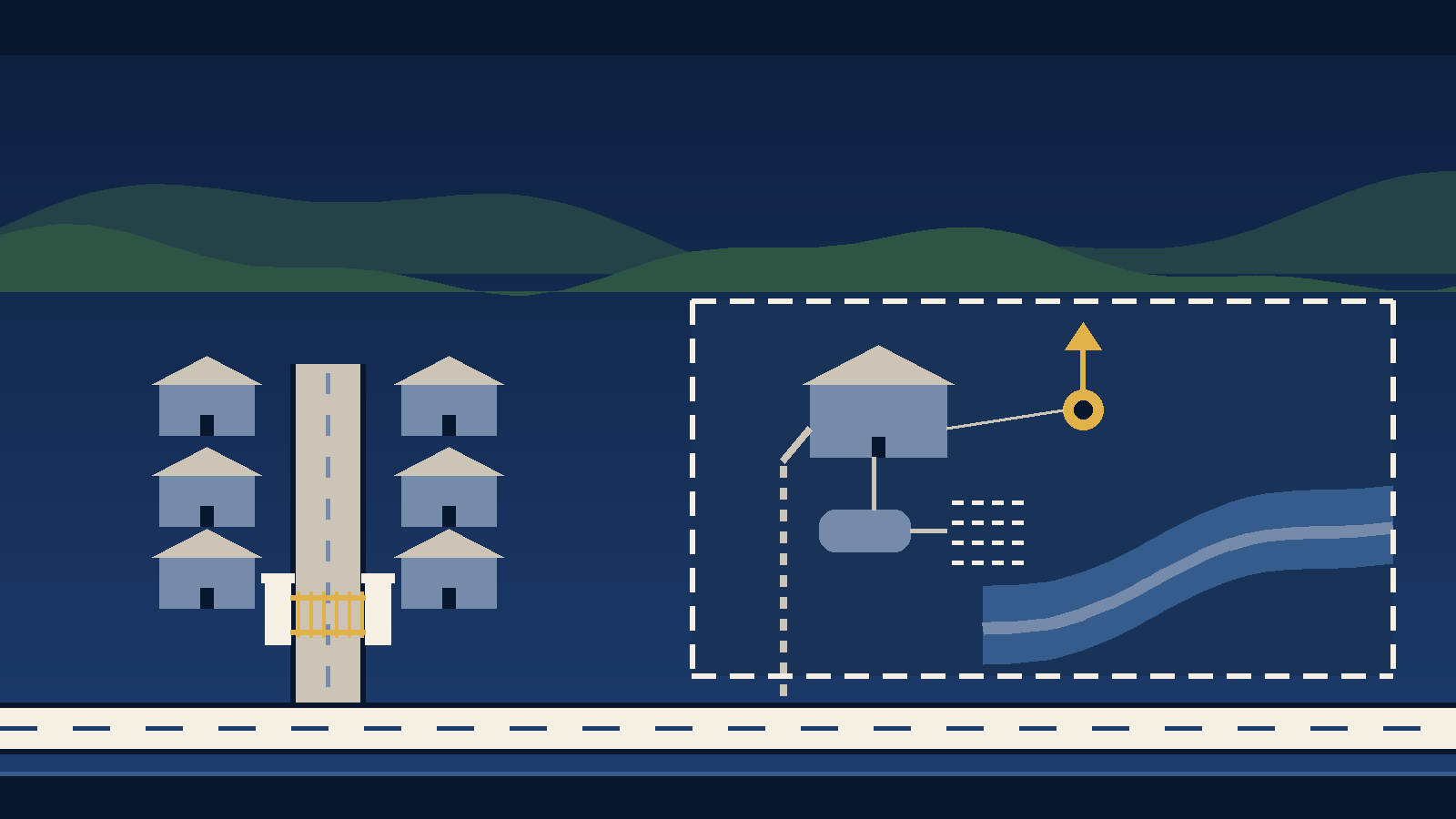
The short version. In a gated subdivision or on Hill Country acreage, some of the systems a city usually owns may belong to you or to your property owners' association instead. That can include the street, the gate, the water supply, the sewer, drainage and the road to the property. Each one has a record that tells you who owns it and who pays for it: the recorded plat, the association's resale certificate, a well registration, a septic permit, the FEMA flood map, the appraisal roll. Ask for those records during the option period, the short window in a Texas resale contract when you can still walk away for any reason. Everything below was read on October 8, 2026, from the agency or code that sets the rule.
This guide is for a buyer looking at a gated neighborhood in north or northwest San Antonio, or at acreage or a large lot around Boerne and Kendall County. It does not rank communities or judge whether a gate is worth having. It names, for each system, the document to request and the office that holds it. For the area itself, see our Boerne area guide and our San Antonio luxury neighborhoods page, which lists several gated areas.
Six systems, and who may own each one
Inside a city, on a public street with city water and sewer, the city or a public utility usually owns and maintains these systems. In a gated subdivision or on rural acreage, check each one separately. One property can mix them, for example city water with a private septic system.
| System | May be owned or paid for by | Where to confirm it |
|---|---|---|
| Street | The property owners' association (private street) or the county or city (public road) | Recorded plat and its notes; association resale certificate |
| Gate and access system | The association | Association budget, reserves and rules; fire code permits and registrations |
| Water | A city, a utility district, a water supply corporation, or you (private well) | Seller's disclosure; PUC service-area map; well registration with the groundwater district |
| Wastewater | A city or utility (sewer), or you (septic system) | County septic permit and maintenance contract |
| Flood risk and drainage | You, and the association for common drainage | FEMA flood map; local floodplain office; seller's disclosure |
| Road to the property | The county, an association, or you and your neighbors (private road or easement) | County records; recorded easement; survey; title commitment |
Private streets and gates: read the plat, then the association's numbers
Is the street private? A plat is the recorded map that creates a subdivision's lots, streets and easements. The plat and its notes usually answer this question. You can search recorded plats, easements and deed restrictions online at the Bexar County Clerk and the Kendall County Clerk. Both searches let you filter by plat, easement and restrictions.
- In Kendall County, the county's development rules (approved November 14, 2022) require a plat with private roads to carry a note that "private roads shall not be maintained by the County." A private subdivision's plat must carry the title "A Private Subdivision," and its plat and deed restrictions must state that "Kendall County will neither accept nor maintain the roads or the drainage facilities." So in a private subdivision there, the drainage facilities belong to the private side too.
- In San Antonio and its ETJ, the City of San Antonio's Unified Development Code, section 35-506, puts private streets on a separate lot that the plat labels "Lot 999." It says private streets and sidewalks "shall be owned and maintained by a corporation, community association, or other legal entity established for this purpose." (An ETJ, or extraterritorial jurisdiction, is the unincorporated area outside city limits where a city's plat rules still apply.) Bexar County reviews plats against the same city code.
What the association has to tell you. If membership in the association is mandatory, Texas Property Code section 207.003 lets a buyer or the buyer's agent request the subdivision information in writing. The association must deliver it within 10 business days. It includes the restrictions, bylaws and rules, plus a resale certificate. These items in the certificate matter most for a private street or a gate:
- the regular assessment, and any special assessment the association has approved;
- capital expenditures approved for the current fiscal year;
- "the amount of reserves, if any, for capital expenditures," which is the money set aside for big repairs such as repaving or replacing a gate;
- the current operating budget and balance sheet;
- any lawsuit the association is a party to, and its insurance on the common areas.
The law requires the certificate to report reserves "if any," so a figure of zero is possible. Nothing in chapter 207 says who must repave a street or replace a gate. That comes from the plat and the association's own documents. Our Boerne and Fair Oaks Ranch HOA dues guide shows how to check the dues figure itself and what the certificate package may cost.
The contract side. The current Texas Real Estate Commission (TREC) resale contract is form 20-19. Paragraph 6E(2) says whether the property is subject to mandatory association membership. The TREC association addendum, form 36-11, sets the timing. After you receive the subdivision information, you have 3 days to terminate. If you never receive it, you may terminate any time before closing. The addendum also warns that "the Association may have the sole responsibility to make certain repairs to the Property." Ten business days can run past a short option period, so ask for the information as soon as the contract is signed.
Getting through the gate: emergency access and the fire provider
We make no claim here about crime or safety. What you can check is how emergency vehicles are meant to get through the gate, and who answers a call at the address. These are the written rules, read October 8, 2026:
- Outside city limits, where no city gate rule applies, Texas Local Government Code section 352.114 requires a lockbox at each vehicle gate of a gated community and an electric gate that opens if the power fails. Section 352.1145 lets a county require a device that opens the gate at the sound of an emergency siren.
- Bexar County says on its gated communities page that siren sensors and Knox key systems "must be registered with the Fire Marshal's Office," so their locations are in the county's dispatch system.
- Inside San Antonio, the city's amended fire code (2024 International Fire Code, section 503.6) requires a fire department key switch, lock or box on security gates. It also requires backup power or a clearly marked manual release. The city's development code requires a Knox box for the fire department on gates inside city limits, and a siren-operated sensor on electric gates in the ETJ.
- In Kendall County, the county's 2021 fire code order requires the owner or association of a gated community to get a lockbox permit from the fire code official. The county's development rules require a gated private subdivision to have a crash gate or a Knox box, plus a letter of approval from the emergency response agencies serving it.
What to ask for. Ask the association which access system the gate uses and whether it is registered or permitted with the fire marshal or fire code official. Ask for its latest service record. If the association's rules or minutes describe the gate, they are part of the subdivision information above.
Who responds. An emergency services district (ESD) is a local district that funds fire or ambulance service with a property tax. Under Texas Health and Safety Code section 775.074, every ESD levies one. That makes the ESD show up as a taxing unit on the appraisal district's record for the address. Bexar County lists twelve ESDs on its ESD page. In Kendall County, the 2026 certified totals from Kendall Appraisal District list no ESD among the taxing units. The county's site says the county is "protected by 7 volunteer fire departments." For an address inside a city, the city's fire department responds. To confirm the provider for a specific property, call the county fire marshal.
Water: find the source first
A property gets its water from one of four places: a city, a utility district such as a MUD (municipal utility district), a water supply corporation, or a private well. Start with the seller's disclosure. TREC's current seller's disclosure form, 55-1, has a water supply line with boxes for City, Well, MUD and Co-op. Under Texas Property Code section 5.008, if you sign a contract before you receive the disclosure, you may terminate for any reason within seven days after it arrives.
Then check the record yourself:
- Utility service area. The Public Utility Commission's water and sewer service-area map shows which utility holds a CCN at an address. A CCN, or certificate of convenience and necessity, gives a utility "the exclusive right to provide retail water or sewer utility service" in that area. Cities don't have to hold one, so a city utility may not appear on the map. Texas Water Code section 13.257 requires a seller in a CCN area to give you notice before you sign. The notice says "there may be special costs or charges that you will be required to pay before you can receive water or sewer service." TREC contract paragraph 6E includes the notice.
- The new water disclosure. Paragraph 7I of TREC contract 20-19 adds a Seller's Water Disclosure covering groundwater and surface water rights. The seller is excused from it only if they know of no well, pond or water tank and no severed water rights, and the property gets water only from a named city, district or water company. If you haven't received it, you can terminate within 7 days after you do, or before closing, whichever comes first.
If the property has a well, do these three things:
- Find the well report. The Texas Water Development Board's driller's report database covers reports filed since 2001. It also has plugging reports. Older reports are in the TCEQ water well report viewer, which says it holds more than 800,000 historical reports. A report can show depth, construction and the driller.
- Check the groundwater district. In Kendall County outside Fair Oaks Ranch city limits, that is the Cow Creek Groundwater Conservation District. Its rules, effective July 13, 2026, say all wells "shall be registered with the District." That includes exempt domestic and livestock wells, which must be on a tract larger than 10 acres and unable to produce more than 25,000 gallons a day. Rule 3.4.C(1) puts the next step on the buyer: "Any change in ownership of a well shall be reported to the District by the purchaser on an approved form within 60 days after the change." A deteriorated or abandoned well must be plugged within 180 days. The district says it can look up older Kendall County registrations, which go back to the mid-1970s. In Bexar County, the district depends on the aquifer. The Edwards Aquifer Authority registers wells that draw from the Edwards. The Trinity Glen Rose Groundwater Conservation District covers the Trinity Aquifer in northern Bexar County and requires all wells to be registered.
- Test the water. No agency tests a private well for you. The Texas A&M AgriLife Texas Well Owner Network recommends testing well water "annually at least for Escherichia coli (E. coli)." It names nitrate and coliform bacteria as the most common problems. TCEQ explains how to find an accredited lab. A well's flow rate is a separate question from water quality. A well contractor tests flow; a lab tests quality.
Our Boerne vs. New Braunfels comparison lists the groundwater district's tax rate with the other Kendall County taxing units.
Wastewater: public sewer or a septic system
Texas calls a septic system an on-site sewage facility, or OSSF. The disclosure form has boxes for "Septic System" and "Public Sewer System." To confirm which one a property has and see its permit, go to the permitting authority. TCEQ's permitting authority search lists them by county and city. On October 8, 2026, it showed:
- Kendall County, including Boerne: the county is the permitting authority for the entire county. Its on-site sewage page gives the office at 400 E. Blanco Rd. in Boerne and a records contact at (830) 331-8253. The page says "a maintenance contract signed by the property owner is also required on all aerobic septic systems," along with a recorded affidavit.
- Bexar County, including San Antonio: the county is the authority for the entire county except Elmendorf, Hill Country Village, Shavano Park and Hollywood Park. Request a permit file through the county's public records portal. For aerobic systems, the county says that after the initial permit expires, "the homeowner is responsible for maintaining a service contract with a service provider and submitting that contract to Bexar County."
Aerobic systems and maintenance. An aerobic system treats wastewater with air and mechanical parts before it is sprayed or dripped on the ground. The state rule, 30 Texas Administrative Code section 285.7, requires a two-year maintenance contract when the system starts service. If the house sells within those two years, the contract carries over to the buyer. After that, the owner "shall either maintain the system personally or obtain a new maintenance contract." TCEQ notes that local authorities can set stricter rules, and the Bexar and Kendall County pages above both call for a maintenance contract on aerobic systems. Ask the seller for the current contract and the service reports. Confirm with the county that the contract on file is current.
No inspection is required at sale. On its OSSF program pages, TCEQ says a lender's septic evaluation "is not required or regulated by TCEQ." A septic inspection during the option period is your choice. After closing, TCEQ advises telling the permitting authority that you are the new owner. Our home inspection checklist covers the rest of the house.
Floodplain and drainage: what a flood zone label tells you
Look up the address on FEMA's Flood Map Service Center. The map's zone label means this:
- Zone A or AE is a Special Flood Hazard Area: land FEMA expects a flood with "a 1-percent chance of being equaled or exceeded in any given year" to cover. FEMA puts that as a 26% chance of flooding over a 30-year mortgage. Homes in these zones with a mortgage from a government-backed lender must carry flood insurance.
- Shaded Zone X is a moderate-hazard area, between the 1% and 0.2% annual-chance flood limits.
- Unshaded Zone X is minimal hazard. FEMA still says "flooding can happen anywhere."
What the label doesn't tell you: whether the house itself sits above the flood elevation, whether water has entered it before, or how runoff from a nearby slope or low-water crossing behaves. The seller's disclosure asks some of this. It asks whether the property is in the 100-year or 500-year floodplain, whether water has entered a structure in a flood, and about flood insurance claims and FEMA or SBA assistance. If FEMA has removed a structure from the high-risk area by letter (a Letter of Map Amendment, or LOMA), ask for the letter. Local offices hold more detail: the Kendall County Engineer's Office administers the county's flood rules, the City of Boerne publishes its own flood maps, Bexar County Public Works issues floodplain development permits outside cities, and San Antonio's Know Your Flood Risk page covers addresses inside the city. In a private subdivision in Kendall County, remember the plat note above: the county does not maintain the drainage facilities.
Road access to acreage: county road, private road or easement
A tract can touch a county-maintained road, sit on a private road, or be reached only across a neighbor's land by an access easement. An access easement is a recorded right to cross someone else's land. Each of these means something different for upkeep, and possibly for a lender.
- County road. Bexar County Public Works says it maintains "over 1,600 center line miles of dedicated public roads." On October 8, 2026, Kendall County's Road and Bridge page did not publish a list of county-maintained roads, so ask the department directly whether the county maintains the road in front of the tract.
- Private road. TREC's seller's disclosure 55-1 asks whether there is "a private road on or adjoining the Property for which Seller is financially responsible for maintaining." If the answer is yes, ask who else uses the road and whether a recorded road maintenance agreement exists.
- Easement. The county clerk's records hold recorded easements. The survey under TREC paragraph 6C and the title commitment show which easements affect the tract and whether the access route is recorded. Under paragraph 6D, you object to title and survey problems within the number of days written into your contract, so read these documents as soon as they arrive.
Agricultural or wildlife valuation on acreage
Many acreage tracts are appraised on what the land produces instead of its market value. This is called special appraisal or "open-space" valuation (1-d-1). The Bexar Appraisal District notes that it "applies only to the land itself," not the house. Under Texas Tax Code chapter 23, subchapter D, the land must be used principally for agriculture "to the degree of intensity generally accepted in the area" for five of the preceding seven years (section 23.51). Wildlife management use is a version of it. It requires land that already had the valuation and at least three of seven listed wildlife practices.
What it means for a buyer:
- A change of use, not a sale, triggers the rollback. Under section 23.55, if the land stops qualifying, an additional tax is due for each of the three years before the change. It equals the difference between the taxes paid on the special valuation and the taxes at market value. The current text charges no interest on that amount unless the bill goes unpaid. The tax becomes a lien on the land. Bexar Appraisal District says "the person who has title to the property on the date the use changes is personally liable for the rollback tax." Land under the older 1-d designation (section 23.46) is different: there, a sale or diversion makes three years of additional tax due, plus interest.
- Whether you need a new application. Bexar Appraisal District's help center says a buyer who purchases after January 1 keeps the current application for that year, and "the following year the new property owner will have to file their own application." A 2025 law, House Bill 1244, effective January 1, 2026, says ownership has not changed when the new owner uses the land in materially the same way under the same individuals. It also allows a late application up to the first anniversary of the transfer. Ask the appraisal district which rule applies to the specific tract.
- Where to look. The appraisal district's record for the property shows its values and taxing units. Kendall Appraisal District is at kendallad.org, and its forms page links the open-space application and the Texas Parks and Wildlife wildlife plan forms. The Bexar property search is linked from its site. Our cash-to-close guide explains how taxes are prorated at closing.
The one-page checklist
Most of these documents take days to arrive, and some take up to 10 business days. In a TREC resale contract, the option period is the number of days written into paragraph 5B. A termination notice must arrive by 5:00 p.m. local time on the last day. Request everything on the day the contract is signed. Our earnest money and option period guide explains the window itself.
| System | Ask for | From | Have it by |
|---|---|---|---|
| Street | Recorded plat and plat notes; deed restrictions | County clerk (Bexar or Kendall) | Before the offer if you can; at the latest, before the option period ends |
| Street and gate costs | Subdivision information and resale certificate: assessments, capital expenditures, reserves, budget, lawsuits | The association (Property Code 207.003; TREC 36-11) | Request on day one; 3 days after receipt to terminate under 36-11 |
| Gate access | Access system, fire marshal registration or lockbox permit, service record | The association; county fire marshal or fire code official | Before the option period ends |
| Fire and EMS provider | Taxing units on the appraisal record (ESD), or the city fire department | Appraisal district; county fire marshal | Before the option period ends |
| Water source | Seller's disclosure; CCN notice; Seller's Water Disclosure (TREC 20-19, 7I) | The seller; PUC service-area map | Before you sign the contract, where the law requires it |
| Well | Well report, registration, ownership-change form, water test, flow test | TWDB or TCEQ databases; groundwater district; accredited lab; well contractor | Tests before the option period ends; ownership form within 60 days after closing (Cow Creek) |
| Septic | Permit file, current maintenance contract, service reports, optional inspection | County permitting authority; the seller | Before the option period ends; notify the county as new owner after closing |
| Flood | FEMA zone, any LOMA, flood answers on the seller's disclosure, local floodplain data | FEMA Map Service Center; county or city floodplain office | Before the option period ends |
| Road access | County maintenance status, recorded easement, survey, title commitment | County road department; county clerk; title company | Title and survey objection deadline in paragraph 6D |
| Special valuation | Appraisal record, open-space status, rollback exposure, application rule after sale | Bexar or Kendall Appraisal District | Before the option period ends |
If you're relocating and can't visit the county offices, most of these records are online at the links above. Our relocation page and buyer page explain how we work with out-of-town buyers. For current prices and inventory, see the market update.
Questions buyers ask
Who maintains the streets in a gated subdivision near San Antonio?
If the streets are private, the association does. San Antonio's development code says private streets "shall be owned and maintained by a corporation, community association, or other legal entity." In Kendall County, a private subdivision's plat must say the county "will neither accept nor maintain the roads or the drainage facilities." Check the recorded plat for the specific subdivision.
Do I have to register a well when I buy a house in Kendall County?
The well should already be registered. Cow Creek Groundwater Conservation District requires the buyer to report a change in well ownership on the district's form within 60 days after the change. Its rules cover Kendall County outside Fair Oaks Ranch city limits.
Does Texas require a septic inspection when a house sells?
No. TCEQ says a lender's septic evaluation is "not required or regulated by TCEQ." You can still order one during the option period. Ask the county for the permit file and the current maintenance contract.
Does an aerobic septic system need a maintenance contract?
State rules require a two-year contract when the system starts service, and it carries over to a buyer within that period. After that, state rules let the owner maintain it personally. Bexar County and Kendall County both say a maintenance contract is required on aerobic systems, so confirm the contract on file with the county.
Will I owe rollback taxes if I buy land with an ag valuation?
A sale alone doesn't trigger it under the open-space rules. A change of use does. Then the additional tax covers the three years before the change, and the owner on the date of the change is liable. Older 1-d land is different: a sale can trigger it. Ask the appraisal district before you buy.
Sources
- Texas Property Code section 207.003, chapter 209 and section 5.008; Texas Water Code section 13.257; Texas Tax Code sections 23.46, 23.51, 23.54 and 23.55 and House Bill 1244 (89th Legislature); Texas Local Government Code sections 352.114 and 352.1145; Texas Health and Safety Code section 775.074. Read 2026-10-08.
- Texas Real Estate Commission forms 20-19 (resale contract), 36-11 (association addendum) and 55-1 (seller's disclosure). Read 2026-10-08.
- Kendall County development rules (approved 2022-11-14), fire code order 09-13-2021, on-site sewage and floodplain pages. Read 2026-10-08.
- Bexar County gated communities, emergency services districts, Public Works and floodplain permits pages, and its on-site sewage page. Read 2026-10-08.
- City of San Antonio Unified Development Code section 35-506 and fire code (2024 IFC section 503.6 as amended), via the city's published code; Know Your Flood Risk. City of Boerne floodplain management. Read 2026-10-08.
- Cow Creek Groundwater Conservation District rules, effective 2026-07-13; Edwards Aquifer Authority well registration; Trinity Glen Rose Groundwater Conservation District rules (2025-10-16). Read 2026-10-08.
- Texas Water Development Board driller's report database; TCEQ water well report viewer, OSSF program, permitting authority search and 30 TAC section 285.7; Public Utility Commission water and sewer CCN map; Texas Well Owner Network. Read 2026-10-08.
- FEMA Flood Map Service Center, flood zone glossary, flood insurance and Letter of Map Amendment pages. Read 2026-10-08.
- Kendall Appraisal District 2026 certified totals and forms; Bexar Appraisal District help center (agricultural and wildlife appraisal). Bexar and Kendall County Clerk online records. Read 2026-10-08.
Where these facts come from
| Statutes | Read on the Texas Legislature's statute pages and checked against two full-text compilations. Where a 2025 law changed the text, we read the enrolled bill. |
|---|---|
| Contract forms | TREC PDFs as published on 2026-10-08: 20-19, 36-11 and 55-1. |
| County and city rules | Each county's, city's and district's own published pages, orders and rules, read 2026-10-08. |
| Not yet documented | We did not find a published list of Kendall County-maintained roads. We did not confirm Cow Creek's 2026 tax rate or the name of its ownership-change form, or whether Kendall County requires an aerobic maintenance contract to continue past year two. We did not confirm the wording of Kendall County's 2022 flood order or Bexar County's 2010 gate rules, which are scanned documents. The emergency-services provider for a specific Kendall County address is also not documented here. |
| Published | 2026-10-09 |
| Sources read | 2026-10-08 |
| Next review | By 2027-01-06 (90 days, legal and program guidance), or sooner if TCEQ adopts its pending septic rule revision or TREC replaces these forms. |
This article is general information, not legal, tax, survey, engineering or insurance advice. Rules, forms, districts and tax treatment change. Confirm them for a specific property with the association, the county, the groundwater district, the appraisal district, FEMA or the local floodplain office, and a Texas attorney if needed.
Velvet Realty Group is brokered by LPT Realty, LLC. Equal Housing Opportunity.
Send us the address you are considering.
We will pull the plat, the taxing units, the flood zone, the septic permit authority and the groundwater district for it, and list the documents to request from the seller and the association.