
Velvet Realty Group Blog
Cash to Close in San Antonio: What Texas Buyers Bring to Closing
Cash to close is one number, and every part of it comes from a document you can read. Here is where each line comes from in a Texas purchase and how to check it before closing day.
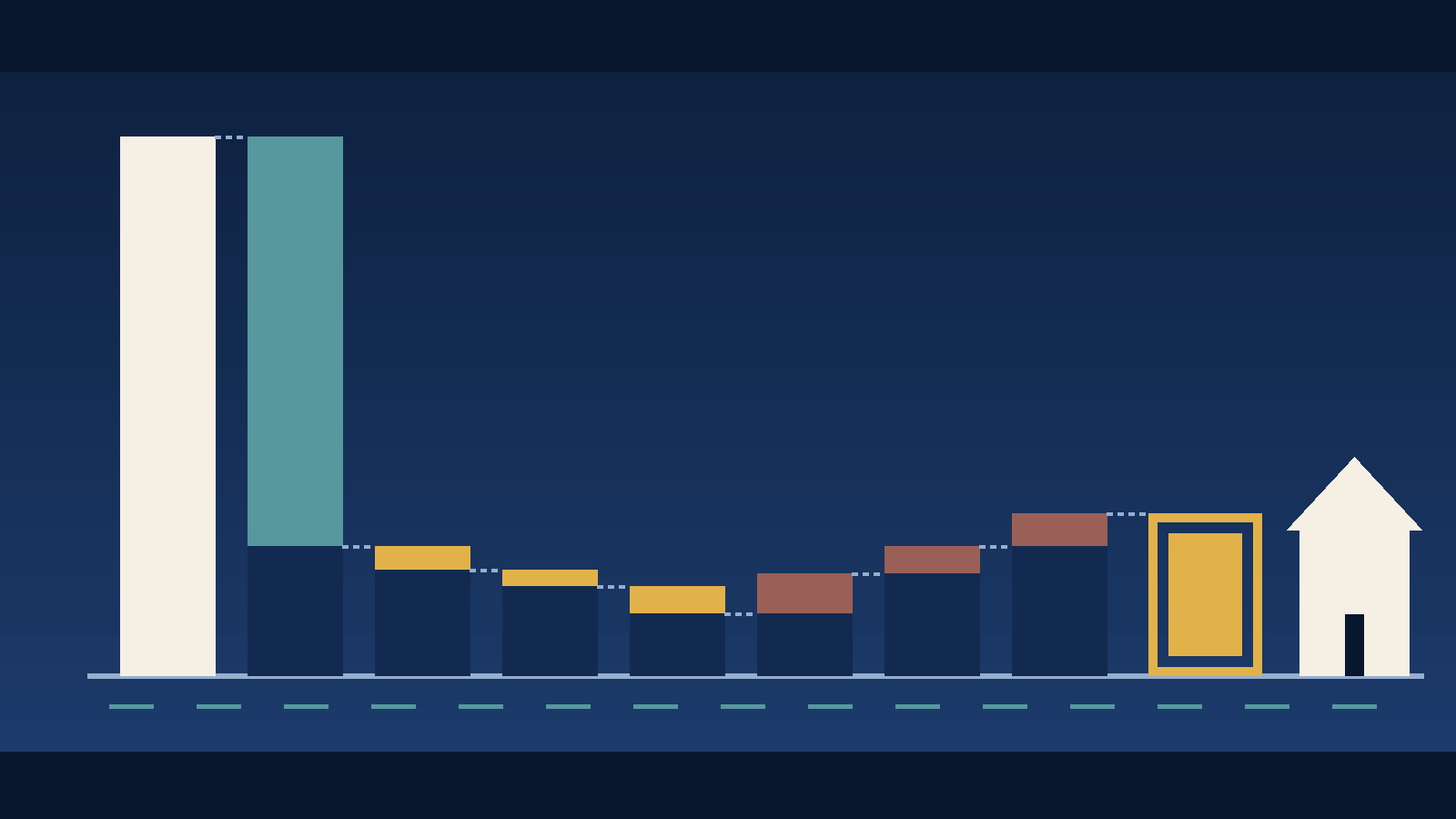
Cash to close is the amount you personally have to deliver to the title company on closing day. Your lender states it as one figure on the Closing Disclosure, which federal rules require you to receive at least three business days before you close. It is not the same thing as your closing costs, and it is rarely what a national percentage rule suggests.
The figure is built from parts: your down payment, your share of the closing costs, prepaid items and the opening deposit to your escrow account, minus what you have already paid and every credit you are owed. In Texas several of those parts follow state-specific rules, and you can check each one against a published source. This page goes through them in the order you will see them.
Cash to close is not the same as closing costs
Closing costs are the fees for making the loan and transferring the property: lender charges, the title policies, the escrow fee, recording and so on. Cash to close is the net amount that still has to arrive at closing after everything else is added and subtracted.
| Line | Effect on cash to close | Where the number comes from |
|---|---|---|
| Down payment | Adds | Sales price minus loan amount |
| Your closing costs | Adds | Loan Estimate, then Closing Disclosure; title premiums from the TDI rate schedule |
| Prepaids and initial escrow deposit | Adds | Insurance quote, daily interest, your lender's escrow calculation |
| Earnest money and option fee | Subtracts (already paid) | TREC resale contract, Paragraph 5 |
| Seller's share of current-year taxes | Subtracts | TREC Paragraph 13 proration and the parcel's tax rates |
| Seller contribution, lender credit, builder incentive | Subtracts | Your contract and your loan terms |
The CFPB describes cash to close as the actual amount you will have to pay at closing, usually by cashier's check or wire transfer. It also suggests checking that the figure matches your most recent Loan Estimate and asking your lender to explain any difference. The Closing Disclosure shows it in two places: in the Costs at Closing box on page 1, and in the Calculating Cash to Close table on page 3, which puts the Loan Estimate figure and the final figure side by side, line by line.
Money you already paid: earnest money and the option fee
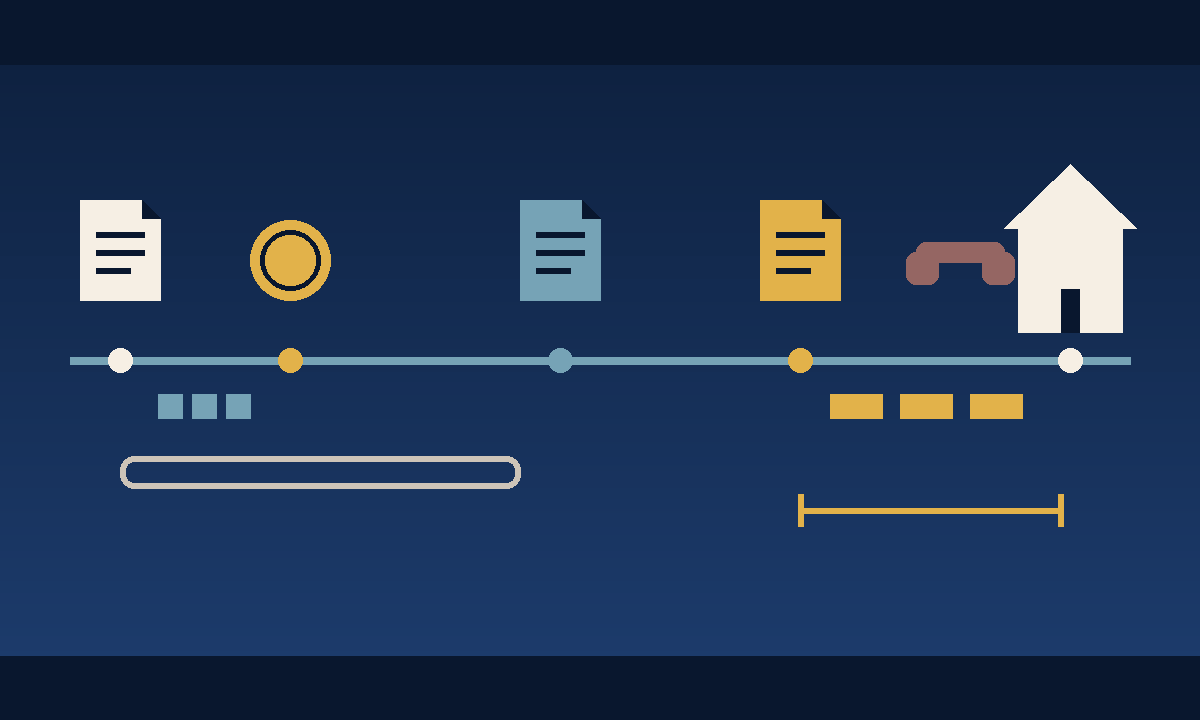
Under the current TREC One to Four Family Residential Contract (Resale), TREC No. 20-19, you deliver the earnest money and the option fee to the escrow agent within 3 days after the effective date. The two can be paid separately or in one payment. If that third day falls on a weekend or a legal holiday, the deadline moves to the end of the next day that is not one. Both amounts come back to you at closing, through different routes:
- Earnest money is applied at closing first to your cash down payment, then to your expenses, and any excess is refunded to you (Paragraph 18B).
- The option fee can be released to the seller at any time, but the contract says it will be credited to the sales price at closing (Paragraph 5A(4)). If you terminate during the option period, the option fee stays with the seller and the earnest money is refunded (Paragraph 5B).
So a buyer who has put down $3,500 in earnest money and a $300 option fee should see $3,800 in total coming off the bottom line. Those are example amounts, not typical ones, because both are negotiated in each contract. If either amount is missing from page 3 of the Closing Disclosure, ask about it before closing day. Our earnest money and option period guide covers how those amounts are set and what happens to them if the deal ends.
Some costs are paid before closing and are not credited back, because they bought something. The inspection is the usual example. An appraisal fee you paid up front is one of your expenses under Paragraph 12A(2). The Closing Disclosure lists it as paid before closing, so it is not charged a second time, but it does not come back to you either.
Title insurance in Texas: the premium is set by the state
The Texas Department of Insurance promulgates the basic premium for title insurance, so the premium for the same policy amount is the same whichever title company issues it. Other charges, such as the escrow fee, can still differ between companies.
The current schedule took effect March 1, 2026. For policies over $100,000 TDI publishes a four-step formula: subtract $100,000, multiply by 0.00494, round to the nearest dollar, and add $780. That formula covers amounts up to $1,000,000. For a $350,000 purchase:
| Policy amount | $350,000 |
|---|---|
| Minus $100,000 | $250,000 |
| Times 0.00494, rounded | $1,235 |
| Plus $780 | $2,015 basic premium |
The lender will also require a loan policy. Under TDI Rate Rule R-5, when an owner's policy and a loan policy are issued simultaneously, bear the same date, cover the same land, and the loan amount does not exceed the owner's policy amount, the owner's policy is charged the basic rate and each loan policy is $100. Endorsements the lender requires are added on top, and TREC lists "loan title policy with endorsements required by lender" among the buyer's expenses.
Who pays for the owner's policy is not set by law. Paragraph 6A of the resale contract has two boxes, one for the seller's expense and one for the buyer's. Check which box your contract uses before you look for $2,015 in your own column. If the seller pays, the owner's policy appears in the seller's column and does not add to your cash to close.
No transfer tax, and a title company instead of a closing attorney
National cash-to-close checklists often include a state or local transfer tax and attorney fees. Neither is standard in a Texas home purchase.
- Transfer tax. Article VIII, Section 29 of the Texas Constitution says no law enacted after January 1, 2016 may impose a transfer tax on a transaction that conveys fee simple title to real property. You will still pay county recording fees, which the TREC contract lists among your expenses.
- Who runs the closing. A Texas purchase usually closes through a title company. Its escrow officer holds the earnest money, collects the funds and disburses them. The resale contract splits the escrow fee, with one-half paid by the seller and one-half by the buyer (Paragraph 12A). You can hire your own attorney to review documents, but that is your choice and your cost, not a standard line item.
Property tax proration: why the seller hands you a credit
Texas property taxes are paid in arrears. The Texas Comptroller says that in most cases the deadline for paying property taxes is January 31, and taxes still unpaid on February 1 are delinquent. So a seller who closes in the fall has usually not paid anything toward the current year yet.
Paragraph 13 of the resale contract prorates taxes for the current year through the closing date. The seller credits you for the part of the year they owned the home, and you pay the whole bill when it comes due. The proration may take into account any change in exemptions that will affect the current year's taxes. If the actual bill differs from the estimate used at closing, the parties adjust once the tax statements are available.
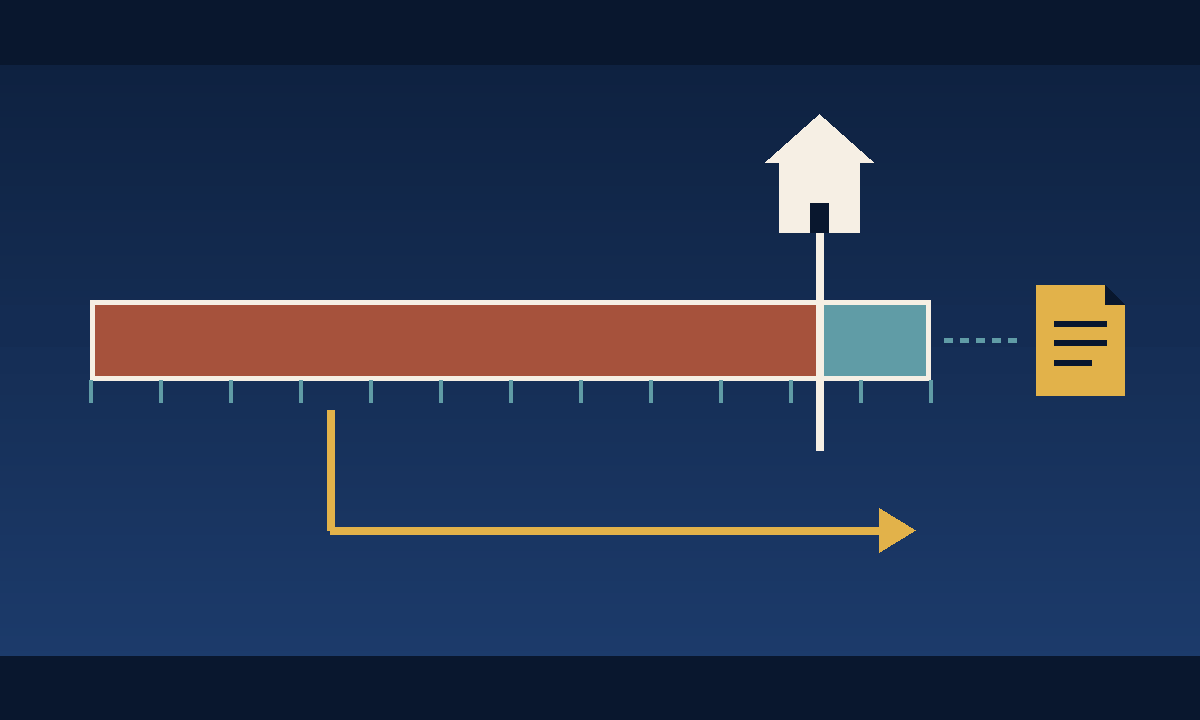
The credit lowers your cash to close, often by thousands of dollars. It is not a discount. It is money you will pay out yourself or through your escrow account a few months later. The size of the credit depends on the parcel's taxing units, which is why the same closing date and price can produce noticeably different figures across the corridor.
The table below uses a $350,000 taxable value, a closing on Friday, November 13, 2026, and the most recently adopted rates published by each source. The seller's share runs from January 1 through the closing date, 317 of 365 days. Your title company sets the exact day count and uses the parcel's actual figures and exemptions.
| Example parcel | Published total rate per $100 | Annual tax at $350,000 | Seller credit, 317 days |
|---|---|---|---|
| Bexar County: City of San Antonio, North East ISD | 2.267474 | $7,936.16 | $6,892.50 |
| Guadalupe County: City of Cibolo, Schertz-Cibolo-Universal City ISD | 1.9299 | $6,754.65 | $5,866.37 |
| Kendall County: City of Boerne, Boerne ISD | 1.8645 | $6,525.75 | $5,667.57 |
| Comal County: City of New Braunfels, Comal ISD | 1.788751 | $6,260.63 | $5,437.31 |
How each total was built:
- Bexar. The sum of seven rates from the Bexar County Tax Assessor-Collector's 2025 Official Tax Rates page: Road and Flood Control Fund 0.023668, Alamo Community College District 0.149150, Hospital District 0.276235, Bexar County 0.276331, San Antonio River Authority 0.018300, City of San Antonio 0.541590, and North East ISD 0.982200. The sum is ours.
- Guadalupe. The City of Cibolo publishes a total of $1.9299 in its table of rates "as of October 1, 2025": city 0.5226, Guadalupe County 0.2784, SCUCISD 1.0769 and Lateral Road 0.0520. The city names the Guadalupe County Tax Assessor-Collector as its source.
- Kendall. The City of Boerne's Current Tax Rates page, headed Tax Year 2025: city 0.4716, Kendall County 0.377, Boerne ISD 1.0109, and Cow Creek Groundwater Conservation District 0.005. The city does not publish a combined figure; the 1.8645 sum is ours.
- Comal. Adopted rates from the Comal County Tax Office's 2025 table for all taxing units: Comal County 0.269000, Comal County Lateral Road 0.036015, City of New Braunfels 0.408936, and Comal ISD 1.074800. The sum is ours. Part of New Braunfels is in New Braunfels ISD (adopted 1.037700) and part of the city extends into Guadalupe County, so check the parcel.
On the same price and closing date, the San Antonio example produces a seller credit about $1,225 larger than the Boerne example. That changes the check you write at closing. The larger bill that follows also changes your monthly escrow. Two homes with the same list price can leave you with different amounts in the bank, which is a reason to compare cash to close as well as price. The taxing units that apply to a real parcel are listed on its appraisal district record; our Texas property tax guide explains how to read that record, and the property tax calculator runs the annual figure for a rate you enter.
Prepaids and the initial escrow deposit
None of these is a fee. They are money paid ahead for the home's first months.
- Homeowners insurance. Your lender will say whether the first year's premium has to be paid at or before closing. The amount comes from your own insurance quote. TREC lists required premiums for flood and hazard insurance among the buyer's prepaid items.
- Prepaid interest. The resale contract lists interest "from date of disbursement to one month prior to dates of first monthly payments" among the buyer's expenses. For illustration: on a $332,500 loan at 6.5%, one day of interest is about $59.21 (loan times rate, divided by 365). Funding on November 13 with a first payment due January 1 means paying interest for November 13 through 30, about $1,066. Your lender's day-count convention and your rate set the real figure.
- Initial escrow deposit. If taxes and insurance are paid through escrow, the lender collects an opening balance so the account can pay the first bills on time. Federal rules under RESPA (12 CFR 1024.17) allow a cushion of no more than one-sixth of the estimated total annual payments from the account, roughly two months. On a fall closing in Texas, the year's tax bill comes due within weeks, so the opening deposit can look large. Part of it is covered by the seller's tax credit you just received. Ask your lender for their escrow calculation instead of estimating it yourself.
- HOA charges. A mandatory association can bring a transfer fee, a resale-certificate fee and prorated dues. Paragraph 13 prorates regular periodic maintenance fees, assessments and dues through closing, and Texas Property Code Section 207.003 caps what the association may charge for the resale certificate package. Item K of the resale certificate lists every transfer-related fee and who it is payable to. Our HOA dues verification guide covers how to get that certificate and what else it discloses.
Credits that lower cash to close
Three kinds of credit can reduce the amount you bring. All three have to be written into your contract or your loan terms to appear on the Closing Disclosure.
- Seller contribution. Paragraph 12A(1)(b) of the resale contract has a blank for an amount the seller will pay toward the buyer's expenses. Paragraph 12C says that if a government loan program bars you from paying certain charges, that contribution goes first to those charges.
- Lender credit. A lender may offer a credit toward closing costs, often in exchange for a higher interest rate. It appears on the Loan Estimate and the Closing Disclosure. It is a trade, so compare the monthly payment with and without it.
- Builder incentive. On new construction, an incentive may be tied to a particular lender or title company, or may be available only by a certain date. Our guides on builder incentive timing and builder preferred-lender credits cover what to get in writing.
Loan programs limit how much a seller or other interested party may contribute toward a buyer's costs, and the limits differ by program. Confirm the limit for your loan with your own lender before you negotiate a number. A credit that exceeds it may not be usable.
Zero down does not mean zero at closing
A VA loan or another low- or no-down-payment program can remove the down payment line. It does not remove the rest. A buyer using one still has:
- earnest money and an option fee to deliver within 3 days of the contract, even though both are credited back later;
- whatever inspections you choose, paid when they are done;
- the buyer's share of closing costs that the seller or lender has not agreed to cover;
- prepaid insurance, prepaid interest and the initial escrow deposit;
- any HOA transfer and certificate fees your contract assigns to you; and
- program-specific charges your lender identifies. The TREC contract names the VA funding fee, FHA mortgage insurance premium and private mortgage insurance among the expenses "as required by the lender".
Rules on which of those a program lets the seller pay are program-specific. Get them from your lender in writing, not from a general article, this one included. Our guide to where San Antonio buyers keep their savings covers keeping cash-to-close money available and easy to move while you shop.
How to send the money without losing it
Paragraph 9B(2) of the resale contract requires the buyer to pay in "good funds acceptable to the Escrow Agent". In practice that usually means a wire transfer or a cashier's check. Ask the escrow officer early which one they need and by what time on closing day. Wire transfers are the step fraudsters target.
The Texas Real Estate Commission warns that consumers "should not rely on instructions sent by email without contacting their broker or sales agent to verify the instructions are correct, since emails may be hijacked by potential scammers." In practice:
- Get the title company's phone number from a source you already trust, such as your contract, the title company's own website that you look up yourself, or a number you have called before. Never use a number from the email that contains wiring instructions.
- Call that number and have the escrow officer confirm the account and routing numbers out loud before you send anything.
- Treat any message that changes the wiring instructions, especially near closing day, as fraud until the title company confirms it by phone.
- After you send the wire, call again to confirm it arrived.
Checklist: Loan Estimate versus Closing Disclosure
Put your latest Loan Estimate next to the Closing Disclosure and go through these lines. The CFPB says the three-business-day window exists so you have time to compare the final terms and costs with the ones you were quoted.
| 1. Cash to close, both columns | Page 3, Calculating Cash to Close. Every row with a change is flagged; read the explanation for each. |
|---|---|
| 2. Loan terms | Loan amount, interest rate, monthly principal and interest, and whether a prepayment penalty appears. These should match what you locked. |
| 3. Deposit | Your earnest money should appear as a credit. Look for the option fee as a credit toward the price too. |
| 4. Seller credits | The seller contribution in your contract, and the tax proration, should both be there. Check the proration's day count and rate against the parcel. |
| 5. Title charges | Owner's policy in the column your contract assigns it to, at the TDI promulgated premium for the policy amount; the loan policy and its endorsements; your half of the escrow fee. |
| 6. Prepaids and escrow | Insurance premium matches your quote; interest days match your funding date; the escrow deposit matches the lender's calculation. |
| 7. Paid before closing | Anything you already paid, such as an appraisal, should be marked paid before closing, not charged again. |
| 8. Anything new | A fee that was not on the Loan Estimate needs an explanation before closing day, not at the table. |
Most last-minute changes do not restart the clock. The CFPB lists three that trigger a new three-business-day review: an APR increase of more than 1/8 of a percentage point on a fixed-rate loan (1/4 point on an adjustable-rate loan), the addition of a prepayment penalty, and a change of loan product. Other changes, including most changes to payments made at closing, can be corrected without one. That makes it more important to raise questions early. Once the numbers match, do the final walk-through and confirm the wire by phone.
What this page is not
It is not legal, tax, or lending advice, and it is not a quote, a loan approval, or an estimate of your closing costs. The worked figures are our arithmetic from the published sources below, labeled as examples, and use rates that change each year. Your lender issues your Loan Estimate and Closing Disclosure. Your title company prepares the settlement figures. Your contract determines who pays what. Confirm every number with the party that issues it.
Where these figures come from
| Title premium and simultaneous-issue rule | TDI Texas Title Insurance Basic Premium Rates, effective March 1, 2026 (page last updated 6/5/2026), and Rate Rule R-5 in the Basic Manual of Rules, Rates and Forms. Read 2026-09-24. The $2,015 figure applies TDI's own published steps to $350,000. |
|---|---|
| Contract terms | TREC No. 20-19, One to Four Family Residential Contract (Resale), which states it replaces TREC No. 20-18. Paragraphs 5, 6A, 9B, 12, 13 and 18B, read from the PDF posted on TREC's site, 2026-09-24. |
| Closing Disclosure timing and changes | CFPB Ask CFPB, "What is a Closing Disclosure?"; CFPB closing disclosure explainer; CFPB blog, "Know Before You Owe: You'll get 3 days to review your mortgage closing documents". Read 2026-09-24. |
| Escrow cushion | 12 CFR 1024.17(c)(1), as published by the CFPB. Read 2026-09-24. |
| Transfer tax | Texas Constitution, Article VIII, Section 29, via the Tarlton Law Library's annotated text. Read 2026-09-24. |
| Tax deadlines | Texas Comptroller, Property Tax Today, January 2026. Read 2026-09-24. |
| Tax rates | Bexar County Tax Assessor-Collector, 2025 Official Tax Rates & Exemptions; Comal County Tax Office, 2025 Tax Rates for all Taxing Units; City of Cibolo, Tax Rates (table as of October 1, 2025); City of Boerne, Current Tax Rates (Tax Year 2025). All read 2026-09-24. Every total except Cibolo's is our sum and is labeled as such. |
| Wire fraud warning | Texas Real Estate Commission, "Beware of Possible Scams before Sending Money via Wire Transfer" (07-18-2019). Read 2026-09-24. |
| Worked arithmetic | Tax credit: rate × $350,000 / 100 × 317 / 365. Daily interest: $332,500 × 6.5% / 365. Both are illustrative and are not a quote. |
| Published | 2026-09-25 |
| Data through | 2026-09-24 |
| Next review due | 2026-10-26, or sooner once 2026 tax rates are adopted and published by the four sources above. |
| Corrections | If a figure on this page does not match its source, tell us and we will correct it and update the review date. |
Sources
- Texas Department of Insurance, Texas Title Insurance Basic Premium Rates, effective March 1, 2026. Read 2026-09-24.
- Texas Department of Insurance, Basic Manual, Rate Rule R-5, Simultaneous Issuance of Owner's and Loan Policies. Read 2026-09-24.
- Texas Real Estate Commission, One to Four Family Residential Contract (Resale), TREC No. 20-19. Read 2026-09-24.
- Consumer Financial Protection Bureau, What is a Closing Disclosure? and Closing Disclosure explainer. Read 2026-09-24.
- Consumer Financial Protection Bureau, Know Before You Owe: You'll get 3 days to review your mortgage closing documents. Read 2026-09-24.
- Consumer Financial Protection Bureau, 12 CFR 1024.17, Escrow accounts. Read 2026-09-24.
- Tarlton Law Library, University of Texas School of Law, Texas Constitution, Article VIII, Section 29. Read 2026-09-24.
- Texas Comptroller of Public Accounts, Property Tax Today, January 2026. Read 2026-09-24.
- Bexar County Tax Assessor-Collector, 2025 Official Tax Rates & Exemptions. Read 2026-09-24.
- Comal County Tax Office, 2025 Tax Rates for all Taxing Units. Read 2026-09-24.
- City of Cibolo, Tax Rates. Read 2026-09-24.
- City of Boerne, Current Tax Rates. Read 2026-09-24.
- Texas Real Estate Commission, Beware of Possible Scams before Sending Money via Wire Transfer. Read 2026-09-24.
Related guides
For the monthly side of the same purchase, see interest rates and San Antonio buying power. For the deposit that starts it all, see the earnest money and option period guide. When you are ready to start, our buyer page explains how we work with buyers.
Check your figure with us
If you are under contract or about to write an offer, send us your Loan Estimate, or your Closing Disclosure once you have it. We will go through each line against your contract with you, starting with the credits you are owed. Your lender and title company issue the final numbers.
Know your cash-to-close figure before closing day.
Send us your Loan Estimate or Closing Disclosure and your contract. We will go through them line by line with you.