
Velvet Realty Group Blog
Interest Rates and San Antonio Buying Power: The Full Payment Math
A quarter point sounds small and a whole point sounds fatal. Neither is true. Here is the arithmetic on a San Antonio-sized loan, and the three cost lines that decide the payment after the rate has done its part.
On a $285,000 San Antonio loan, a quarter point moves principal and interest by roughly $47 a month and a full point moves it by about $193. But principal and interest is only about three quarters of the real payment. Property tax, insurance, mortgage insurance and HOA dues decide the rest.
Three numbers run this page, and they are all dated. Freddie Mac's Primary Mortgage Market Survey put the 30-year fixed average at 6.76% on September 10, 2026. SABOR's August 2026 report, released the same day, put the San Antonio-area median sale price at $299,275. The same report put the average monthly rent at $1,832.
Round the median to a $300,000 purchase with 5% down and you get a $285,000 loan. Every figure below is built on that loan, so you can see which line moves when the rate moves and which lines do not care about the rate at all.
What a rate change does to a $285,000 loan
Standard 30-year amortization, no extra payments. Principal and interest only.
| Rate | Monthly principal & interest | Interest over 30 years | Change vs 6.76% |
|---|---|---|---|
| 5.76% | $1,664.99 | $314,398 | −$185.41 / month |
| 6.26% | $1,756.65 | $347,393 | −$93.75 / month |
| 6.51% | $1,803.27 | $364,177 | −$47.13 / month |
| 6.76% (September 10, 2026 survey average) | $1,850.40 | $381,144 | - |
| 7.01% | $1,898.03 | $398,290 | +$47.63 / month |
| 7.26% | $1,946.14 | $415,609 | +$95.74 / month |
| 7.76% | $2,043.74 | $450,748 | +$193.35 / month |
A quarter point is about $47 a month here. That is the part people overestimate. The part they underestimate is the tail: one full point costs about $69,600 in additional interest across thirty years on the same loan, which is roughly a quarter of the loan amount.
The 6.76% figure is Freddie Mac's published national weekly average. It is not a quote, and it is not the rate any particular borrower will be offered. Credit profile, loan type, points, property type and lock terms all move it.
Buying power is the same payment against a smaller loan
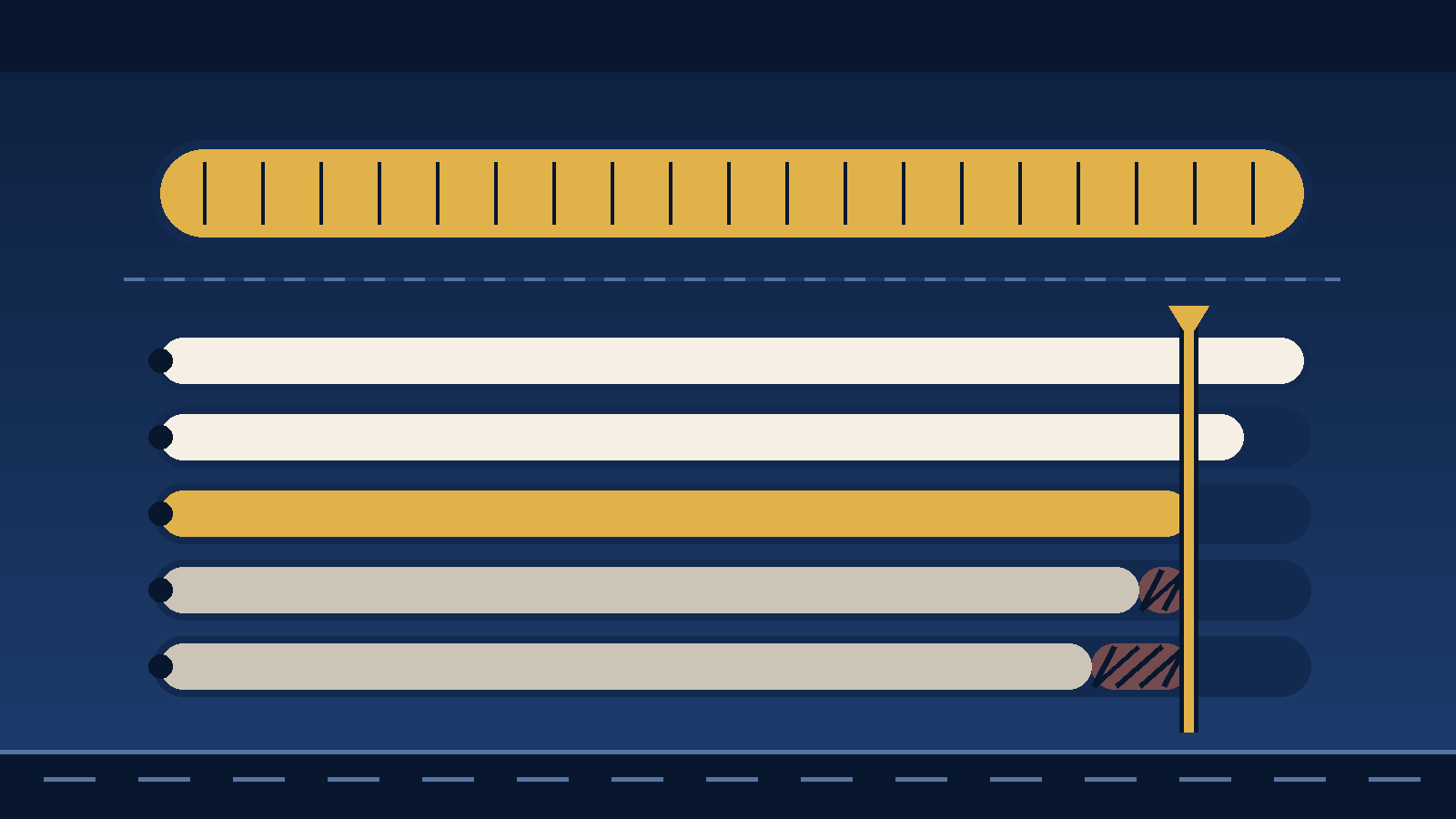
Flip the arithmetic. Hold the payment at $1,850.40 and ask what loan it buys at each rate. That is what the hero illustration above is drawing.
| Rate | Loan that payment supports | Change vs 6.76% | Purchase price at 5% down |
|---|---|---|---|
| 5.76% | $316,736 | +$31,736 | $333,407 |
| 6.26% | $300,210 | +$15,210 | $316,011 |
| 6.76% | $285,000 | - | $300,000 |
| 7.26% | $270,980 | −$14,020 | $285,242 |
| 7.76% | $258,038 | −$26,962 | $271,619 |
A one-point rise takes about $27,000 of loan and roughly $28,400 of purchase price off the table, with nothing changed about the buyer. A one-point fall adds about the same. In a market where the August median was $299,275, that is the difference between shopping at the median and shopping well below it.
Principal and interest is about three quarters of the payment

Property tax is the line most out-of-state buyers get wrong, because Texas has no state income tax and pays for local government another way. Tax rates are set per $100 of taxable value by each taxing unit that covers the address, and they stack.
Here is one real stack: a City of San Antonio address inside North East ISD, at the rates Bexar County published for tax year 2025.
| Taxing unit | Rate per $100 | Homestead exemption as published | Annual tax on $300,000 |
|---|---|---|---|
| North East ISD | $0.982200 | $140,000 | $1,571.52 |
| City of San Antonio | $0.541590 | $5,000 or 20% | $1,299.82 |
| Bexar County | $0.276331 | $5,000 or 20% | $663.19 |
| Hospital District (University Health) | $0.276235 | $5,000 or 20% | $662.96 |
| Alamo Colleges District | $0.149150 | $5,000 or 1% | $439.99 |
| Road and Flood Control Fund | $0.023668 | $3,000 and 20% | $56.09 |
| San Antonio River Authority | $0.018300 | $5,000 or 4% | $52.70 |
| Combined | $2.267474 | - | $4,746.28 · $395.52 / month |
Without a homestead exemption the same stack is $6,802.42 a year, or $566.87 a month. That is a $171 monthly swing on one exemption, which is larger than a half-point rate move on this loan. If you are buying a second home or a rental, the higher number is your number.
Two cautions on that table. The taxable value is the appraisal district's value, not your purchase price, and the two are often different. And the rate set depends on the exact address: Bexar County's 2025 school district rates ran from $0.931900 to $1.257500 per $100, and some addresses also carry an emergency services district, a municipal utility district or a special improvement district. Pull the tax record for the specific property before you decide what you can afford.
Bexar County commissioners were scheduled to vote on tax year 2026 rates on September 15, 2026, so the 2025 rates above are the most recent adopted set as of this page's review date.
Insurance, mortgage insurance and HOA dues
Homeowners insurance. The Texas Department of Insurance puts the statewide average annual homeowners premium at $3,506 for 2025, marked preliminary. That is $292.17 a month. It is a statewide average across every property type, roof age and coverage level in Texas, so treat it as a placeholder until you have a real quote on a real address. Get that quote during the option period, not after.
Mortgage insurance. A 5% down conventional loan generally carries private mortgage insurance until the loan reaches the threshold where it can be removed. The cost depends on credit score, loan-to-value and the insurer, so we are not going to invent a figure for it. Ask your loan officer for the exact monthly amount on the loan estimate, and ask when it drops off.
HOA dues. Many established San Antonio neighborhoods have no association. Many newer corridor subdivisions do, and some carry a second assessment on top. The number comes from the seller's disclosure or the association, and it is worth chasing early, because at 6.76% every $50 a month of HOA dues is the equivalent of about $7,700 of loan. A $100 monthly assessment is worth roughly $15,400 of purchase price.
| Principal and interest | $1,850.40 |
|---|---|
| Property tax (2025 rates, homestead applied) | $395.52 |
| Homeowners insurance (Texas statewide average) | $292.17 |
| Priced subtotal | $2,538.09 |
| Private mortgage insurance | From your loan estimate |
| HOA or special district dues | From the seller's disclosure or the association |
Principal and interest is 72.9% of that subtotal. Anyone quoting you a payment from a rate and a price alone has given you about three quarters of the answer.
Where the corridor's prices actually sit
The August 2026 SABOR report covers the San Antonio reporting area and breaks out Bexar County and the state separately, which is useful if you are shopping anywhere along I-35 rather than inside the city.
| Geography | Median sale price | Change year over year | Sales |
|---|---|---|---|
| Texas | $335,000 | −0.9% | 27,398 |
| San Antonio reporting area | $299,275 | See note below | 3,104 |
| Bexar County | $280,999 | −3.1% | 2,068 |
Bexar County's median sits about $18,300 below the wider reporting area's. Since Bexar accounted for roughly two thirds of the area's August closings, the arithmetic means the non-Bexar parts of the reporting area closed higher on average. Moving outward from the county line is not automatically a way to spend less per house.
Three more figures from the same release shape what a rate move feels like in practice. Homes averaged 82 days on the market, up 11% year over year. Homes sold for an average of 92.8% of their original list price. Months of inventory measured 5.87. Together those describe a market with room to negotiate, which matters a great deal for the next section.
Four levers that move the payment without moving the rate
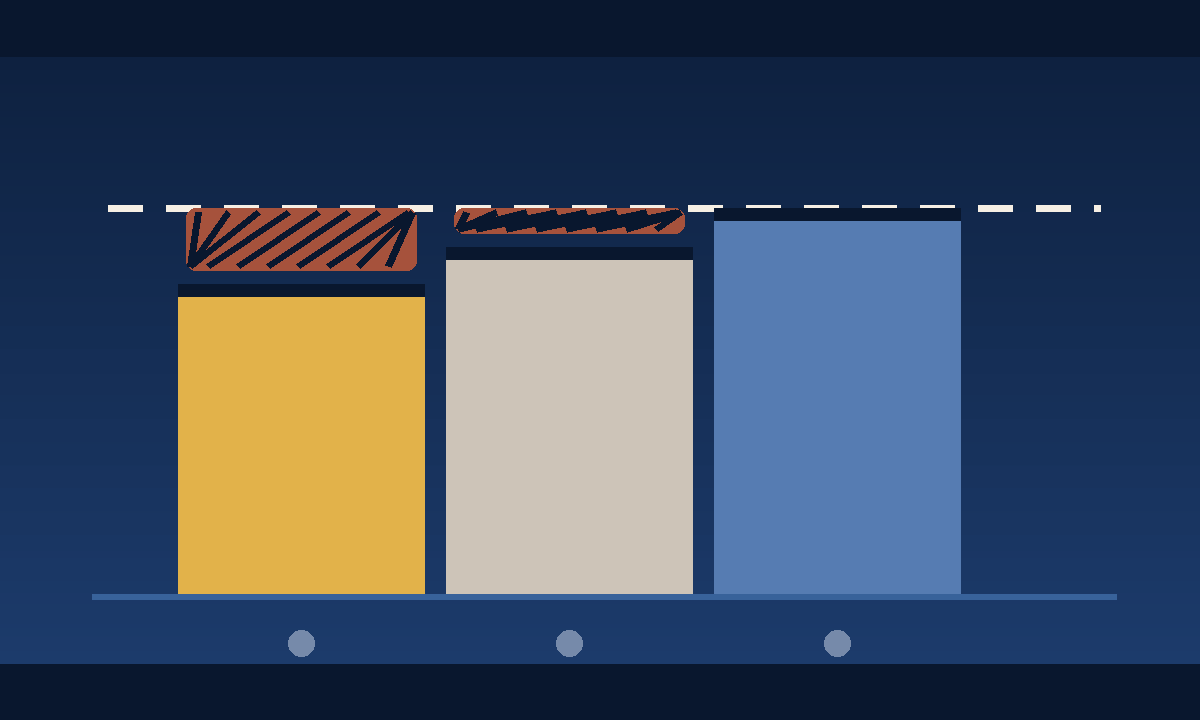
A temporary buydown lowers the payment for the first year or two using money placed in escrow up front, usually by a seller or a builder. On this loan, a two-then-one buydown costs about $6,569 in total subsidy and buys a first-year payment $362 a month lower. What it does not do is change the note. Year three arrives at the full payment, so the question to ask yourself is whether you can carry $1,850.40 rather than whether you can carry $1,488.41.
Discount points buy the rate down permanently. The CFPB's definition is exact: "One point equals one percent of the loan amount." On $285,000 that is $2,850 per point. Points make sense when you keep the loan long enough to recover the cost, which is why the CFPB tells borrowers to price the shortest, longest and most likely time they will hold the loan before deciding.
Seller concessions are the lever most tied to local conditions, and August's 92.8% close-to-original-list figure is why it is worth asking. The cap depends on the loan. Fannie Mae limits interested party contributions on a principal residence to 3% of the lower of sales price or appraised value above 90% loan-to-value, 6% between 75.01% and 90%, and 9% at 75% or less. On a $300,000 purchase with 5% down, that ceiling is $9,000, and it can fund closing costs, prepaid escrows, or the buydown above. Ask for a specific use, not a number.
A rate lock fixes the rate for a defined window while the file is processed. Whether locking now or floating is right depends on your closing date and your own tolerance for the rate moving against you. That call belongs to you and your loan officer, and the terms, cost and extension rules of the lock come from the lender in writing.
Rent or buy comes down to how long you stay
SABOR reported an average monthly rent of $1,832 in August 2026, down 2% year over year, across 5,024 active rental listings. Set that against the $2,538.09 priced subtotal above and the gap is $706.09 a month, or $8,473 a year, before mortgage insurance, HOA dues and maintenance.
That gap is not the whole comparison, because part of an owner's payment is not a cost. In year one at 6.76%, $3,031.58 of the $285,000 loan is paid off, which is $252.63 a month of the payment going into the balance rather than out the door. Net of that, the first-year gap is about $453 a month.
Length of stay decides the rest, and four inputs decide length of stay:
| Cash in at the start | Down payment plus closing costs and prepaid escrows. On this example the down payment alone is $15,000. Your loan estimate has the rest. |
|---|---|
| Monthly difference | Full housing cost minus rent, minus the principal you pay down each month. Recalculate this with your own PMI and HOA figures, not the subtotal above. |
| Cash out at the end | What it costs to sell when you leave. This is the input people skip, and it is usually the one that makes a short stay expensive. Ask for a seller net sheet before you buy, not when you list. |
| Price change while you own | We do not forecast this and neither should anyone selling you a house. As a scale check: each 1% move on a $300,000 home is $3,000. |
Run those four honestly and the answer tends to sort itself. A two-year stay has to overcome the entry and exit costs on a year's worth of monthly difference, which is a steep ask. A seven-year stay has $26,214 of principal paydown working on it before any price change at all. If your horizon is genuinely uncertain, that uncertainty is itself the answer for now.
Buyers relocating to Joint Base San Antonio have one extra input, because a housing allowance is a known monthly figure rather than an estimate. Our 2026 BAH rates for JBSA page has the current figures to put on the left side of this comparison. VA-eligible buyers should also weigh that a qualifying VA purchase may require no down payment, which changes the cash-in line more than any rate move on this page does.
What a brokerage can and cannot tell you
Velvet Realty Group is a real estate brokerage, not a lender. We can show you the arithmetic on this page, pull the tax record for a specific address, tell you what concessions are being negotiated on comparable San Antonio properties right now, and help you decide what to offer.
Loan program eligibility, rate quotes, lock terms, mortgage insurance cost and what any of it means for your file come from a licensed loan officer. That includes VA. We can explain in general terms what a no-down-payment purchase does to your cash requirement; your lender determines entitlement, eligibility and the actual terms. Nothing here is a rate quote, a pre-approval, an offer of credit, or tax, legal or financial advice.
Where these figures come from
| 30-year fixed rate | Freddie Mac Primary Mortgage Market Survey, weekly release dated 2026-09-10: 6.76% for the 30-year fixed and 6.09% for the 15-year fixed. Retrieved 2026-09-10 from the published PMMS history file. National survey average, not a quote. |
|---|---|
| San Antonio market figures | SABOR August 2026 San Antonio Market Statistics press release, dated 2026-09-10, retrieved 2026-09-10. Median $299,275, average $372,989, 3,104 sales, 82 average days on market, 92.8% of original list price, 5.87 months of inventory, 16,940 active listings. |
| Note on the SABOR release | The narrative in that release describes the average and median as unchanged from August 2025, while its own recap table shows August 2025 at $382,419 average and $310,000 median. This page uses the recap table figures and states the August 2026 values without a year-over-year characterization for the reporting area. |
| Rent figure | Same SABOR release: average monthly rent $1,832, down 2% year over year, 5,024 active rental listings, August 2026. |
| Bexar County and Texas price figures | Same SABOR release: Bexar County 2,068 sales, median $280,999 (−3.1%), average $336,979 (−2.6%); Texas 27,398 sales, median $335,000 (−0.9%), average $430,635 (+0.9%). |
| Property tax rates | Bexar County official tax rates and exemptions for tax year 2025, retrieved 2026-09-10. Tax year 2026 rates were scheduled for a commissioners court vote on 2026-09-15 and are not reflected here. |
| School district homestead exemption | $140,000, as published for North East ISD on the Bexar County rate table and as required of school districts by Texas Tax Code Section 11.13(b). |
| Homeowners insurance | Texas Department of Insurance homeowners market overview: statewide average annual premium $3,506 for 2025, marked preliminary. Retrieved 2026-09-10. |
| Points and lender credits | CFPB Ask CFPB guidance on discount points and lender credits. Retrieved 2026-09-10. |
| Seller concession limits | Fannie Mae Selling Guide B3-4.1-02, interested party contributions, principal residence limits by loan-to-value. Retrieved 2026-09-10. |
| Payment arithmetic | Standard 30-year fixed amortization computed for this page on a $285,000 loan. No fees, no extra payments, no escrow shortage. Rounded to the cent. |
| Published | 2026-09-11 |
| Modified | 2026-09-11 |
| Data through | 2026-09-10 for rate and market figures; tax year 2025 for adopted tax rates; 2025 preliminary for the insurance average. |
| Last reviewed | 2026-09-10 (Codex automated source review) |
| Next review due | 2026-10-11, since the rate survey publishes weekly, SABOR publishes monthly, and Bexar County adopts 2026 rates in September. |
| Corrections | If a figure on this page does not match its source, tell us and we will correct the page, restate the corrected figure, and update the review date above. |
Sources
- Freddie Mac, Primary Mortgage Market Survey, for the 30-year and 15-year fixed weekly averages dated September 10, 2026. Retrieved 2026-09-10.
- San Antonio Board of REALTORS®, South Texas Market Report, August 2026 San Antonio market statistics press release dated September 10, 2026, for sales, price, inventory, days on market, close-to-original-list, Bexar County, Texas and rental figures. Retrieved 2026-09-10.
- Bexar County, 2025 Official Tax Rates & Exemptions, for every rate and exemption in the tax table. Retrieved 2026-09-10.
- Texas Comptroller of Public Accounts, Property Tax Exemptions, for the school district residence homestead exemption required by Texas Tax Code Section 11.13(b). Retrieved 2026-09-10.
- Texas Department of Insurance, Texas homeowners insurance market overview, for the statewide average annual premium. Retrieved 2026-09-10.
- CFPB, discount points and lender credits, for the definition of a point and the guidance on how long you keep the loan. Retrieved 2026-09-10.
- Fannie Mae, Selling Guide B3-4.1-02, Interested Party Contributions, for the concession limits by loan-to-value. Retrieved 2026-09-10.
Related guides
Our guide to where to keep down payment savings covers the cash-in line on this page, and our builder preferred-lender credit guide covers how a concession works when the seller is a builder. For military buyers, the Military & Veterans hub links our JBSA-specific guides.
Put your own numbers in
Send us the price range and the area you are shopping and we will pull the tax record for the specific addresses, show you what concessions comparable San Antonio sellers have actually agreed to, and give you a seller net sheet for the day you eventually leave. Your lender confirms the rate, the program and the mortgage insurance.
Run the math on a real address.
Tell us the price range and the area. We will pull the tax record, the comparable sales and the concession history, and start your San Antonio home search from a payment you have actually seen.