
Velvet Realty Group Blog
Where San Antonio Buyers Should Keep Their Down Payment Savings
For San Antonio buyers, the account question starts with the closing timeline. Where the money should sit depends on when you close, how much you actually need, and whether a local assistance program changes the number.
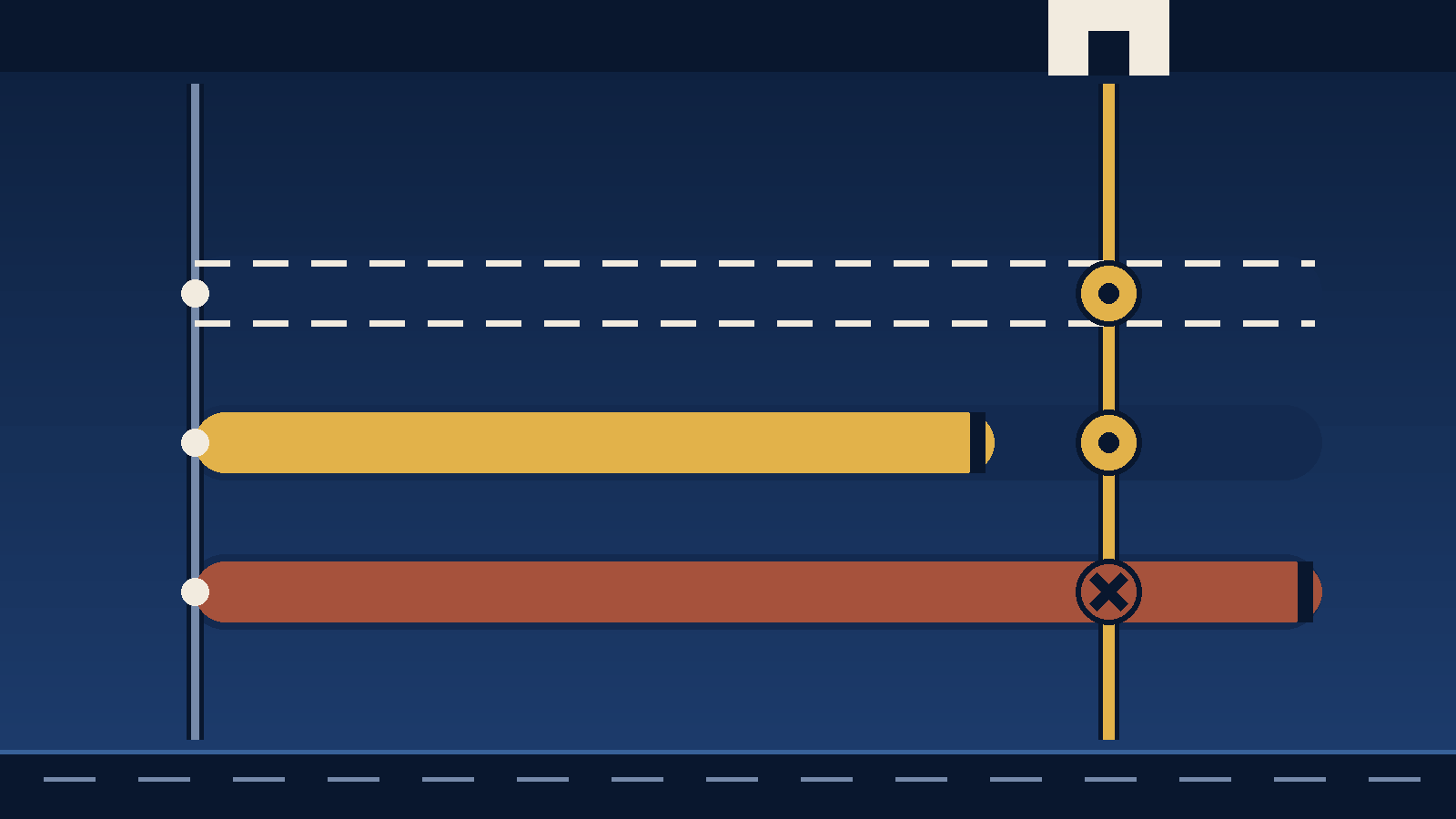
Hold down payment money where it will be liquid on your closing date. If you are buying within about three months, keep it in an insured savings or money market account. If you are a year or more out, a certificate can pay more. Check the early-withdrawal penalty first, because breaking one CD usually costs more than the extra yield earns.
Start with three numbers: your expected purchase price, the cash your lender requires at closing, and the savings you want to keep afterward. The examples below use a dated San Antonio price to show the arithmetic; your lender must calculate your actual cash to close. If the down payment is coming out of a home you still own, the sale timing drives this decision more than the account does, and our guide to selling a San Antonio home covers how that sequencing usually works.
What Texas buyers should know about homebuyer savings accounts
A First-Time Homebuyer Savings Account (FHSA) is a state-sponsored account with tax advantages under that state's rules. Texas is absent from Redfin's state-program list, checked September 7, 2026. Do not assume a product marketed as a homebuyer savings account carries a special Texas tax benefit; confirm its terms with the institution and a tax adviser.
You can still dedicate an ordinary savings account to your home purchase. Compare its access rules and costs against your closing timeline.
Match the account to your closing date, not your account type preference
The right account for a down payment is one that protects your principal and lets you deliver cleared funds by the closing deadline. That single rule sorts the options faster than comparing product names. Start from your house-hunting timeline, not from the account.
| If you are buying | Where to hold it | Why |
|---|---|---|
| In the next 3 months | An insured savings or money market account, all of it | Earnest money and the option fee are due within 3 days of the contract's effective date. No fixed-term account can meet a 3-day deadline, and the rest of your cash to close follows only weeks later. |
| In 3 to 12 months | Savings or money market for anything you might need early; a short certificate only for the remainder | You can go under contract sooner than you planned. Keep whatever might become earnest money, an option fee, or an appraisal-gap payment reachable the same week you need it. |
| 12 months or more from now | A certificate, or a ladder of them, timed to mature before your target date | This is where locking a rate actually pays. Leave a cushion between the maturity date and the closing date, and check whether the certificate renews automatically. |
| Any timeline, if the money is a gift or was moved recently | Wherever your lender can document it, moved early | See the seasoning section below. Moving money late in the process can cost you more time than any account switch earns in interest. |
A money market account sits between the other two. It usually pays more than a basic savings account and stays accessible, but it carries conditions a savings account may not: Credit Human's money market savings requires $1,000 to open, charges a $7 monthly fee unless you keep a $1,000 daily balance, and allows six free withdrawals per statement cycle with a $2 fee for each additional one. Those limits rarely matter while you are saving. They matter in the month you are closing.
Savings rates change. A certificate generally fixes its rate for the term but may charge an early-withdrawal penalty. Check minimum balances, fees, transfer times, and renewal terms alongside the rate, and confirm the number with the institution on the day you open the account. The CFPB explains CD terms and penalties.
Use an insured bank or federally insured credit union and confirm your coverage. FDIC coverage is generally $250,000 per depositor, per insured bank, per ownership category; accounts in the same category at one bank are combined. Leave time to get cleared funds to the closing agent.
What these accounts pay, as of September 19, 2026
We read these rates on September 19, 2026. The gap between the national average and what an individual institution publishes is wide enough to matter: the average savings account pays almost nothing, so leaving the money in savings only helps if you also move it somewhere that pays.
| Account type | National average APY | An example of a published rate |
|---|---|---|
| Savings | 0.38% | 3.00% APY, Ally Bank online savings, no minimum balance (rate stated correct as of 09/18/26) |
| Money market | 0.63% | 1.50% to 2.11% APY by balance tier, Credit Human money market savings, $1,000 minimum (rates effective 09-18-2026) |
| 6-month certificate | 1.41% | 3.80% APY, Credit Human 6–11 month share certificate, $500 minimum (rates effective 09-18-2026) |
| 12-month certificate | 1.71% | 3.95% APY, Credit Human 12–17 month share certificate, $500 minimum (rates effective 09-18-2026) |
National averages come from the FDIC's national deposit rates, effective August 17, 2026. The published examples are rates we read on each institution's own rate page on September 19, 2026, chosen because Credit Human is headquartered in San Antonio and Ally is available nationally. They are examples of what was available, not recommendations, and Velvet Realty Group is not compensated by any institution named here. Every one of these rates can change without notice, and a rate you find later may be higher or lower.
What breaking a certificate early actually costs
Here is the case that decides the question: you put the money in a 12-month certificate, and then you find the house in month three.
Early-withdrawal penalties are usually written as a number of days of earnings. RBFCU's current truth-in-savings disclosure sets 30 days of earnings for a 6- to 11-month certificate, 60 days for 12 to 23 months, 120 days for 24 to 35 months, and 180 days for 36 to 47 months. The sentence that matters most is the one about how the penalty is calculated: it applies to that many days of earnings "whether earned or not." A penalty larger than what you have earned comes out of your principal.
Put real numbers on it. Take $20,000 in a 12-month certificate paying 3.95% APY. That earns about $790 over a full year, or roughly $2.16 a day, and the 60-day penalty works out to about $129.86.
Break it at day 30 and you have earned about $64.93 against that $129.86 penalty, so you close the account with roughly $64.93 less than you deposited. Break it at the three-month mark and you have earned about $194.79, so the penalty still leaves you with about $64.93 in earnings. That second case looks survivable until you compare it to the account you skipped: the same $20,000 sitting in a 3.00% savings account for those 90 days would have earned about $147.95 with no penalty and no maturity date. Locking the money cost you roughly $83 in that scenario, and it cost you the ability to move quickly.
Over a full year the certificate does win, and it is worth seeing by how much. At 3.95% it earns about $790 against roughly $600 in a 3.00% savings account, a difference of about $190 a year, or close to $16 a month. A single early-withdrawal penalty of $129.86 erases about eight months of that advantage. If there is a real chance you are buying inside the year, the extra yield is not paying you enough to give up access.
Some institutions sell a middle option. Credit Human's liquid share certificate pays 3.64% APY on a one-year term with a $5,000 minimum and allows two penalty-free withdrawals during the term as long as the balance stays at $5,000 (rates effective 09-18-2026). Penalty terms and products differ by institution, so read the actual disclosure for the account you are opening rather than assuming this schedule applies.
Earnest money moves in three days, not at closing
Texas puts a hard deadline on part of this. Under Paragraph 5 of the TREC One to Four Family Residential Contract (Resale), form 20-19, effective July 1, 2026, the buyer must deliver both the earnest money and the option fee to the escrow agent "Within 3 days after the Effective Date" of the contract. If that third day is a Saturday, Sunday, or legal holiday, it rolls to the next business day.
Three days is the constraint that should shape your account choice. The amounts are negotiated between you and the seller rather than set by rule, so ask your agent what is customary for the price range and property type you are shopping. Whatever that number turns out to be, it has to be sitting somewhere you can move it from this week.
The rest of the cash follows on a different clock. An accepted offer with financing commonly carries a closing date 30 to 45 days out, and the exact date is a date you and the seller write into the contract. Your lender's Loan Estimate and, later, the Closing Disclosure give you the actual cash to close, which includes closing costs, prepaid items, and any reserves on top of the down payment itself. Our walk-through of the full payment math behind a San Antonio purchase covers how those pieces fit together.
A workable split for most buyers: keep the earnest money, the option fee, and a cushion for an appraisal gap fully liquid from the moment you start touring homes, and treat only the remainder as money that could sit in a fixed term.
Gift funds and seasoning: the part account timing actually controls
Two rules affect where your money should sit well before it affects which account earns the most.
Source documentation. Lenders review account statements and may ask you to document large deposits and transfers. A statement-review period is not a universal rule that every dollar must sit untouched for two months. Keep the full paper trail and ask your lender what is required before moving funds.
Gift funds. Ask your lender to confirm the donor, gift letter, and transfer documentation before anyone sends money. Some programs allow the donor to send funds directly to the closing agent. Fannie Mae's gift-fund rules describe both routes; your loan program may differ.
Ask your lender for their specific seasoning window and gift-fund documentation requirements before you move money, since requirements vary by loan program.
Your real down payment may be smaller than you think
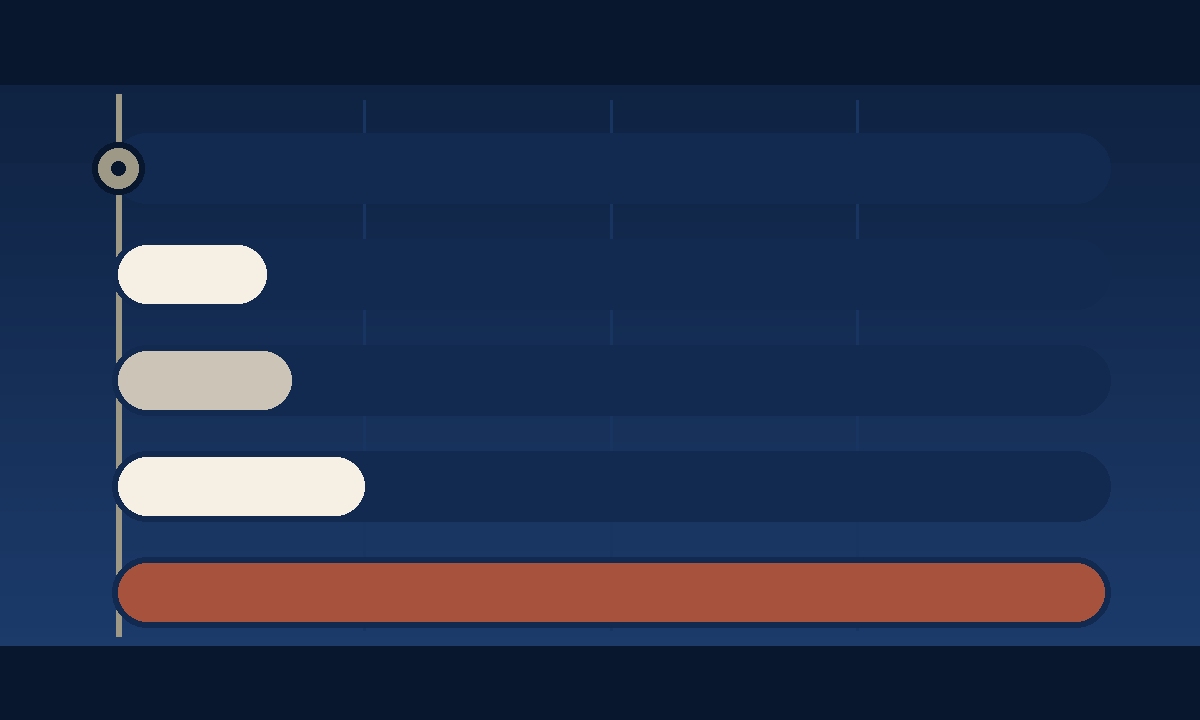
The July 2026 SABOR monthly median home price for the San Antonio market was $315,000. Generic advice built around a 20% down payment implies saving $63,000 against that price. Some eligible buyers can use lower-down-payment loan options.
| Loan type | Down payment share | Amount on $315,000 |
|---|---|---|
| VA (eligible active-duty, veteran, or surviving spouse borrowers) | 0% | $0 |
| Conventional (eligible 3%-down program; PMI generally required) | 3% | $9,450 |
| FHA (eligible borrowers; 580+ credit score for 3.5% minimum) | 3.5% | $11,025 |
| Conventional (5% example; PMI generally still required) | 5% | $15,750 |
| 20% comparison (generally avoids conventional PMI) | 20% | $63,000 |
Conventional PMI is generally required below 20% down; putting 5% down does not ordinarily remove it. Down payment is separate from closing costs, prepaid expenses, reserves, and any appraisal gap. Fannie Mae describes options starting at 3%, subject to eligibility.
San Antonio sits beside three JBSA installations, and VA-eligible buyers in the corridor (active duty, veterans, and eligible surviving spouses) may qualify for $0 down when the purchase price does not exceed the appraised value and entitlement and lender requirements are met. If that's you, the entire account question changes: you may only need enough savings to cover closing costs and a reserve, not a down payment at all. Talk to a VA-experienced lender about your specific eligibility and entitlement before assuming either way.
Down payment assistance that can close the gap further
Three programs are worth checking before you finalize a savings target. Eligible assistance may reduce upfront costs, but the amount, loan compatibility, and repayment terms vary. Contact each program directly to confirm current terms before relying on any figure below: assistance programs adjust funding and terms over time.
| Program | Assistance | Structure | Key eligibility |
|---|---|---|---|
| TDHCA My First Texas Home | Down payment assistance; confirm the current amount with a participating lender | Assistance paired with a 30-year mortgage; confirm second-lien and repayment terms | First-time buyers, with certain exceptions for qualified veterans and targeted areas; approved homebuyer education required. Ask the lender about current credit, income, purchase-price, and loan-type requirements. |
| SETH 5 Star Texas Advantage | Up to 5% of the loan amount | Second loan with no monthly payment: forgiven after 3 years, or deferred and repaid at sale, refinance, or loan term end | No first-time buyer requirement; minimum credit score 640; homebuyer education required; available statewide except Travis County and the city limits of El Paso, McKinney, and Grand Prairie. |
| NHSSA Down Payment Assistance | Up to $12,000 for down payment and closing costs | Deferred second lien; confirm repayment terms with NHSSA | First-time buyer; participating first-lien lender; minimum credit score 580; U.S. citizen or permanent resident; Bexar County or surrounding counties; income limits and HUD-approved homebuyer education apply. |
Program pages checked September 7, 2026. SETH excludes Travis County and the city limits of El Paso, McKinney, and Grand Prairie. NHSSA now describes Bexar County and surrounding counties, so crossing the Bexar line does not automatically rule it out. Confirm the property address, available funding, and repayment terms directly with the program before relying on assistance.
A simple decision checklist
| Buying in the next 3 months | Keep all of it in an insured savings or money market account. Earnest money and the option fee are due 3 days after the contract's effective date. |
|---|---|
| Buying in 3 to 12 months | Keep anything that might become earnest money or an appraisal-gap payment liquid. A certificate only earns you about $16 a month per $20,000, and one early-withdrawal penalty erases eight months of that. |
| Buying 12 months or more from now | Consider a certificate or a ladder timed to mature before your target date, with a buffer for delays, and check the automatic-renewal terms. |
| VA-eligible and buying in the JBSA corridor | Confirm your entitlement with a VA-experienced lender before assuming you need a down payment at all. |
| First-time buyer, or haven't owned in 3+ years | Check TDHCA My First Texas Home and ask NHSSA whether the property is in its current service area. |
| Not a first-time buyer, or buying outside Bexar County | SETH 5 Star Texas Advantage has no first-time buyer requirement and reaches most of the state. |
| Expecting a family gift toward the down payment | Ask your lender to approve the gift documentation and transfer route before the donor moves money. |
What this page is not
It is not tax, legal, or financial advice, and it is not a promise of loan approval, program funding availability, or any specific savings return. Interest rates on savings and CD products change frequently; compare current offers directly before opening an account. Down payment assistance programs set and change their own income limits, purchase-price limits, funding availability, and terms: confirm current details directly with each program or with a participating lender before relying on them. Nothing on this page evaluates any school, neighborhood, or the people who live in one.
Where these figures come from
| Texas FHSA context | Redfin's state-program list does not include Texas. Checked 2026-09-07; confirm any claimed tax benefit independently. |
|---|---|
| Savings and CD accounts | CFPB CD guidance and FDIC deposit-insurance guidance checked 2026-09-07. |
| National average deposit APYs | FDIC National Deposit Rates, effective 2026-08-17. Read 2026-09-19. |
| Published example APYs | Read directly from each institution's own rate page on 2026-09-19. Credit Human rates stated effective 09-18-2026; Ally savings rate stated correct as of 09/18/26. Examples only, not recommendations; no compensation from any institution named. |
| Early-withdrawal penalty schedule | RBFCU Truth in Savings disclosure M161AA R 03-01-26. Read 2026-09-19. Penalty days and the "whether earned or not" basis are quoted from that disclosure; other institutions set their own terms. |
| Earnest money and option fee deadline | TREC One to Four Family Residential Contract (Resale), form 20-19, effective 07/01/2026, Paragraph 5A. Read 2026-09-19. |
| San Antonio median home price | July 2026 monthly median of $315,000, published on Velvet Realty Group's market-update page from SABOR data. Retrieved 2026-08-13. |
| TDHCA My First Texas Home terms | TDHCA's current Programs page. Checked 2026-09-07. |
| VA $0-down eligibility | General VA loan program eligibility for active-duty service members, veterans, and eligible surviving spouses; confirm individual entitlement with a VA-experienced lender. |
| SETH 5 Star Texas Advantage terms | SETH's own program site (seth5star.com). Checked 2026-09-07. |
| NHSSA Down Payment Assistance terms | NHSSA's current Down Payment Loans page. Checked 2026-09-07; use the provider's $12,000 figure and expanded service area rather than older directory terms. |
| Published | 2026-09-20 |
| Modified | 2026-09-20 |
| Data through | 2026-09-19 for deposit rates and contract deadlines; 2026-09-07 for program/account guidance; 2026-07-31 for the historical market example. |
| Last reviewed | 2026-09-19 |
| Next review due | 2026-10-13, given how quickly savings and CD rates and program funding can change. |
| Corrections | If a figure on this page does not match its source, tell us and we will correct the page, restate the corrected figure, and update the review date above. |
Sources
- Redfin, What is a First-Time Homebuyer Savings Account (FHSA)?, for the list of states that have enacted an FHSA by statute, which does not include Texas. Checked 2026-09-07.
- CFPB, CD terms and private mortgage insurance; FDIC, deposit insurance. Checked 2026-09-07.
- Fannie Mae, down payments and personal gifts; HUD, FHA down payment guidance; VA, purchase-loan eligibility. Checked 2026-09-07.
- Velvet Realty Group Market Update, for the July 2026 SABOR monthly median San Antonio home price of $315,000. Retrieved 2026-08-13.
- Texas Department of Housing and Community Affairs, My First Texas Home, for program structure and eligibility. Checked 2026-09-07.
- Southeast Texas Housing Finance Corporation, 5 Star Texas Advantage Program, for assistance amount, structure, and eligibility. Checked 2026-09-07.
- Neighborhood Housing Services of San Antonio, Down Payment Loans, for current assistance amounts, structure, and the Bexar County and surrounding-county service area. Checked 2026-09-07.
- FDIC, National Deposit Rates and Rate Caps, for the national average APYs on savings, money market, and certificate accounts. Effective 2026-08-17; read 2026-09-19.
- Credit Human, Share Certificates, Money Market Savings, and Liquid Share Certificate, for published APYs, minimums, fees, and withdrawal terms. Rates stated effective 09-18-2026; read 2026-09-19.
- Ally Bank, Online Savings Account, for the published savings APY and minimum balance. Rate stated correct as of 09/18/26; read 2026-09-19.
- Randolph-Brooks Federal Credit Union, Truth in Savings Account Disclosure (M161AA R 03-01-26), for the certificate early-withdrawal penalty schedule and its "whether earned or not" basis. Read 2026-09-19.
- Texas Real Estate Commission, One to Four Family Residential Contract (Resale), form 20-19, effective 07/01/2026, Paragraph 5A, for the 3-day earnest money and option fee delivery deadline. Read 2026-09-19.
Related guides
Our final walk-through checklist covers the days right before the closing date this page is built around, and our seller repair checklist is useful if repairs negotiated during the option period affect your closing costs. For military buyers, our Military & Veterans hub links our JBSA-specific guides, including VA loan eligibility.
Plan your next homebuying step
Every buyer's mix of loan type, timeline, and assistance eligibility is different. Tell us your target closing date and the area you want to search. We can help plan the home search and point you to program contacts; your lender and financial adviser should confirm financing eligibility and account choices.
Find out what you actually need to save.
Tell us your timeline and target area. We will help plan your home search and identify the program contacts to ask about financing.