
Velvet Realty Group Blog
Selling an I-35 Corridor Home: Pricing Age, Condition and Competition
Price a home against the closed sales and current alternatives its buyers would actually weigh, not against its age alone. Year built is one fact in that comparison. Condition, renovation scope, location, property type and the terms behind each sale belong in it too.
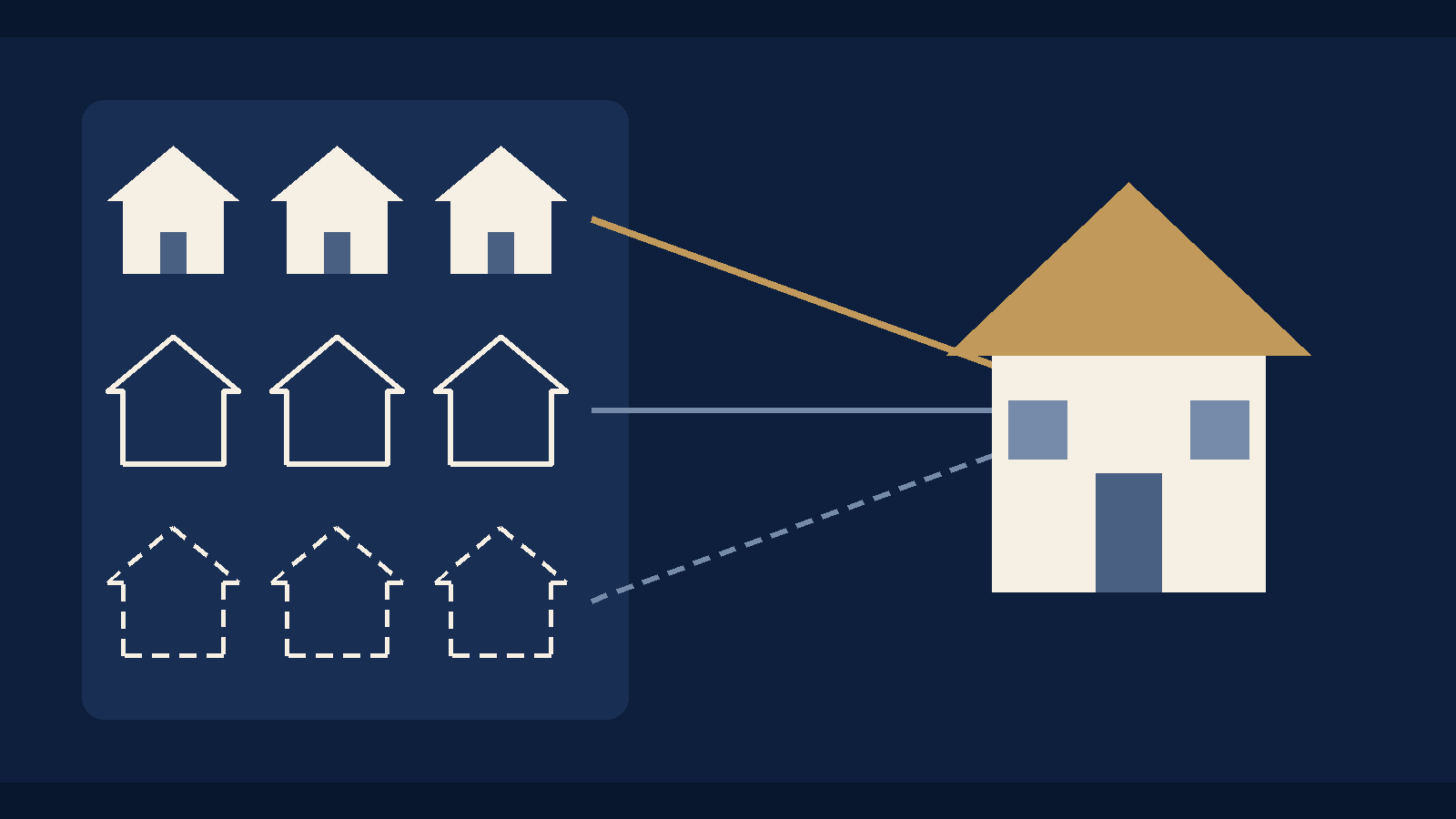
The short version. Compare your home with relevant closed sales, name the differences that matter, and review what buyers can choose from today. A nearby address, similar square footage or a matching year built does not make another home comparable on its own. Pricing is an evidence-based decision, not a guarantee.
Along I-35, from San Antonio through Universal City, Schertz and Cibolo to New Braunfels, the corridor name does not make two homes competitors, and a sale in one of these cities does not set the price of a home in another. The test is whether the two homes would draw the same buyers.
This guide explains how to weigh the evidence. It contains no current market statistics, comparable sales or dollar adjustments for the corridor or any subdivision. Those have to come from a dated analysis of one specific property. For published market reports, see our market update.
Much of the method below comes from Fannie Mae's appraisal guidance and the Texas Comptroller. Fannie Mae's provisions govern its appraisal context, not every seller's listing analysis. We use them because they explain clearly how to compare homes. An estimated list price, an appraisal opinion, an asking price and a completed sale are four separate things, and this guide keeps them apart.
Which sales actually resemble my home?
The ones that would compete with it for the same buyers. Fannie Mae's comparable sales topic (dated June 4, 2025; reviewed November 2, 2026) says comparable properties should have similar physical and legal characteristics, including site, room count, finished area, style and condition. External factors, including designated flood zones, also warrant consideration.
The same topic defines a home's market area by where most demand originates and most competition is located. The properties should appeal to the same market participants. They need not be identical.
- Same area first. Sales in the same market area, including the subdivision or project, should be used when possible.
- Competing neighborhoods can count. They can supply appropriate comparables, but their relevance and differences need explaining.
- Newest is not automatically strongest. An older, more similar sale can be more useful, with market-condition analysis where appropriate.
- Property type comes early. Start with what your home is and where it actually competes. Explain differences in location, property form or legal characteristics rather than hiding them.
Fannie Mae's sales comparison topic (dated June 4, 2025; reviewed November 3, 2026) also calls for enough data to understand sale conditions, financing concessions, physical characteristics and whether a sale was at arm's length, meaning between parties acting independently. A headline price or a renovation description does not supply all of that.
Questions to put to whoever prepares your pricing analysis:
- Why does each selected sale compete with my home?
- Which differences matter, and how do you know?
- Why was a nearby or high-priced sale left out?
- What is verified about each sale, and what remains unknown?
Be wary of an analysis that picks only the highest sales or applies one universal radius, construction-year band or recency cutoff.
Does an older home have to be priced below a new one?
No fixed rule says so. Fannie Mae's improvements topic (revision date not verified; reviewed November 2, 2026) separates actual age from effective age. A well-maintained home generally can have an effective age lower than its actual age, and this guidance does not impose an actual-age restriction on the dwelling.
That is not a finding that age never affects price. It means age is a question to test against relevant sales, not a discount to apply by the year. We have no supported dollar figure for what a year of age, or a newer build, is worth on the I-35 corridor.
How do I separate condition from renovation scope?
Write down what was done and what was not. The joint Fannie Mae and Freddie Mac condition and quality definitions (version 1.0, April 29, 2025, pages 3 to 5; reviewed November 3, 2026) treat condition and construction quality as separate things. They distinguish a comprehensive remodel from updates to selected components, and dated but functional finishes from more serious deficiencies.
An older, completely renovated home can fall in a condition category that also describes nearly new homes. That does not establish equal market value. Newness alone does not establish quality, and attractive finishes do not establish the condition of the whole property.
For your own home, record:
- What changed and when it changed.
- What remains original.
- What still needs attention.
- Which work was cosmetic, and which was broader rehabilitation or component replacement.
"Updated" covers everything from one new component to a full remodel, so compare the actual scope with the scope of each relevant sale. These are comparison questions, not a rating assigned to your house.
How do I read closed, active and pending homes?
Each one answers a different question, and only a closed sale shows a completed price. Fannie Mae treats current listings as supporting evidence rather than a replacement for closed comparables, and keeps contract offerings distinct from closed sales. The table below is our reading of its comparable sales and adjustments topics as of November 2, 2026. It does not report current local listings.
| Evidence | Question it answers | What it does not show |
|---|---|---|
| Closed comparable sales | What prices were achieved in completed, relevant transactions? | Your home's value. Property differences, terms and timing still need review. |
| Active asking prices | What alternatives can buyers consider now? | A completed price. An asking price is an offer to sell. |
| Pending listings | Which alternatives are under contract? | The contract price. The advertised price is not a verified contract price or a completed sale. |
| Concessions | What else came with the transaction price? | A dollar-for-dollar value change. The effect depends on market reaction, so the seller's cost is not automatically subtracted. |
| Price reductions | How did a seller change the asking position? | A sale result, the reason for the change, or a corridor-wide trend. |
| Builder incentives and upgrades | What package comes with the new-home price? | A like-for-like price. Compare verified terms, not the headline number. |
How do I compare my home with new construction?
Compare the whole offer, not the two headline prices. Fannie Mae's guidance supports looking at condition, property characteristics, and builder concessions and upgrades, with adjustments grounded in market reaction. It does not provide a universal older-resale discount. We report no current builder incentives here, so get the terms for the specific home.
- Establish whether the homes plausibly compete for the same buyers.
- Compare location, site, property type, size, layout, condition and renovation scope.
- Separate the builder's advertised price from documented upgrades and incentive terms.
- Keep completed builder sales apart from advertised offers.
- Name the information that is missing.
- Use a dollar adjustment only when relevant market evidence supports it. Otherwise, explain the difference without putting a number on it.
A useful question for any difference: "What evidence shows how buyers value this?" An invented discount does not answer it, and neither does a renovation receipt.
Is there a formula for age, upgrades or size?
No. Fannie Mae requires appraisal adjustments (topic dated June 4, 2025; reviewed November 2, 2026) to reflect the market's reaction to property differences, and it specifically rejects rule-of-thumb adjustments where market analysis supports a different result. So a standard discount per year of age, a universal premium for a renovated kitchen and a fixed square-foot adjustment all lack support as general rules. Where local evidence does not support a dollar amount, describe the difference and the uncertainty instead.
Which numbers should not set the list price?
Your appraisal district value
It is a property-tax figure. The Texas Comptroller (publication date not stated; reviewed November 2, 2026) describes appraisal district valuation as generally tied to market value as of January 1, with statutory exceptions. It does not designate that figure as a suggested listing price, and we read it as a tax value for that purpose and date, not a list price.
Market value, appraised value, assessed value and taxable value are different labels. Texas permits exemptions, and appraisal limitations can make an appraised value differ from market value. Explaining the difference for one property takes that property's records.
The amount you want to net
Fannie Mae's definition of market value (revision date not verified; reviewed November 2, 2026) is framed around the most probable price in a competitive, open market under specified fair-sale conditions. The owner's desired proceeds are not an input. Your target net is a real planning constraint, but it is not evidence that buyers will pay the matching price. Keep the proceeds estimate separate from the pricing analysis.
What the improvements cost
Market-supported adjustments reflect how buyers react to a difference, not a reimbursement of the owner's spending. Receipts document the scope of the work. They do not prove an equal increase in sale price, and no fixed return on an upgrade is supported here.
When should I revisit the analysis?
When the evidence changes, not on a preset calendar. Fannie Mae's guidance calls for analyzing market changes between a comparable's contract date and the appraisal's effective date, which supports paying attention to timing. It does not set an expiration date for a comparative market analysis (CMA, an agent's pricing comparison) or a price-reduction schedule. A practical sequence:
- Ask for a dated CMA that identifies its evidence period.
- Before listing, ask which sales, alternatives or property facts have changed since it was prepared.
- After listing, review documented feedback alongside current alternatives, offers and new closed sales.
- Separate repeated comments about condition or price from verified transaction evidence.
- Then decide whether the evidence supports holding the price, changing the presentation, addressing condition or revising the asking price.
Limited feedback does not prove that price alone caused the response.
What a supported price cannot promise
A list price backed by evidence, or a later revision, does not guarantee an offer, a timeline, your proceeds or agreement with an appraisal. It gives you a documented reason for the number you chose and a way to review it. This guide is general information and is not legal, tax, or financial advice.
Questions sellers ask about pricing
Does a home in another I-35 city count as a comparable?
Only if it would compete for the same buyers. Fannie Mae allows sales from competing neighborhoods, with their relevance and differences explained. Sharing a corridor name does not establish that.
Is the most recent sale always the strongest comparable?
No. An older, more similar sale can be more useful, with market-condition analysis where appropriate.
Will a renovation add what it cost?
Not necessarily. Adjustments reflect how the market reacts to a difference, not what the owner spent, so no fixed return can be promised.
Should I cut the price after a set number of days or showings?
No universally correct schedule exists. Review documented feedback, current alternatives, offers and new closed sales, then decide what the evidence supports.
Is a pricing analysis the same as an appraisal?
No. A seller's pricing analysis estimates a list price. It is not a lender appraisal, and neither one is a completed sale.
Sources
- Fannie Mae Selling Guide, B4-1.3-08, Comparable Sales and B4-1.3-09, Adjustments to Comparable Sales, topics dated June 4, 2025. Reviewed 2026-11-02.
- Fannie Mae Selling Guide, B4-1.3-07, Sales Comparison Approach Section, topic dated June 4, 2025. Reviewed 2026-11-03.
- Fannie Mae Selling Guide, B4-1.3-05, Improvements Section, B4-1.3-06, Property Condition and Quality of Construction and B4-1.1-01, Definition of Market Value. Revision dates not verified. Reviewed 2026-11-02.
- Fannie Mae and Freddie Mac, Condition and Quality Rating Definitions, version 1.0, April 29, 2025, pages 3 to 5. Reviewed 2026-11-03.
- Texas Comptroller, Valuing Property and Property Tax Exemptions. Publication dates not stated or not verified. Reviewed 2026-11-02.
Where these facts come from
| Facts | The official sources listed above, with the dates shown. The Fannie Mae material is appraisal guidance used here to explain comparison principles. Fannie Mae is a source only, not a partner or endorser. |
|---|---|
| Our framework | The seller questions, checklists and comparison steps are Velvet Realty Group's editorial application of those sources. The questions are our wording, not measured search demand. |
| Numbers | None published. Current corridor conditions, sold comparables, builder incentives and supported dollar adjustments are not documented here, because they depend on the property and the date of the analysis. |
| Published | 2026-11-04 |
| Next review due | 2027-05-04, or sooner if a source changes. |
| Corrections | If something on this page does not match its source, tell us and we will correct it and update the review date. |
Related guides
Start with our seller guide. Pricing your San Antonio home covers where a pricing opinion comes from, seller concessions compares a credit with a price cut, and the Universal City and Schertz seller repair checklist covers repairs before listing. For the builder side, see new construction in New Braunfels, Schertz and Cibolo. For the cities along this stretch of I-35, see the San Antonio, Universal City, Schertz, Cibolo and New Braunfels area guides.
Selling along I-35?
Send us the address. We will go through the relevant closed sales, the current alternatives and what is still unverified, and date the review so you know what it covers.
Velvet Realty Group is brokered by LPT Realty, LLC. Equal Housing Opportunity.
Start with your home's evidence.
Send us the property and we will review the closed sales and current alternatives that compete with it.