
Velvet Realty Group Blog
Seller Concessions in San Antonio: When a Credit Beats a Price Cut
A closing-cost credit and a price cut can cost you about the same. They do very different things for the buyer, and the buyer's loan decides how much of a credit is allowed at all.
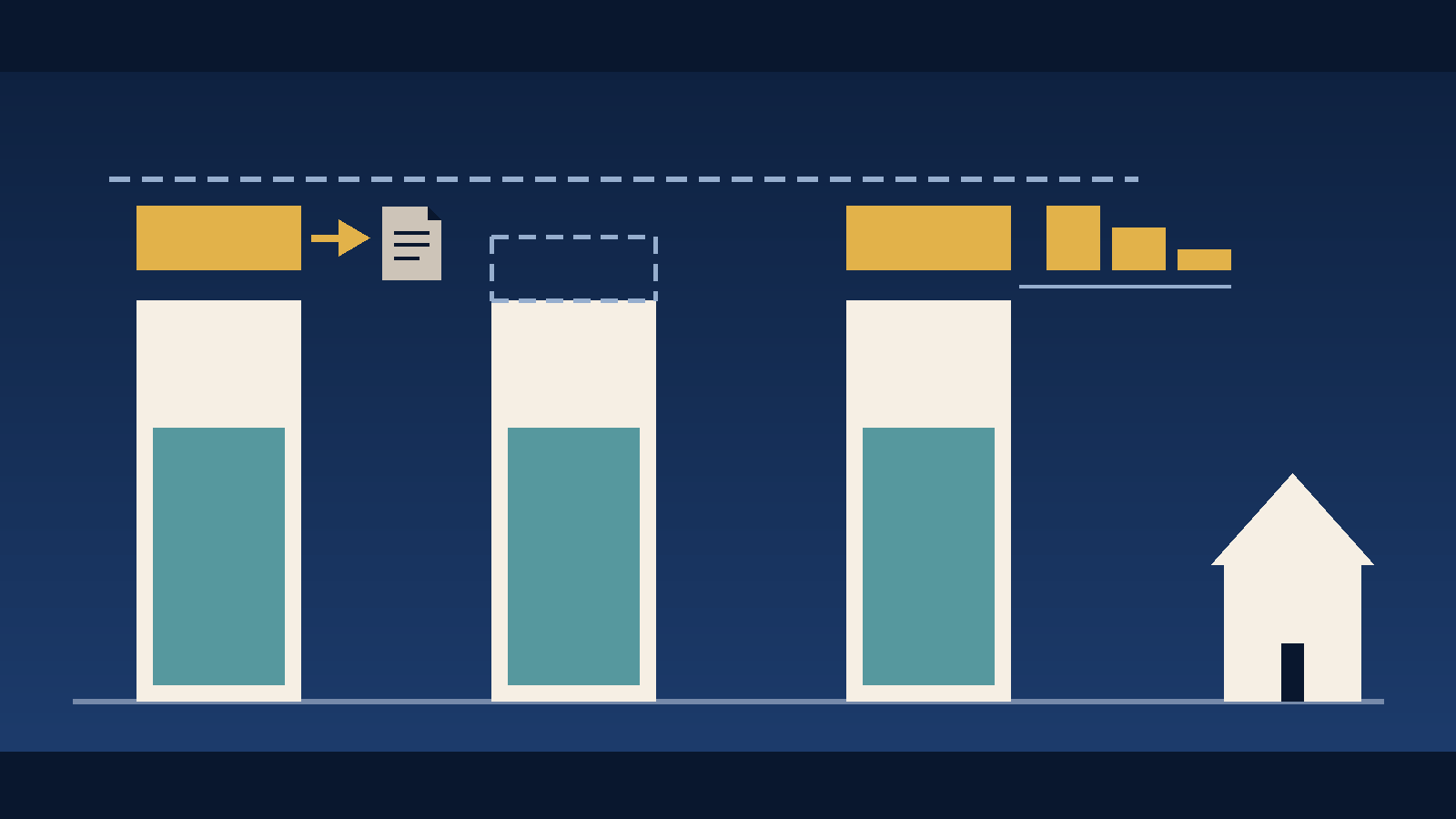
A buyer's offer asks you to pay $10,500 of their closing costs. Should you say yes, or take $10,500 off the price? In our worked example below, the two leave you within about $600 of each other. For the buyer, the credit means about $10,000 less cash at closing, in exchange for a monthly payment about $63 higher. Whether a credit is allowed at all, and how large it can be, is set by the buyer's loan program, not by you or the buyer.
What a seller concession can pay for
A seller concession, which the loan guides call a seller or interested party contribution, is money you agree to pay toward the buyer's costs of buying. It comes off your proceeds at closing and shows up as a credit on the buyer's side. It is not cash handed to the buyer. Each program's own guide says what it may cover:
- Conventional (Fannie Mae). The buyer's closing costs, including prepaids, and up to 12 months of HOA assessments after closing. Not the down payment, reserves, or the buyer's minimum contribution. The credit also cannot exceed the buyer's actual closing costs; any excess is treated as a sales concession (Selling Guide B3-4.1-02).
- FHA. Origination fees, other closing costs, prepaid items and discount points. The 6% also covers seller-paid interest rate buydowns and the upfront mortgage insurance premium. It may not be used for the buyer's minimum required investment (HUD Handbook 4000.1, II.A.4.d.iii(G)).
- VA. VA defines a concession as anything of value the seller adds that the seller "is not customarily expected or required to pay or provide." Its examples include paying the VA funding fee, prepaying the buyer's taxes and insurance, funding a temporary buydown, and paying off the buyer's debts (M26-7, Chapter 8, Topic 5).
- USDA. Contributions must serve an eligible loan purpose. They cannot pay the buyer's personal debts or include personal property as an inducement (HB-1-3555, paragraph 6.2 C).
Where it goes in the Texas contract
On the current TREC One to Four Family Residential Contract (Resale), TREC No. 20-19, the credit is one blank. Paragraph 12A(1)(b) says the seller pays "an amount not to exceed $____ to be applied to Buyer's Expenses other than brokerage compensation or contributions under Paragraph 12B below." Three details matter:
- "Not to exceed." The blank is a ceiling. If the buyer's allowable costs come in lower, the unused part is not paid out.
- Paragraph 12C. If a government loan program bars the buyer from paying certain fees, the 12A(1)(b) money goes to those fees first.
- Brokerage compensation is separate. A seller contribution toward the buyer's broker goes in Paragraph 12B, not in 12A(1)(b).
After the option-period inspection, a negotiated credit is usually written on TREC's Amendment to Contract, TREC No. 39-11. The form has no line called a "repair credit." Instead, item 4 changes the 12A(1)(b) amount, item 1 changes the sales price, and item 2 lists repairs the seller will complete. Which one you use changes how the lender sees it. FHA lists "repair allowances" among inducements to purchase, which reduce the price used for the loan-to-value calculation. USDA requires seller-funded repair money to be held in escrow. Before you agree on a form of words, ask the buyer's agent what the lender needs. Our guide to what happens after an offer is accepted in Texas covers the option period and amendment timing.
How much the buyer's loan allows
The limit comes from the buyer's loan, so the same credit can be fine for one offer and too large for another.
| Buyer's loan | Limit | Measured against | What is left out of the limit |
|---|---|---|---|
| Conventional, principal residence or second home, over 90% LTV | 3% | Lower of sales price or appraised value | Seller costs that are common and customary locally |
| Conventional, 75.01% to 90% LTV | 6% | Same | Same |
| Conventional, 75% LTV or less | 9% | Same | Same |
| Conventional, investment property | 2% | Same | Same |
| FHA | 6% | Sales price | Commissions typically paid by the seller under local or state law, or local custom |
| VA | 4% of concessions | VA reasonable value | The buyer's closing costs and normal discount points |
| USDA guaranteed | 6% | Sales price | Seller-funded repairs (escrowed), the buyer's real estate commission, lender premium-pricing credits |
What happens to money over the limit. Fannie Mae treats it as a sales concession, deducts it from the sales price, and recalculates the loan-to-value. FHA calls it an inducement to purchase and reduces the price dollar for dollar before applying its LTV. VA calls concessions over 4% "excessive, and unacceptable." In practice, an over-limit credit means reworking the contract before closing, not a bigger check for the buyer.
The VA difference. VA is the one program where paying the buyer's ordinary closing costs does not use up the limit at all. Its own example: if the market norm is 2 points and the seller pays 5, the extra 3 count as a concession. So a VA buyer can ask you to cover all normal closing costs and still have room for a funding-fee payment or a temporary buydown within the 4%. VA also bars the veteran from paying certain fees, and Paragraph 12C sends your 12A(1)(b) money to those fees first. If your buyer is using VA, our guide to VA appraisals and minimum property requirements covers the other place a VA offer differs.
How the appraiser treats a credit
Raising the price and adding a matching credit ("price up, credit back") only works if the home appraises at the higher price. The rules make that harder than it sounds:
- Your contract is disclosed. Fannie Mae requires the appraiser to report the total dollar amount of seller-paid concessions on the subject sale and describe what they pay for (Selling Guide B4-1.3-02).
- Comparable sales are adjusted. When a comparable sale included concessions, the appraiser must adjust for their effect on its price, based on the market at the time. Guidance B4-1.3-09 says a dollar-for-dollar deduction equal to the seller's cost is "not appropriate" unless the appraiser finds the market reacted by the full amount. Adjustments can only go down: "Positive adjustments for sales or financing concessions are not acceptable."
- The limit follows the lower number. For conventional loans, the percentage is taken from the lower of the price or the appraised value. At a $350,000 price with an appraisal of $340,000, a 3% limit is $10,200, not $10,500.
Worked example: credit, price cut, or buydown
Here is one $350,000 San Antonio sale done three ways. The seller spends the same $10,500 in the credit and buydown cases and takes the same amount off the price in the price-cut case. Every input is an illustration we chose, not a quote:
- a conventional buyer putting 5% down on a principal residence, so the 3% limit applies and $10,500 sits exactly at it;
- a 30-year fixed rate of 6.5%;
- $12,000 of buyer closing costs, prepaids and escrow deposit;
- total brokerage compensation of 5% of the price, paid by the seller. TREC's contract states that brokerage compensation "is not set by law and is fully negotiable";
- a seller-paid owner's title policy at the Texas Department of Insurance basic premium;
- $3,000 of other seller costs.
Seller net is before paying off any mortgage. The buydown is a 2-1 temporary buydown: the rate is 4.5% in year 1, 5.5% in year 2, and 6.5% after that. It costs $7,567.50, the total of the payment differences over 24 months. The rest of the $10,500 goes to closing costs.
| A. 3% closing-cost credit | B. Equal price reduction | C. 2-1 buydown plus credit | |
|---|---|---|---|
| Contract price | $350,000 | $339,500 | $350,000 |
| Seller-paid toward buyer | $10,500 credit | None | $7,567.50 buydown + $2,932.50 credit |
| Brokerage compensation at 5% | $17,500 | $16,975 | $17,500 |
| Owner's title policy (TDI basic premium) | $2,015 | $1,963 | $2,015 |
| Other seller costs | $3,000 | $3,000 | $3,000 |
| Seller net before payoff | $316,985 | $317,562 | $316,985 |
| Buyer's loan (95%) | $332,500 | $322,525 | $332,500 |
| Buyer's cash to close | $19,000 | $28,975 | $26,567.50 |
| Buyer's monthly principal and interest | $2,101.63 | $2,038.58 | $1,684.73 in year 1, $1,887.90 in year 2, then $2,101.63 |
What the numbers show:
- For you, B nets $577 more. In this example, the price cut comes out slightly ahead because the percentage-based brokerage compensation and the title premium both shrink with the price. That gap depends on the compensation you agreed to, so run it with your own listing terms.
- For a cash-short buyer, A is worth far more. The credit leaves the buyer bringing $9,975 less to closing, at a cost of $63.05 a month in principal and interest. A buyer who can cover the down payment but not the closing costs may only be able to close with A.
- For a payment-focused buyer, C is the strongest. The buydown cuts the first-year payment by $416.90 a month and the second-year payment by $213.73, then returns to the note rate. Ask the buyer's lender how the buydown counts toward the program limit and how the buyer qualifies. FHA's 6% expressly includes temporary buydowns, and VA counts escrowed buydown funds toward its 4%.
The worked figures use 5% brokerage compensation, the $3,000 cost line and the 6.5% rate only to make the comparison concrete. They are not typical, recommended or current rates. The title premiums apply the TDI formula for policies over $100,000: $780 plus 0.00494 times the amount above $100,000, rounded.
When a credit helps you more than a price cut
- Your likely buyer is short on cash, not income. Some buyers qualify for the payment but are short on closing costs on top of the down payment. A credit addresses exactly that; in the example above, a price cut of the same size lowers their cash to close by only $525.
- Offers are coming with FHA, VA or USDA financing. These programs allow meaningful seller help, and for VA, ordinary closing costs sit outside the 4% limit.
- Rate is the objection. A seller-funded buydown answers "the payment is too high" more directly than a price cut of the same size does.
- The price is supported by recent sales. If comparable sales support your price, a credit keeps the contract price there, as long as the appraisal does too.
When a price cut is the better move
- You are just above a search bracket. Buyers filter listings by price. A home at $352,000 does not appear in a search capped at $350,000, and no credit fixes that.
- The appraisal is the risk. Adding a credit on top of a price the comparable sales barely support invites a low appraisal and a second negotiation.
- Carrying costs are adding up. Every extra month of mortgage, taxes, insurance and utilities is money you do not get back, and a credit only helps once a buyer is already interested. If showings are thin, a credit does not change what shoppers see first: the price.
- The buyer's program limit is already used. A conventional buyer with 5% down and a 3% limit cannot use more credit, but can still accept a lower price.
Neither choice guarantees a sale or a result. These are the trade-offs to weigh with your agent against actual offers.
Buyer's agent compensation versus closing-cost help
Since the 2024 changes to how buyer's agents are paid, sellers are often asked for two different things: help with the buyer's closing costs, and payment toward the buyer's broker. The Texas contract keeps them apart. Closing-cost help goes in Paragraph 12A(1)(b), which expressly excludes brokerage compensation. Payment toward the buyer's broker goes in Paragraph 12B(1), which sets out a dollar amount or a percentage of the sales price.
Whether a seller-paid buyer's agent commission counts against the buyer's concession limit, answered from each program's own guidance:
- Conventional (Fannie Mae). A Selling Notice dated April 15, 2024 says that when the seller pays the buyer's agent commission "in accordance with local common and customary practices, these amounts are not required to be counted towards the IPC limits."
- FHA. Handbook 4000.1 says real estate commissions "typically paid by the seller under local or state law, or local custom" are not an interested party contribution. The handbook does not separately address the buyer's agent. Ask the lender how they apply this to a 12B payment.
- VA. Circular 26-24-14, which VA still lists as valid until rescinded, says "VA does not treat the seller's payment of buyer-broker charges as a seller concession."
- USDA. Seller funds used "to pay the buyer's real estate commission fees are not included" in the 6% limit.
Under that guidance, a 12B payment made in line with local custom generally does not use up the buyer's closing-cost limit, but the lender makes that call on each file. Our cost to sell a house in San Antonio guide covers how buyer-agent compensation fits into your overall selling costs.
A note on taxes
IRS Publication 523 (2025), Selling Your Home, lists "Any mortgage points or other loan charges you paid that would normally have been the buyer's responsibility" among the selling expenses that reduce your amount realized. Publication 936 says the buyer treats seller-paid points as if the buyer paid them. How a particular credit is treated on your return is a question for a tax professional.
What the local market says right now
| Area and source | Median price | Months of inventory | Pace | Sold price vs. original list |
|---|---|---|---|---|
| San Antonio-New Braunfels metro (Texas A&M Real Estate Research Center) | $299,950 | 6.0 | 116 days to sell, which includes days to close | 92.80% |
| San Antonio area (San Antonio Board of REALTORS, released September 10, 2026) | $299,275 | 5.87 | 82 days on market | 92.8% |
| Bexar County (Texas A&M) | $280,000 | 5.59 | Not published by county | Not published by county |
| Comal County (Texas A&M) | $424,995 | 7.48 | Not published by county | Not published by county |
| Guadalupe County (Texas A&M) | $284,990 | 5.70 | Not published by county | Not published by county |
Kendall County, which includes Boerne, is not in Texas A&M's county housing table, and we could not read a current Kendall figure from a primary source, so we have left it out rather than estimate it. Neither source publishes how often local sellers pay concessions or how large they are. We have not found a local concession rate, and we are not importing a national one. What the data does show is that the average San Antonio-area sale in August closed at about 93% of its original list price. That gap between first asking price and sale price comes from price reductions and negotiation; the data does not say how much of each. The practical question is which form of giving ground works best for your buyer. Our market update tracks these figures month to month.
Questions to ask your listing agent
- What loan types are the offers and showing feedback coming from, and what is each one's contribution limit at the likely down payment?
- Do the recent comparable sales support the price if we add a credit, and did those sales include concessions?
- If I cut the price instead, which search brackets does the new price reach?
- What is my net on each structure, using my actual listing agreement, payoff and title costs?
- If the buyer asks for a repair credit after the inspection, should we change 12A(1)(b), change the price, or do the repairs, and what will the buyer's lender accept?
- Is a request for buyer's agent compensation under 12B separate from the closing-cost request, and how does the buyer's lender count each?
- If the appraisal comes in low, how does the concession change?
What this page is not
It is not legal, tax, or lending advice, and it is not a pricing recommendation, a net sheet or a loan approval. The worked figures are our arithmetic from inputs we chose, labeled as illustrations. The buyer's lender decides what its program allows on a given file, your title company prepares the settlement figures, and your contract decides who pays what. Confirm every number with the party that issues it.
Where these figures come from
| Contract terms | TREC No. 20-19, One to Four Family Residential Contract (Resale), form dated 05-04-2026, listed effective July 1, 2026; Paragraphs 7D, 12A, 12B and 12C. TREC No. 39-11, Amendment to Contract, items 1, 2, 4, 5 and 6. Read 2026-09-27. |
|---|---|
| Conventional limits and appraisal | Fannie Mae Selling Guide B3-4.1-02 (section dated 05/07/2025), B4-1.3-02 and B4-1.3-09 (06/04/2025), in the Guide edition published September 2, 2026. Fannie Mae Selling Notice, Real Estate Commissions and Interested Party Contributions, April 15, 2024. Read 2026-09-27. |
| FHA | HUD Handbook 4000.1, as posted with the August 12, 2026 update, II.A.4.d.iii(G) and (H). Read 2026-09-27. |
| VA | VA Lenders Handbook M26-7, Chapter 8, Topics 4 and 5, from VA's published chapter PDF; VA Circular 26-24-14 and Change 1, listed on VA's circulars page as valid until rescinded. Read 2026-09-27. |
| USDA | HB-1-3555, Chapter 6, paragraph 6.2 C (revised 05-05-25). Read 2026-09-27. |
| Tax | IRS Publication 523 (2025), Worksheet 2, line 2d; IRS Publication 936 (2025), Points paid by the seller. Read 2026-09-27. |
| Market | Texas A&M Texas Real Estate Research Center, Housing Report for San Antonio-New Braunfels, August 2026, and its Housing Activity county data; San Antonio Board of REALTORS August 2026 market statistics release. Read 2026-09-27. |
| Worked arithmetic | Monthly principal and interest on a 30-year fixed loan: standard amortization formula. Buydown cost: 12 × ($2,101.63 − $1,684.73) + 12 × ($2,101.63 − $1,887.90) = $7,567.50. Title premium: TDI basic premium formula for policies from $100,001 to $1,000,000, effective March 1, 2026. All inputs are illustrative. |
| Published | 2026-09-28 |
| Data through | 2026-09-27 |
| Next review due | 2026-10-28, or sooner if any program guide above changes its contribution rules. |
| Corrections | If a figure on this page does not match its source, tell us and we will correct it and update the review date. |
Sources
- Texas Real Estate Commission, One to Four Family Residential Contract (Resale), TREC No. 20-19. Read 2026-09-27.
- Texas Real Estate Commission, Amendment to Contract, TREC No. 39-11. Read 2026-09-27.
- Fannie Mae, Selling Guide B3-4.1-02, Interested Party Contributions (IPCs). Read 2026-09-27.
- Fannie Mae, Selling Guide B4-1.3-09, Adjustments to Comparable Sales. Read 2026-09-27.
- Fannie Mae, Selling Guide B4-1.3-02, Subject and Contract Sections of the Appraisal Report. Read 2026-09-27.
- Fannie Mae, Selling Notice: Real Estate Commissions and Interested Party Contributions, April 15, 2024. Read 2026-09-27.
- U.S. Department of Housing and Urban Development, FHA Single Family Housing Policy Handbook 4000.1. Read 2026-09-27.
- U.S. Department of Veterans Affairs, VA Lenders Handbook M26-7, Chapter 8: Borrower Fees and Charges and the VA Funding Fee. Read 2026-09-27.
- U.S. Department of Veterans Affairs, Circular 26-24-14, Temporary Local Variance for Certain Buyer-Broker Charges, and the VA circulars list. Read 2026-09-27.
- USDA Rural Development, HB-1-3555, Single Family Housing Guaranteed Loan Program Technical Handbook, paragraph 6.2 C. Read 2026-09-27.
- Internal Revenue Service, Publication 523 (2025), Selling Your Home. Read 2026-09-27.
- Internal Revenue Service, Publication 936 (2025), Home Mortgage Interest Deduction. Read 2026-09-27.
- Texas Department of Insurance, Texas Title Insurance Basic Premium Rates, effective March 1, 2026. Read 2026-09-24.
- Texas A&M Texas Real Estate Research Center, Housing Report for San Antonio-New Braunfels, August 2026 and Housing Activity data. Read 2026-09-27.
- San Antonio Board of REALTORS, August 2026 San Antonio market statistics release. Read 2026-09-27.
Related guides
For the full list of what you pay to sell, see the cost to sell a house in San Antonio. To see how a credit lands on the buyer's side of the settlement statement, read cash to close in San Antonio. Selling in the Hill Country? Our Boerne area page covers that market. When you are ready to list, our seller page explains how we work with sellers.
Run your numbers with us
If you have an offer asking for a credit, or you are deciding how to respond to a slow listing, send us the offer or your listing terms. We will lay out your net for a credit, a price cut and a buydown side by side, using your own figures.
See your net before you answer a concession request.
Send us the offer or your listing terms. We will compare a credit, a price cut and a buydown using your numbers.