
Use it to compare properties, public facilities, streets, and city programs in the central area.
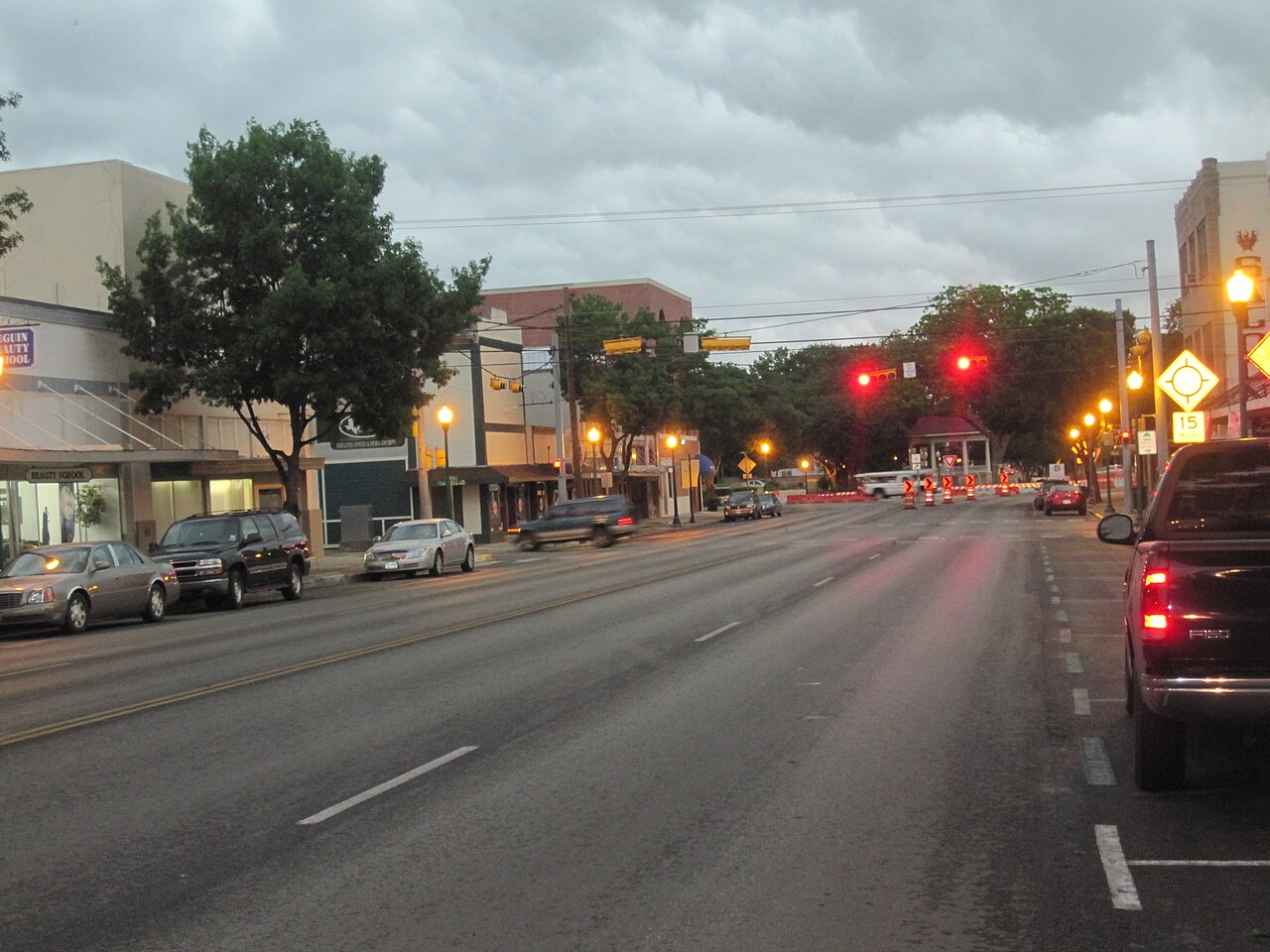
New Braunfels neighborhood guide
Downtown New Braunfels, drawn from the city boundary.
Older housing, civic blocks, Main Plaza, and a working commercial center share a compact map. The useful comparison starts with the exact block, parcel, and route, not a broad downtown label.
Start with the map
This page uses the City of New Braunfels Downtown Boundary.
Downtown is easy to describe loosely and easy to misstate. This guide follows the City of New Braunfels GIS map titled Downtown Boundary, retrieved August 5, 2026. The map includes the central commercial and civic area around Main Plaza and extends across a broader set of adjacent blocks. It is not a substitute for a survey, parcel map, zoning record, or title review.
Historic review boundaries and requirements must be verified separately for the address.
Tax-increment zones and local shorthand can overlap with downtown without defining the same geography.
Housing and block context
Central New Braunfels is a property-by-property comparison.
Within the Downtown Boundary, the built environment can shift quickly between storefront blocks, civic uses, older detached homes, small multifamily buildings, apartments, and infill. A listing headline may use downtown for a broad location signal. That does not tell a buyer how the lot drains, where guests park, whether an alley or easement affects access, or what has been updated behind finished walls.
Older homes and renovations
For an older home, inspect the work rather than assuming a remodel resolves the underlying condition. Ask for permit history where relevant, then match it to the visible work. The inspection scope can include foundation movement, plumbing supply and drain lines, electrical service, roof age, attic ventilation, HVAC, windows, and drainage. A seller disclosure and a general inspection are important starting points, not a complete engineering or sewer evaluation.
Infill and attached housing
Newer construction in a central setting can involve shared walls, compact setbacks, rear access, private drives, or association documents. Confirm the recorded plat, common-area maintenance, parking allocation, insurance responsibility, construction warranties, and whether an adjacent parcel has an approved or proposed project. A nearby vacant lot is a research item, not a promise of future open space.
Commercial adjacency
Downtown activity is part of the location. Visit the specific street at the times that matter for your routine. Note loading, event activity, sound, lighting, access during street work, and the difference between a map route and the route from the front door or garage. A buyer who needs a quiet evening should test an evening. A buyer who will use downtown parking should test parking.
Seller preparation
Central properties benefit from a clear property file. Useful records include permits, service invoices, roof and HVAC documentation, surveys, repair receipts, association information, utility bills when appropriate, and information about parking or access. Avoid making a broad downtown claim when a concrete document can answer the buyer's question more directly.
Ownership costs and restrictions
Build the cost picture from the parcel, not a neighborhood average.
Downtown location does not create one standard tax bill, utility arrangement, flood profile, school assignment, or restriction set. The citywide New Braunfels hub explains why addresses in this market can cross county, school-district, utility, and special-district lines. For a downtown candidate, use current records for the exact parcel before comparing payments or an offer price.
Taxes and exemptions
The City of New Braunfels publishes tax information, but the city rate is only one component of a tax bill. Confirm the current appraisal record, taxing entities, exemption status, and any special district with the county appraisal and tax records for the property. Do not use a seller's past bill as a prediction of a new owner's bill.
City tax informationHistoric and development review
Before planning exterior changes, demolition, an addition, signage, or a use change, check the parcel against the city's current maps and development-services requirements. A location inside the Downtown Boundary does not itself establish historic-district status or a particular approval path.
City downtown resourcesShort-term rentals
Rental use is not a generic investment assumption. City regulations, permit status, deed restrictions, association rules, lender terms, insurance, and tax treatment can all matter. Review the current city program and the recorded documents before pricing a property around a rental plan.
City short-term rental informationInsurance and drainage
River proximity, drainage channels, lot elevation, prior water intrusion, and the location of improvements can change the insurance and repair conversation. Obtain current flood information and an insurance quote for the particular address. Ask about drainage work, claims, and permits without treating a broad downtown label as a flood determination.
City floodplain managementDaily routes and public services
Test the street, then verify the provider.
Downtown's street grid puts Main Plaza, municipal services, restaurants, shops, and river-related destinations within the same central area. That convenience does not eliminate practical questions about parking, traffic patterns, utility infrastructure, or school attendance. These checks work best before the option period runs short.
Parking and access
The city maintains a downtown parking program and map. Current city information says on-street parking is free for the first hour, then $2 per hour, with a $10 daily maximum. Program rules can change, and a house, condo, or commercial-adjacent address may have its own parking limitations. Verify the current map and test the relevant block.
Downtown parking informationUtilities
Do not assume a provider or connection type from the neighborhood name. New Braunfels Utilities offers an infrastructure information portal with general location data for electric, water, wastewater, and hydrant assets. Confirm active service, meter details, capacity, sewer or septic status, and any required extensions with the provider and the seller's documentation.
NBU infrastructure information portalSchools
Attendance zones are address-specific and may change. Verify a prospective address directly with the applicable district before relying on an online map, portal listing, or past assignment. This page does not rank schools or recommend a property based on a school assignment.
Texas school district locatorRoad and project checks
Look beyond the fastest route returned by an app. Drive the route during the hours you expect to use it, including the last blocks near the property. For a planned project, check the city's capital-program materials and the current project limits. A public plan or rendering is not a completion guarantee.
City capital programsA buyer and seller working list
Questions worth answering before the decision gets emotional.
For buyers
- Is the address inside the City Downtown Boundary, a historic district, both, or neither?
- What do the current tax, exemption, insurance, utility, and association records show?
- What did the inspection, permit review, and drainage conversation uncover?
- How does the block function at morning, evening, and event times?
- What nearby land uses, plats, or public projects should be reviewed before closing?
For sellers
- Can the listing distinguish documented updates from cosmetic descriptions?
- Are parking, access, permits, survey, utility, and association details ready to share?
- Does the price comparison account for condition, lot, block, and competing inventory?
- Are flood, drainage, and historical questions answered with records rather than assumptions?
- Have pending repairs or public work near the property been described accurately?
The New Braunfels area guide remains the comparison hub for citywide taxes, utilities, growth areas, and property-level due diligence. For dated citywide context, see the New Braunfels City Report 2026.
Common questions
Downtown New Braunfels FAQs
What boundary does this Downtown New Braunfels guide use?
It uses the City of New Braunfels GIS Downtown Boundary map, verified August 5, 2026. It does not substitute the Downtown Historic District, TIRZ 3, or an informal core.
Does a Downtown New Braunfels address establish flood risk or utility service?
No. Flood, drainage, insurance, utility service, taxes, and school attendance must be checked for the exact parcel using current records and provider or district confirmation.
What is different about buying an older central home?
Age and condition can make permits, systems, drainage, foundation, plumbing, electrical work, parking, easements, and historic-review questions more important. The inspection scope should fit the property.
Can a buyer assume a downtown property can be used as a short-term rental?
No. Review current city rules, permits, recorded restrictions, association documents, lender terms, insurance, and tax treatment before treating rental use as available.
Sources and review notes
Primary sources used for this guide
Reviewed August 5, 2026. Boundaries, parking rules, projects, tax rates, and property conditions can change. Verify the original source and the exact address before acting.
Boundary and city programs
Property verification
Compare the actual address
Bring the property, not just the neighborhood name.
Velvet Realty Group can help organize the records, routes, comparable homes, and questions that apply to a specific Downtown New Braunfels address.