
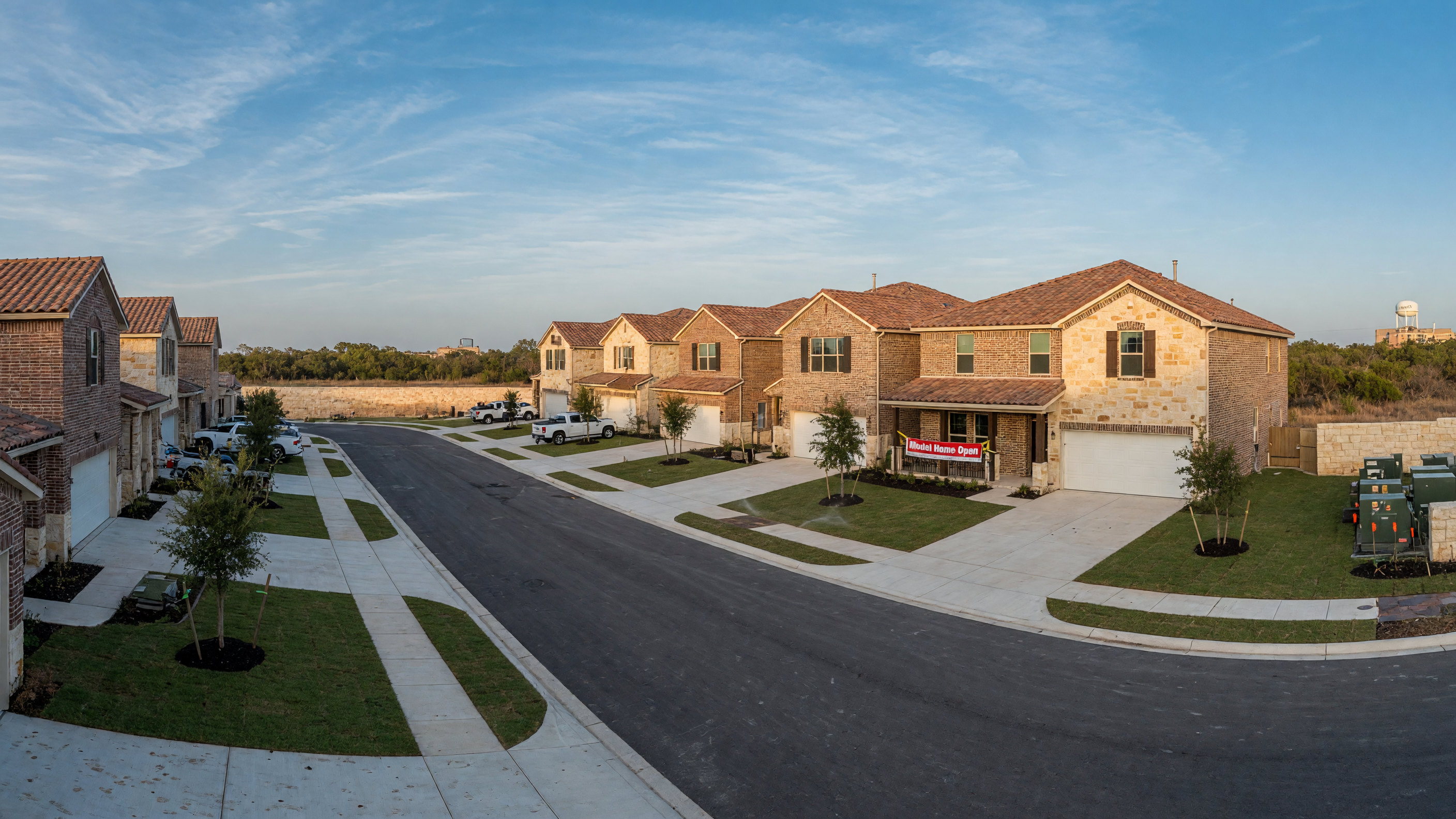
New Construction Homes in San Antonio
San Antonio is one of the fastest-growing metro areas in Texas, and the new construction market reflects it. From far West Side communities to the I-35 corridor between San Antonio and New Braunfels, builders are putting up everything from entry-level production homes to semi-custom Hill Country builds.
Builders market hard. They spend millions on model homes, design studios, and sales teams to make you feel like the process is easy. But new construction is not the same as resale — the contracts, the warranties, the upgrade pricing, and the timeline all work differently. Having your own agent costs you nothing on new construction but protects you at every step. Call 210-880-4519 or schedule a consultation before you visit any model home.
The major growth corridors include far West Side, Helotes, Boerne, New Braunfels, Cibolo, Schertz, and Universal City. Each area has different builders, price points, school districts, and commute times to the JBSA bases. Whether you are a first-time buyer, a military family PCS-ing to the area, or relocating from out of state, understanding these differences before you tour a model home will save you time, money, and regret.
Search Available New Homes in San Antonio
Want to see exactly what builders have on the market right now? New Home Buddy is a free tool that lets you browse active new construction inventory across the San Antonio area in real time — no commitment, no sales pressure, just a clear view of what is currently available from builders near you.
Browse New Construction InventoryPowered by New Home Buddy · Free to use · No account required
What builder incentives are actually available right now?
Builders use incentives to move inventory, especially on standing inventory and quick-move-in homes. The most common incentives include interest rate buydowns (where the builder pays to lower your rate for the first one to two years), closing cost credits (typically $5,000 to $15,000 toward your closing costs), free upgrade packages (design studio credits or pre-selected premium finishes), lot premiums waived, and appliance or smart-home packages.
Here is what we want you to know: incentives change quarterly and vary by community. A builder offering a 2-1 rate buydown in January may shift to a closing cost credit by March depending on inventory levels and sales velocity. What is advertised online may not be the best deal available — it is just what is public.
As your buyer's agent, we can negotiate on top of what is advertised. Builders have internal authority to add incentives that are not posted publicly, especially on standing inventory or homes that have been sitting. We track which builders are motivated in which communities and use that knowledge to structure your offer for maximum value.
One important note: standing inventory and quick-move-in homes typically get better incentives than to-be-built homes. If you have flexibility on timing, a spec home can save you significantly compared to building from scratch.
| Builder | Rate Buydown | Closing Costs | Upgrades | Lot Premium |
|---|---|---|---|---|
| D.R. Horton | Yes — mortgage incentive programs | Up to $10K on standing inventory | Smart Home package standard | Select communities |
| Meritage Homes | Yes — mortgage financing incentives | Select communities | Energy-efficient packages standard | Standing inventory only |
| Perry Homes | Select communities | Design studio credits | Premium finish packages | Occasionally |
Incentives are approximate and change frequently. Contact us for current availability in your target community.
What are the benefits of buying a new construction home?
New construction has real advantages, especially if you do not want to deal with renovation surprises, aging systems, or someone else's design choices. Here is what you get:
Customization
Choose your floor plan, lot, finishes, and structural options. Most builders let you personalize during a design studio appointment before construction begins.
Modern Energy Efficiency
New homes are built to current energy codes with better insulation, double-pane windows, high-efficiency HVAC, and LED lighting. Lower utility bills from day one.
Builder Warranties
Most builders offer a structural warranty (typically 10 years), a mechanical warranty (2 years on HVAC, plumbing, electrical), and a cosmetic/appliance warranty (1 year). Coverage varies by builder.
Smart Home Tech Standard
Many builders now include smart thermostats, doorbell cameras, and connected lighting as standard features. Some, like D.R. Horton, include full smart-home packages.
Lower Early Maintenance
Everything is brand new — roof, HVAC, appliances, plumbing. You are not replacing a water heater in year two or dealing with deferred maintenance from a previous owner.
No Renovation Surprises
With resale, you never truly know what is behind the walls. New construction eliminates the risk of discovering mold, outdated wiring, or foundation issues from day one.
The trade-offs to keep in mind
- Cookie-cutter neighborhoods. Production builders build similar floor plans across communities. If you want a truly unique home, new construction may feel repetitive.
- Builder-grade finishes unless upgraded. The base price gets you basic countertops, standard cabinets, and entry-level flooring. Upgrades cost extra — and they add up fast.
- Construction delays. Weather, material shortages, and labor issues can push your closing date. Budget for flexibility in your move-in timeline.
- Lot sizes are shrinking. New developments typically offer smaller lots than older neighborhoods. If yard space is a priority, check lot dimensions before you commit.
How is buying new construction different from buying an existing home?
If you have only bought resale before, new construction will feel different in almost every way. Here is what to expect:
The model home experience
Model homes are staged to sell. Every upgrade is on display — the quartz countertops, the hardwood floors, the crown molding. The base price gets you none of that. A good agent helps you separate what is standard from what costs extra.
Builder sales reps vs. your own agent
The on-site sales representative at a model home works for the builder. Their job is to sell homes for the builder, not to negotiate the best deal for you. Having your own buyer's agent costs you nothing — the builder pays the commission — but it gives you representation on contract review, negotiations, and inspection coordination.
Upgrades and options work differently
In resale, you negotiate a price and get the house as-is. In new construction, you select structural options, design upgrades, and lot premiums that affect the final price. Some upgrades are worth it; others are overpriced compared to doing them yourself after closing. We help you prioritize.
Contract differences
Builder contracts are written to protect the builder. They may include escalation clauses, limited contingency periods, and language that gives the builder flexibility on completion dates. Standard TREC contracts used in resale transactions do not apply. We review every line so you know what you are signing.
Timeline differences
Resale typically closes in 30 to 45 days. New construction can take 4 to 8 months from contract to closing if you are building from scratch. Standing inventory and spec homes can close in 30 to 60 days. Your loan lock and living situation both need to account for the longer timeline.
Inspections are still important
Even brand-new homes need inspections. We recommend a third-party inspection at the pre-drywall stage and again at the final walkthrough. Construction quality varies between builders and even between crews on the same job. An independent inspector catches things the builder's quality control process missed.
What should I look for during a new construction walkthrough?
Every builder offers a final walkthrough before closing. This is your chance to identify defects and incomplete work. Here is what to look for and why a third-party inspector is still worth it.
The builder walkthrough and punch list
The builder will walk you through the home and note any visible issues on a "punch list" — a list of items they agree to fix before closing. Common punch list items include paint touch-ups, appliance adjustments, missing hardware, and minor cosmetic defects. The builder is responsible for completing the punch list, but the scope is limited to what is visible and agreed upon.
Why you still need a third-party inspection
The builder's walkthrough is not a substitute for an independent home inspection. A third-party inspector will check things the builder's team may not flag: HVAC calibration, electrical panel labeling, grading and drainage, window seal integrity, plumbing pressure, and structural alignment. Even new construction can have defects that are not visible to an untrained eye.
Common new-build issues to watch for
Hairline cracks in drywall are common as the foundation settles. Most are cosmetic, but larger cracks may indicate structural issues.
New HVAC systems need proper calibration. An inspector checks airflow, refrigerant levels, and thermostat accuracy across all zones.
Water should flow away from the foundation. Poor grading can lead to foundation damage, moisture intrusion, and drainage issues over time.
Fogging between panes indicates a broken seal. Check every window for condensation, proper operation, and weatherstripping.
Uneven paint, crooked fixtures, gaps in trim, and scratched surfaces. These are typically covered by the builder's punch list.
All outlets, switches, faucets, and fixtures should be tested. GFCIs in wet areas should trip properly. Water pressure should be consistent.
What is typically covered by warranty vs. what is not
Builder warranties typically cover structural defects (10 years), major mechanical systems like HVAC and plumbing (2 years), and cosmetic issues and appliances (1 year). What is not covered: normal wear and tear, damage from homeowner modifications, landscaping, and appliances not installed by the builder. Always read the warranty document carefully — every builder's coverage is different.
Which San Antonio-area builders should I know about?
The San Antonio metro has an active new construction market with dozens of national and regional builders. Below is an organized overview of the builders currently active in San Antonio and surrounding areas. We do not rank or endorse any builder — our job is to help you understand the differences and negotiate the best deal regardless of which builder you choose.
National Builders
Large-scale builders active in San Antonio now.
Ashton Woods Homes
Active in the San Antonio area.
Beazer Homes
Active in the San Antonio area.
CastleRock Communities
Active in the San Antonio area.
Centex Homes
Active in the San Antonio area.
Century Communities
Active in the San Antonio area.
DRB Homes
Active in the San Antonio area.
D.R. Horton
Active in the San Antonio area.
Drees Homes
Active in the San Antonio area.
Empire Communities
Active in the San Antonio area.
Meritage Homes
Active in the San Antonio area.
M/I Homes
Active in the San Antonio area.
Pulte Homes
Active in the San Antonio area.
Texas Regional Builders
Texas-based builders with a strong local presence.
Bellaire Homes
Active in the San Antonio area.
Chesmar Homes
Active in the San Antonio area.
Coventry Homes
Active in the San Antonio area.
David Weekley Homes
Active in the San Antonio area.
Davidson Homes
Active in the San Antonio area.
Everview Homes
Active in the San Antonio area.
First America Homes
Active in the San Antonio area.
Hakes Brothers
Active in the San Antonio area.
Highland Homes
Active in the San Antonio area.
HistoryMaker Homes
Active in the San Antonio area.
Joseph Creek Homes
Active in the San Antonio area.
Legend Homes
Active in the San Antonio area.
Oakmont Homes
Active in the San Antonio area.
Perry Homes
Active in the San Antonio area.
Rosehaven Homes
Active in the San Antonio area.
Scott Felder Homes
Active in the San Antonio area.
Sitterle Homes
Active in the San Antonio area.
Starlight Homes
Active in the San Antonio area.
Texas Homes
Active in the San Antonio area.
TwoTen Communities
Active in the San Antonio area.
View Homes
Active in the San Antonio area.
How do VA and FHA loans work with new construction?
This is where Jonathan's mortgage loan originator license makes a real difference. As both a licensed Realtor and a Mortgage Loan Officer (NMLS# 2792614), Jonathan handles your financing and your real estate purchase as one coordinated process — not two separate conversations between a lender and an agent.
VA Loans for New Construction
VA loans work for new construction, and builders in the San Antonio area accept them regularly. VA loans offer $0 down payment, no PMI, competitive rates, and limited closing costs. The VA funding fee applies unless you have a service-connected disability exemption.
There are two main approaches: VA purchase (you get a standard VA loan for a completed or nearly completed home) and the VA one-time close construction loan (one loan that covers both construction and permanent financing, reducing closing costs).
FHA Construction-to-Permanent
FHA loans work well for new construction buyers who want lower credit requirements (580+ with 3.5% down). The FHA construction-to-permanent loan combines your construction financing and permanent mortgage into a single closing, reducing total closing costs.
Builder financing can also work with FHA, but it is important to compare the builder's lender rates and terms against your own lender. Having Jonathan as both your agent and your MLO means you get an apples-to-apples comparison.
The mortgage expertise advantage
When your agent is also your MLO, your financing and your real estate move together from day one. No dropped handoffs between two offices. No waiting for the lender to email the agent. No confusion about where you are in the process. Jonathan coordinates the loan, the contract, and the timeline as one process.
Where are the best new construction communities near JBSA?
The best community depends on which base you are commuting to, your budget, and your lifestyle preferences. Here is a breakdown organized by base proximity.
Near JBSA-Lackland
Helotes
15–20 min to Lackland
Hill Country feel with larger lots and new construction from Highland Homes, Perry Homes, and Scott Felder. Crescent Hill is a key community. Lackland housing guide →
Far West San Antonio
15–25 min to Lackland
Alamo Ranch and surrounding communities with Lennar, D.R. Horton, and KB Home. Entry-level to mid-range with established retail and dining. Lackland housing guide →
Near JBSA-Randolph
Cibolo
10–15 min to Randolph
Top-rated schools, master-planned communities like Cibolo Canyons and Turning Stone. Popular with military families and first-time buyers. Randolph housing guide →
Schertz
10–20 min to Randolph
Affordable new construction options with Lennar, KB Home, and D.R. Horton. Family-friendly neighborhoods with easy I-35 access. Randolph housing guide →
Universal City
5–10 min to Randolph
Closest community to Randolph with growing retail and dining. Short commute and tight-knit community feel. Randolph housing guide →
Near Fort Sam Houston
Far North SA / Stone Oak
15–25 min to Fort Sam
Premium new construction with Hill Country views. The Canyons at Scenic Oaks and other communities with multiple builders active in the far North SA corridor. Fort Sam housing guide →
Live Oak
10–20 min to Fort Sam
Growing area with new construction options and established amenities. Close to I-35 and the Forum shopping area. Fort Sam housing guide →
Featured Communities
The Canyons at Scenic Oaks
Hill Country views, larger lots, and established amenities. One of the premier new-construction communities north of San Antonio.
Old Kraemar
West Side growth corridor with Hill Country access and easy commutes to Lackland via US-90.
Crescent Hill
New construction in Helotes with larger lots, Hill Country feel, and proximity to dining and entertainment on Bandera Road.
Alamo Ranch
Established master-planned community with retail, dining, pools, and trails. Strong family community with NEISD feeder schools.
Veramendi
One of the fastest-growing master-planned communities in New Braunfels with expanding amenities, trails, and parks.
Turning Stone
Active community along the I-35 corridor with entry-level and move-up options in the SCUCISD school zone.
Cibolo Canyons
Master-planned with Hill Country views, multiple builders, and strong resale values near I-35 and Randolph.
Meyer Ranch
Hill Country living at a more accessible price point with growing amenities and new phases opening regularly.
What's a new construction timeline from contract to closing?
New construction timelines vary depending on whether you are buying standing inventory or building from scratch. Here is a realistic breakdown of the typical process:
Pre-Approval
1–2 weeksGet pre-approved before you tour. Jonathan handles this in-house as your agent with mortgage expertise.
Model Home Visits
1–4 weeksTour communities, compare builders, review floor plans and included features. Bring your agent.
Contract & Design
1–2 weeksSign the purchase agreement, select your lot, and choose structural options and design upgrades.
Construction
4–7 monthsFraming, MEP, drywall, finishes. Expect pre-drywall and final walkthrough inspections.
Final Walkthrough
1 dayPunch list walkthrough to identify any defects or incomplete items before closing.
Closing
1 daySign final documents, fund the loan, and get your keys. Jonathan coordinates everything.
What can extend the timeline
- •Weather delays — heavy rain, extreme heat, or storms can halt exterior work for days or weeks.
- •Material delays — supply chain disruptions can push delivery of windows, doors, appliances, or specialty materials.
- •Labor shortages — subcontractor availability varies. Busy seasons can slow down framing, electrical, and plumbing.
- •Permit issues — municipal inspections and permit approvals can add time, especially in rapidly growing areas.
What you should be doing during construction
- ✓Stay in contact with your lender (Jonathan) to make sure your loan stays on track.
- ✓Do not make large purchases, open new credit accounts, or change jobs during construction.
- ✓Finalize your homeowners insurance policy before closing.
- ✓Keep records of all communications with the builder.
Can I negotiate on new construction?
Yes, but differently than resale. In a resale transaction, you negotiate directly off the listing price. In new construction, builders rarely drop the base price of a home because it affects the valuation of every other home they have sold in that community. Instead, they negotiate through value-add channels.
Upgrade credits
Design studio credits, free premium flooring, upgraded countertops, or included appliances. These add real value without lowering the base price.
Closing cost credits
Builders can contribute toward your closing costs, rate buydowns, or prepaid items. This is one of the most effective negotiation tools.
Incentive packages
Rate buydowns, HOA fees prepaid for a year, lot premiums waived, or smart-home packages added. The specific incentives depend on what the builder is authorized to offer.
The importance of having an agent who knows what the builder will actually flex on cannot be overstated. We have closed enough new construction deals to know which builders have internal authority to add value and which ones will not budge. That knowledge translates directly into money saved for you.
Is new construction a good option for first-time buyers?
Short answer: it can be one of the best paths to homeownership for first-time buyers — if you go in with clear expectations. Here is why.
Why new construction works for first-time buyers
- No renovation surprises. Everything is brand new — no need to budget for a new roof, HVAC, or plumbing in year one.
- Builder warranties. Structural, mechanical, and appliance warranties protect you during the early years of homeownership.
- Builder financing options. Many builders offer their own financing programs, sometimes with lower rates or additional incentives for using their preferred lender.
- Down payment assistance programs work. TSAHC, TDHCA, and other Texas DPA programs can be used with new construction purchases, reducing your out-of-pocket cost.
What to watch out for
- Upgrade budget creep. The base price is the starting point. Every upgrade you add during the design phase increases your total cost. It is easy to add $30,000 to $50,000 in upgrades without realizing it.
- HOA fees in master-planned communities. Most new construction communities have HOA fees ranging from $50 to $200 per month. These are in addition to your mortgage and property taxes.
- Property tax estimates on unimproved land. The tax assessment on new construction may increase significantly after the home is completed and the land is re-appraised. Your first-year tax estimate may not reflect your long-term tax obligation.
New Construction FAQs
Do I need a Realtor to buy new construction?
Yes, and it typically costs you nothing. The builder pays the buyer's agent commission on most new-construction contracts. The builder's on-site sales agent works for the builder, not for you. Having your own agent gives you someone reviewing the contract, negotiating on your side, and watching for terms that favor the builder. Going to a model home without your own agent is one of the most common mistakes buyers make.
How much earnest money do I need for a new build?
Earnest money on new construction typically ranges from $2,000 to $10,000 depending on the builder and the total purchase price. Some builders require a higher deposit for custom or semi-custom options. Your earnest money is usually applied to your down payment or closing costs at closing.
Can I use a rate buydown incentive with a VA loan?
Yes, in most cases. Builder-offered rate buydowns can often be combined with VA financing. The key is making sure the buydown structure complies with VA guidelines. Jonathan as your agent with mortgage expertise will coordinate with the builder's preferred lender or your own lender to make sure the incentive stacks correctly with your VA loan.
What happens if the builder delays closing?
Builder delays are common, especially for to-be-built homes. Weather, material shortages, labor issues, and permit delays can all push the timeline. Most builder contracts include an estimated closing date rather than a guaranteed one. We review the contract language carefully and make sure your loan lock and living situation are accounted for. If you have a PCS timeline, communicate that to the builder early.
Are HOA fees included in the mortgage?
No. HOA fees are paid separately, typically monthly or quarterly. They are not part of your mortgage payment. Master-planned communities in the San Antonio area typically charge $50 to $200 per month for HOA fees depending on the amenities included. We review the HOA fees and restrictions before you sign.
Do new homes appreciate like resale homes?
New construction can appreciate well, especially in high-growth areas like the I-35 corridor and far North San Antonio. However, the first year can sometimes see modest appreciation because you paid a premium for new construction. Over 5 to 10 years, new homes in desirable communities tend to perform similarly to resale homes in the same area. Location, school district, and community amenities matter more than whether the home is new or existing.
Can I make changes after construction starts?
It depends on the builder and how far along construction is. Most builders allow changes during the design phase and early construction, but changes after drywall or framing are significantly more expensive and may not be possible. Any change orders will affect your price and potentially your timeline. We help you make smart decisions before construction locks in your options.
Where can I search for new construction inventory that is currently available?
We recommend New Home Buddy, a free tool that lets you browse active new construction inventory across the San Antonio area in real time. You can see what builders have on the market right now, including standing inventory and quick-move-in homes, without visiting individual builder websites. Search available new homes now →
Buying new construction is one of the biggest decisions you'll make.
Let us walk you through it — from the first model home visit to the final walkthrough. No pressure, no hype, just honest guidance from two people who actually care about where you end up.
Jonathan Morris — Realtor (TX #794969) · MLO (NMLS# 2792614)