
Velvet Realty Group Blog
Utilities, Tax Jurisdictions and HOAs: An I-35 Corridor Buyer Checklist
A postal city, ZIP code or subdivision name does not tell you who supplies a home's electricity, water and sewer, which taxing units bill it, or whether an HOA applies. Along the I-35 corridor from San Antonio through Schertz and Cibolo to New Braunfels, check each of those for the exact address. This checklist shows where.
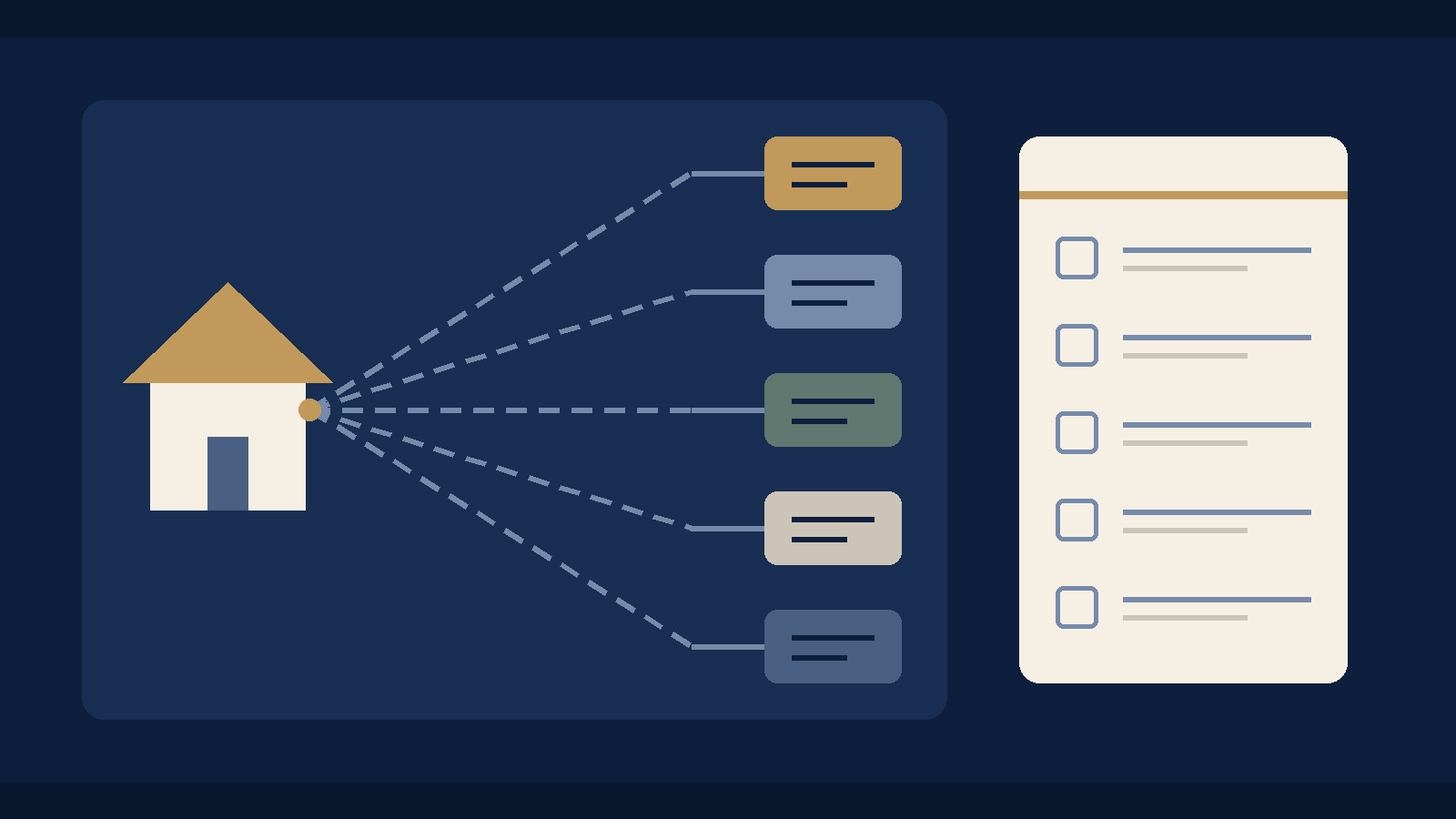
The short version. Keep a separate record for each address you are considering. Confirm electric service, water service, the wastewater arrangement, the taxing units and any HOA obligations one at a time, from the provider, the public record or the association's documents. Do not treat the mailing city, ZIP code or subdivision name as proof of any of them. Utility boundary maps, appraisal records and association documents answer different questions, and a home can sit inside one boundary and outside another.
Compare the documents and the open questions for each address, not one city against another. Leave a line marked "not yet verified" until a record supports it.
This checklist is based on official state, city, county, utility and appraisal district sources, accessed October 31, 2026. An access date is not the date a source was published or last updated. We looked up no specific property, so nothing below is a finding about any one home. It is general guidance, not legal or tax advice.
Can one house have different electric, water and sewer organizations?
Yes, and it is worth assuming until you have checked. Service boundaries are drawn separately for each utility. Two examples from official city pages along the corridor:
- Cibolo water. The City of Cibolo names two water providers serving the city, the City of Cibolo and Green Valley Special Utility District (GVSUD), and tells residents to contact its Utility Administration to find out which one covers an address (Cibolo water information). A Cibolo mailing address does not tell you which one it is.
- Schertz wastewater. The City of Schertz distinguishes its own role as the retail point of contact for wastewater from the treatment role of the Cibolo Creek Municipal Authority (Schertz infrastructure). The organization you call and the organization that treats the water can be different.
Electric service
Find out which electric utility serves the address first. Only then does it make sense to compare retail plans. A map is a screening tool; for a boundary that looks close, a new address, a structure that is not yet connected or a planned service change, get confirmation from the provider.
- Statewide maps. The Public Utility Commission of Texas (PUC) lists retail service-area and competitive-area maps on its electric maps page. It describes its retail map as covering investor-owned utilities and certain municipal utilities, so it is not a parcel-level directory of every municipal utility and cooperative.
- CPS Energy. CPS Energy publishes an electric service boundary map through its subdivision development resources. Use it to screen a location, then confirm the actual address through its residential service contact. The map does not confirm a meter, an active account or finished construction.
- New Braunfels Utilities (NBU). NBU's start, stop and transfer service page links an interactive service-area lookup. We did not test it with an address. Ask NBU what it confirms for the specific structure.
- GVEC. We did not find a working GVEC address-search map. Use its published contact route to ask whether GVEC serves the exact property. Do not assume GVEC, or any other provider, from the city name.
Can I shop for an electricity plan?
Only if the address is eligible, and a ZIP code search does not settle that. CPS Energy's own financial disclosure describes exclusive retail electric service within its service area unless the city and its board opt into competition (CPS Energy disclosure). Power to Choose is the PUC's resource for comparing competitive retail plans and tells shoppers to read each plan's fact sheet, but a plan showing up for a ZIP code does not prove a particular address can buy it. We did not establish the current retail-choice status for NBU or GVEC territory.
Water and wastewater
Check water and sewer separately. A water bill from one organization does not tell you who handles wastewater, or whether the home is on a public sewer at all.
A water or sewer Certificate of Convenience and Necessity (CCN) identifies a certificated service area. The PUC says its CCN viewer can be searched by address or by CCN number, and also that some cities and districts are not required to hold a CCN in every circumstance (PUC water and sewer mapping). So a blank map result does not mean a property has no water or sewer service. It means you need to ask.
| Route | How to use it | Question to ask |
|---|---|---|
| PUC CCN viewer | Open the viewer from the PUC's water and sewer map page and search the address. | Which certificated water and sewer areas cover this property? |
| NBU service-area lookup | The map linked from NBU's service page. | Which service areas does it show, and what does NBU confirm for the structure? |
| City of Cibolo | The water information page sends coverage questions to Utility Administration. | Is the water account with the city, with GVSUD, or something else? |
| Green Valley SUD | The GVSUD site publishes its rates page. | Does GVSUD confirm service to this property, and which current schedule applies? |
| City of Schertz | Utility Billing bills water, sewer and other listed services. | Who bills this property, and who confirms the physical water and wastewater arrangement? |
For San Antonio addresses, we did not find a current, working SAWS address lookup. The only SAWS sewer service map we came across was dated 2010, which is too old to rely on for a parcel today. Use the PUC viewer and confirm with the provider for the exact address.
Septic systems and wells
Ask whether the home has public sewer, an on-site sewage facility (OSSF, usually called a septic system), public water, a private well or another arrangement. Do not assume any corridor address has one or the other.
- The Texas Commission on Environmental Quality (TCEQ) sends OSSF permit questions to the local permitting authority and provides a county-based authority lookup (TCEQ OSSF permits). Its guidance notes exceptions and local requirements, so neither a missing online record nor a seller calling a system "grandfathered" proves it complies.
- If a well is reported, ask for its construction, service and water-testing records and talk with a qualified professional about an evaluation. TCEQ explains that whether a water supply described as a private well is actually regulated as a public water system depends on its circumstances (TCEQ: Am I regulated?).
City limits and ETJ
Write down three things separately: the postal city, whether the property is inside an incorporated city, and whether it is in a city's extraterritorial jurisdiction (ETJ), which lies outside city limits. A mailing label is not proof of city status, and ETJ status tells you nothing about utility service or a tax bill.
- Schertz: the city's map resources link an interactive map.
- Cibolo: the city's GIS hub, which its FAQ links along with a City Limits Map.
- New Braunfels: the city's quick links directory lists a "City Limits and ETJ Map" under Maps & GIS.
- San Antonio: we did not find a working address-level city-limits and ETJ viewer, so we do not link one. Do not infer city limits from the postal city; ask the City.
These are places to look, not boundary determinations. Near a line, confirm with the city.
Property taxes: appraisal record versus tax bill
Three different bodies are involved, and their records are not interchangeable. The Texas Comptroller explains that appraisal districts value property and process exemption applications, taxing units set tax rates, and tax collectors collect the taxes under whatever arrangements apply (Comptroller property tax basics). Taxing units can include the county, the school district, the city and special districts. So the appraisal website is not the tax bill, an estimate is not an amount due, and a city tax rate on its own is not the whole picture.
| County | Appraisal record | Tax bill and payments |
|---|---|---|
| Bexar | Bexar Appraisal District, which links its property search. | Bexar County property tax, which links its tax search. |
| Guadalupe | Guadalupe Appraisal District, which links its property search. | Guadalupe County Tax Resources, then "Property Taxes." |
| Comal | Comal Appraisal District, which links its property search. | Comal County tax search. It separates the property's actual location from the owner's mailing address, so search by location. The county's tax FAQ covers finding balances and receipts. |
A sequence that keeps the records straight:
- Match the address to the appraisal parcel, property ID and legal description.
- Note the tax year shown and the taxing units listed on the appraisal record.
- Keep market value, appraised value, exemptions and taxable value as separate labeled numbers. Do not copy one figure without its label.
- Open the collector's record for the same property and tax year.
- Compare the taxing units, the current statement, the balance and payment status.
- Ask the collector whether another collector or a separate assessment record also applies.
Will the seller's exemptions carry over to me?
Do not count on it. A notice of appraised value lists taxing-unit and valuation information, and the Comptroller explains that residence homestead exemptions depend on the owner qualifying, while appraisal limitations have ownership-related conditions for when they start and end (Comptroller: valuing property). Keep the seller's tax history as history. Your own eligibility and future treatment are separate questions for the appraisal district or a tax professional. The purchase price alone does not tell you the next bill, and we publish no tax estimate here.
MUDs, PIDs and other districts
Treat a public district, a public improvement district (PID) assessment and a private HOA assessment as three separate lines on your list. A municipal utility district (MUD) is one kind of special taxing unit that can appear on an appraisal record; a PID levies assessments on the properties it covers. A provider's name, a subdivision's marketing name or a city boundary does not close any of the three.
One bounded example: the City of New Braunfels' official directory lists a Solms Landing PID service and assessment plan and a PID property search. That shows where to look in that one case. It does not mean any particular property is assessed or what a current charge is, and it says nothing about other New Braunfels properties. TREC's resale contract page also lists district-related notices and addenda among its related forms; whether one applies depends on the transaction.
Questions to answer from records, not from guesses:
- Does the appraisal record list a MUD or another special taxing unit?
- Does the collector's bill show the same unit?
- Does an official PID plan, assessment roll, notice or property search identify this parcel?
- Is the charge collected on the property tax bill or some other way?
- What current official record supports the amount and the period it covers?
HOAs: which document answers which question
The statewide HOA management certificate search is at hoa.texas.gov, and the official certificate requirements page identifies the Texas Real Estate Commission (TREC) as the agency that receives the filings. It is not a Secretary of State database.
What is a management certificate? It identifies who manages the association and where its documents are recorded, plus other specified information. It is a way to find contacts and document references. It is not the declaration, and it does not contain all of a property's restrictions.
Does an empty search mean there is no HOA? No. A search that finds nothing is an unanswered question, not proof of "no HOA" or "no restrictions." Ask the title company to identify the recorded instruments that apply to the parcel and to reconcile them with what the seller and the association provide.
| Document | What it is | How to use it |
|---|---|---|
| Declaration and amendments | Texas Property Code Chapter 209 describes the declaration as a recorded instrument containing restrictive covenants, and separately defines governing instruments (Chapter 209). | Find out which recorded instruments apply to the parcel and get those versions. |
| Bylaws, rules and other governing instruments | Distinguished from the declaration in the same chapter. | Read the ones that bear on how you plan to use the home. |
| Management certificate | Management, recording and other specified association information (requirements). | Locate contacts and document references, not restrictions. |
| Resale certificate | Under Chapter 207, a covered resale certificate includes regular and approved special assessments, unpaid amounts attributable to the property and transfer-related fee information (Chapter 207). | Request the certificate for this property through the transaction. |
| Current itemized charges | Whatever the association states for this transfer. | Ask which dues, transfer charges, document charges and other amounts apply, and as of what date. |
How to ask for the documents. Chapter 207 gives covered purchasers, their agents and other specified people a written-request pathway for subdivision information, and an association may ask for reasonable evidence that the purchaser has a right to acquire the property. That is separate from the records-access rules for owners in Chapter 209. Find the association contact, work out the right request pathway with your agent, the seller or the title company, and keep the dates you asked and heard back. Chapter 207 and TREC's HOA membership addendum do not cover condominium sales, which follow different procedures not covered here.
TREC also maintains a Seller's Disclosure Notice form. Whether and how a particular seller completes it is a question for the transaction.
The address checklist
Use one copy per property. This is our working list, not an official form or a substitute for professional review. Keep account numbers, names and private documents in your own files.
| Check | Record | Evidence or next step |
|---|---|---|
| Property identity | Street address, county, parcel ID, legal description | Match the appraisal record to the transaction documents. |
| City status | Postal city, incorporated city, ETJ or unresolved | Keep the boundary source and any date it shows. |
| Electric provider | Provider confirmed for the location | Note a map screen separately from provider confirmation. |
| Retail electric choice | Eligible, not eligible or not yet verified | A ZIP code plan result is not address eligibility. |
| Electric service status | Existing, proposed or unresolved | Ask the provider about the actual premises. |
| Water provider | Retail provider and billing contact | Check water separately from sewer. |
| Wastewater | Retail sewer contact, septic or unresolved | Confirm the physical arrangement; water billing does not settle it. |
| Rate schedule | The provider's published schedule and service category | A published schedule is not an address-specific quote. |
| New service or activation | Provider's stated requirements and status | Record what is uncertain rather than assuming timing, capacity or cost. |
| Septic or well | What the seller reports and what records exist | Check with the local authority or a qualified professional. |
| Appraisal record | Tax year, labeled values, exemptions, taxing units | This is not your future bill. |
| Tax account | Collector, tax year, statement date, payment status | Reconcile parcel and units with the appraisal record. |
| Your tax treatment | Exemption and limitation questions | Ask the appraisal district or a tax professional. |
| Public districts | District names and parcel evidence | Keep MUD questions separate from utilities and HOA dues. |
| PID assessment | Whether it applies to this parcel, and the official record | A nearby development's PID does not answer it. |
| HOA applicability | Declaration references and association identity | A certificate search alone does not close it. |
| HOA documents | Declaration, amendments, bylaws, rules | Note versions and anything missing. |
| Association charges | Dues, approved special assessments, itemized transfer charges | Use current documents for this property, not an estimate. |
| Resale materials | Who asked, how, for what, and when they answered | Coordinate the request through the transaction. |
| Decision timing | Contract milestones your agent or attorney identifies | Do not assume a standard option period. |
| Open items | What is missing, who to ask, next step | Keep "not verified" visible until it is resolved. |
When should I start?
Early enough to talk through open items before your contract's option period or other decision points. We give no standard deadline here, because the dates and their consequences depend on the contract you sign. Ask your agent or attorney to identify them.
When a number does come up, from a seller's utility history, a published rate schedule, a tax estimate or an association quote, label it with its source, the property, the period and whether it is an estimate, a quote, a past bill or a current bill. None of those is a guarantee of what you will pay.
What we could not document
As of October 31, 2026, these were not documented in the sources we used. Each one is a question for the specific property or the responsible office:
- The providers, connections or retail electric eligibility for any actual property.
- A working GVEC address-search map, a current SAWS address lookup, or a San Antonio address-level city-limits and ETJ viewer.
- Results from the NBU interactive map, or a direct link to the New Braunfels city-limits and ETJ map.
- Current Solms Landing PID records, amounts or which parcels they apply to.
- Any property's MUD membership, other district obligations or separate assessment billing.
- Any buyer's exemption eligibility, future taxable value or tax bill.
- Any association's dues, transfer charges, document charges or special assessments.
- Any property's septic permit, well classification, condition, water quality or service capacity.
Questions buyers ask about utilities, taxes and HOAs
Does a Cibolo address tell me who provides the water?
No. The City of Cibolo names two water providers serving the city, the City of Cibolo and Green Valley Special Utility District, and asks residents to contact its Utility Administration to confirm which one serves an address.
Is the appraisal district website showing my tax bill?
No. Appraisal districts value property and process exemptions, taxing units set rates, and the tax collector bills and collects. Check the collector's record for the same property and tax year to see the actual statement and balance.
Will the seller's homestead exemption carry over to me?
Not automatically. Exemptions depend on the owner qualifying, and appraisal limitations have ownership-related conditions. Ask the appraisal district or a tax professional about your own eligibility.
If the state HOA certificate search finds nothing, is there no HOA?
No. An empty search is an unanswered question. Ask the title company to identify the recorded instruments that apply to the parcel, and compare them with the seller's and association's documents.
Can I pick my electricity provider?
Only if the address is eligible for retail choice. CPS Energy's disclosure describes exclusive service in its area unless the city and board opt in to competition. A plan appearing for a ZIP code on Power to Choose does not prove an address is eligible.
Sources
- Public Utility Commission of Texas, water and sewer CCN mapping, CCN viewer page and electric maps; Power to Choose user guide. Undated. Accessed 2026-10-31.
- CPS Energy, subdivision development, service boundaries map, residential and financial disclosure, Appendix A. Accessed 2026-10-31.
- New Braunfels Utilities, start, stop and transfer service and service-area lookup; GVEC, Explore your bill. Undated. Accessed 2026-10-31.
- City of Cibolo, water information and GIS hub; Green Valley SUD, home and rates. Undated. Accessed 2026-10-31.
- City of Schertz, infrastructure, utility billing and development maps; City of New Braunfels, quick links directory. Undated. Accessed 2026-10-31.
- Texas Comptroller, property tax basics and valuing property. Accessed 2026-10-31.
- Bexar, Guadalupe and Comal appraisal districts and counties: BCAD, Bexar County property tax, Guadalupe AD, Guadalupe County tax resources, Comal AD, Comal County tax search and tax FAQ. Accessed 2026-10-31.
- Texas Real Estate Commission, HOA management certificate requirements, certificate search, HOA membership addendum, resale contract and Seller's Disclosure Notice pages. Accessed 2026-10-31.
- Texas Property Code Chapter 207 and Chapter 209, official compilation stated current through the 89th Legislature, 2nd Called Session, 2025. Accessed 2026-10-31.
- TCEQ, OSSF permits, authority lookup and Am I regulated? Accessed 2026-10-31.
Where these facts come from
| Facts | Official state agency, city, county, appraisal district, utility and statute sources listed above, accessed 2026-10-31. Source dates are stated where the source shows one. |
|---|---|
| Numbers | None published. This checklist contains no rates, fees, tax estimates or deadlines, because those depend on the property, the provider and the contract. |
| Published | 2026-11-02 |
| Next review due | 2027-05-02, or sooner if a source changes. |
| Corrections | If something on this page does not match its source, tell us and we will correct it and update the review date. |
Related guides
For the wider buying process, start with our buyer guide. For the cities along this stretch of I-35, see the San Antonio, Schertz, Cibolo and New Braunfels area guides. Our New Braunfels utility checklist before closing goes deeper on NBU territory, the Texas property tax guide for San Antonio homeowners covers Texas property taxes in more depth, and MUD, PID and special district taxes covers districts in more detail.
Comparing homes along I-35?
Send us the addresses you are considering and we will help you work through the utility, tax and HOA checks for each one, so the open questions are on the table before your decision dates.
Velvet Realty Group is brokered by LPT Realty, LLC. Equal Housing Opportunity.
Start with the address.
Send us a property and we will help you line up the utility, tax and HOA records for it.