
Breaking Update: New Federal Housing Law
Velvet Realty Group Blog
21st Century ROAD To Housing Act: What San Antonio Buyers And Sellers Need To Know
The 21st Century ROAD to Housing Act is a broad federal law intended to expand housing supply, improve selected financing and appraisal processes, and restrict future purchases by very large institutional investors. San Antonio-area buyers and sellers should care because local implementation could influence development, competition, and housing choices over several years.
Last updated: July 11, 2026
At Velvet Realty Group, we are tracking this new housing law 2026 across Greater San Antonio, New Braunfels, Seguin, Schertz, Cibolo, and the JBSA communities. It does not instantly change prices, mortgage rates, inventory, or the fundamentals of a sound transaction.
What The Law Is And How It Became Law Without A Signature
H.R. 6644 is a negotiated federal housing package assembled from more than 60 separate bills. It moved through two initial chamber votes, reconciliation, and two final votes before reaching the president. It became law July 11, 2026, when the constitutional review period expired without a signature.
The Senate first passed the bill March 12, 2026, by 89 to 10. The House approved an amended version May 20 by 396 to 13. After the chambers reconciled differences, the Senate approved the final version June 22 by 85 to 5, and the House followed June 23 by 358 to 32, according to the Bipartisan Policy Center, retrieved July 11, 2026.
Congress presented the final bill to the president June 29. The president neither signed nor vetoed it during the 10-day window, so it became law July 11 without a signature, according to NPR, retrieved July 11, 2026.
The practical questions now concern effective dates, agency rules, appropriations, local participation, and institutional compliance.
What The Law Does, And What It Does Not Do
The law authorizes grants, pilots, regulatory changes, studies, disclosures, and enforcement measures. It is not an immediate affordability switch. It does not send direct checks to buyers, set consumer mortgage rates, establish one national down payment, or guarantee lower prices. Many programs still require funding and agency implementation.
A crucial caveat is that the statute provides no additional appropriations for implementation. Congress authorized programs, but authorization alone does not place new money in agency accounts. Future funding decisions and existing resources will determine how quickly and fully many provisions operate, according to the Bipartisan Policy Center, retrieved July 11, 2026.
The law does not erase local zoning, utility, platting, inspection, engineering, or permitting requirements. Buyers still need financing, appraisal, inspection, title, insurance, and contract due diligence. Sellers still need property-specific pricing and marketing.
One unusual provision prohibits the Federal Reserve from creating a central bank digital currency through 2030. It is a banking measure added during negotiations, not a housing-supply program, according to the Bipartisan Policy Center, retrieved July 11, 2026.
How The Law Seeks To Build More Homes
The supply strategy combines federal zoning guidance, local incentives, public-land transparency, pre-reviewed designs, expanded community-development uses, conversion grants, and streamlined environmental reviews. These tools do not produce completed homes immediately. They are intended to help participating jurisdictions remove bottlenecks and support additional housing over time.
Zoning Guidance, Single-Stair Buildings, And Public Land
HUD must publish best-practice zoning frameworks for state and local governments. HUD will also issue guidelines for single-stairway residential buildings up to six stories and support pilot grants, according to the Bipartisan Policy Center, retrieved July 11, 2026.
Communities receiving Community Development Block Grant funds must publish searchable databases of undeveloped publicly owned parcels. A listed parcel is not necessarily available, serviced, suitable, or approved for housing.
Innovation Grants And Pre-Reviewed Designs
A $200 million annual Innovation Fund will reward local governments that measurably increase housing supply. The competitive program sunsets after seven years. Separate grants support pre-reviewed accessory dwelling unit, duplex, and townhouse designs, with 10% reserved for rural areas, according to the Bipartisan Policy Center, retrieved July 11, 2026.
Pre-reviewed designs can reduce repetitive work, but setbacks, drainage, utilities, easements, access, soils, and neighborhood restrictions still determine whether a plan fits a particular lot.
Build Now, CDBG Construction, And Conversions
The Build Now Act ties Community Development Block Grant funding to housing production and offers bonuses for accelerated homebuilding. The law also allows CDBG funds to support construction of new affordable housing, expanding how participating communities can use that program, according to the Bipartisan Policy Center, retrieved July 11, 2026.
The RESIDE Act creates a pilot grant program for local governments converting vacant commercial or industrial buildings into affordable housing in distressed areas. Feasibility still depends on the building, location, code requirements, floor plan, remediation needs, financing, and construction cost.
Faster Federal Environmental Reviews
The law expands categorical exclusions under NEPA and permits greater delegation of environmental reviews to states and localities. These changes are intended to reduce duplicative review work. They do not remove every environmental obligation or guarantee approval for a project, according to the Bipartisan Policy Center, retrieved July 11, 2026.
Institutional Investor Rule: Who Is Covered, What Is Exempt, And When It Starts
Title X, called "Homes Are for People, Not Corporations," limits future covered-home purchases by very large for-profit investors. It is narrower than a general investor ban, broader than a company-by-company property count, and subject to substantial exemptions. The restriction begins 180 days after enactment, not on July 11, 2026.
Who Counts As A Large Institutional Investor
A large institutional investor is a for-profit entity with investment control of at least 350 covered homes, counted alone or acting in concert with other entities. The law therefore examines coordinated ownership and control, not only the name printed on one deed, according to the National Law Review, retrieved July 11, 2026.
For Title X, a covered home is a structure with two or fewer dwelling units intended for occupancy by one household. Manufactured homes are excluded. Investment control uses a five-prong test reaching entities that control investment managers, advisers, general partners, managing members, or more than 25% of any equity class.
Small and mid-size local investors generally remain outside the rule unless their controlled holdings and relationships meet the threshold and control test. No divestment of existing holdings is required. The restriction concerns additional purchases after its effective date, according to Morgan Lewis, retrieved July 11, 2026.
What Purchases Are Exempt
Exemptions include newly built homes intended for sale, qualifying build-to-rent communities, and renovate-to-rent acquisitions with rehabilitation equal to at least 15% of the purchase price. Qualifying rent-to-own and homeownership programs are exempt when they include consumer protections and positive rent reporting, according to the National Law Review, retrieved July 11, 2026.
Purchases through foreclosure or debt enforcement are exempt, along with sales between covered institutional investors. Senior housing communities serving households with at least one member age 55 or older are also exempt.
Covered investors may also purchase from non-covered sellers during the first two years after enactment. Whether an exemption applies will depend on the statute, agency guidance, ownership structure, facts, and documentation.
When The Rule Starts And How It Is Enforced
The restriction takes effect 180 days after July 11, 2026, placing its start in early January 2027. HUD and the Treasury Department share enforcement authority, according to the National Law Review, retrieved July 11, 2026.
Civil penalties can reach $1,000,000 per violation or three times the purchase price, whichever is greater. Covered investors must file annual HUD reports identifying the number and location of homes they control. They must notify tenants at move-in and annually, and HUD must operate a renter outreach resource for disputes.
Title X sunsets 15 years after its effective date. Unless Congress changes it, the acquisition restriction and related framework expire then.
What Changed Between The Senate And House Versions
The Senate version required certain homes bought through a rental exemption to be resold to an individual homeowner after seven years. The House removed that requirement before final passage. The enacted law therefore contains no seven-year resale deadline for exempt build-to-rent holdings, according to Greenberg Traurig, retrieved July 11, 2026.
Qualifying build-to-rent homes can therefore be held indefinitely, subject to exemption requirements and applicable regulations.
Manufactured And Modular Housing Provisions
Title III removes the permanent chassis requirement, revises federal energy oversight, expands selected FHA financing, and directs HUD to address modular construction barriers. These changes may broaden production and financing options. Local placement rules, land costs, utilities, insurance, lender participation, and property eligibility will still shape actual availability, according to the Bipartisan Policy Center, retrieved July 11, 2026.
HUD becomes the primary authority on manufactured housing energy standards. The law also increases FHA manufactured housing loan limits and permits FHA property improvement financing for accessory dwelling units.
HUD must address FHA construction-financing barriers for modular housing. Site work, transportation, foundations, utilities, inspections, financing, and local approvals remain necessary.
PRICE preservation grants for existing manufactured homes are reauthorized for seven years.
Financing, Appraisals, And Small Mortgages
The financing provisions target specific gaps rather than changing every mortgage. They create a four-year FHA pilot for loans under $100,000, require studies of small-loan economics, update selected FHA limits, reform appraisal processes, increase bank investment authority, and support smaller community lenders. Mortgage approval still remains borrower-specific and property-specific, according to the Bipartisan Policy Center, retrieved July 11, 2026.
The Consumer Financial Protection Bureau must study originator compensation and points-and-fees thresholds affecting small loans. FHA loan limits for multi-unit residential properties are also updated.
Appraisal reforms address licensing, training, and workforce grants. USDA, VA, FHA, and the Federal Housing Finance Agency must give consumers a process to request reconsideration of an appraised value or a second appraisal.
That process does not guarantee a different value. It creates a formal channel to identify factual errors, omitted comparable properties, unsupported adjustments, or other concerns under the applicable program.
Banks may invest up to 20% in affordable housing and community development, up from 15%. Related community-bank reforms support smaller lenders.
What Changes For Military And Veteran Buyers
The law adds clearer VA loan awareness and comparison requirements during the mortgage application process. Standard residential loan applications must flag possible VA eligibility, FHA disclosures must support side-by-side comparisons, and a HUD-VASH income rule changes for disabled veterans. These are information and eligibility reforms, not automatic loan approvals.
Every Uniform Residential Loan Application must disclose that an applicant may be eligible for a VA home loan. The VALID Act requires FHA disclosures allowing borrowers to compare VA, conventional, and FHA options side by side, according to the Bipartisan Policy Center, retrieved July 11, 2026.
Borrowers still need to evaluate eligibility, funding fees, property standards, lender terms, monthly cost, cash requirements, and long-term plans. Buyers connected to JBSA can use our San Antonio VA loan guide to organize those questions before speaking with a qualified lender.
The law also excludes disability benefits from income calculations for HUD-VASH, which serves unhoused disabled veterans. That program change should not be confused with ordinary mortgage underwriting.
What The Law Does For Renters
Renters are addressed through tenant protections, repair assistance, inspection coordination, institutional-owner notices, and a federal dispute resource. The law expands selected programs rather than providing one universal benefit. Property participation, applicant eligibility, agency implementation, local administration, and future funding will determine which households experience a direct change.
The Rental Assistance Demonstration cap rises by 100,000 units with extended tenant protections. A whole-home repairs pilot authorizes grants and forgivable loans for repairs, according to the Bipartisan Policy Center, retrieved July 11, 2026.
Units financed through LIHTC, HOME, or USDA that passed inspection within the prior year automatically meet Housing Choice Voucher inspection requirements. That coordination can reduce duplicate inspections for qualifying units.
Covered institutional owners must notify tenants at move-in and annually. HUD must also provide an outreach resource for renter disputes involving those owners after Title X takes effect, according to the National Law Review, retrieved July 11, 2026.
Rural Housing Changes
The rural provisions preserve rental assistance, make a revitalization program permanent, reserve design-grant funding for rural areas, and coordinate federal environmental reviews. These changes may matter outside San Antonio's urban core, but eligibility remains property-specific and program-specific. A rural address alone does not establish eligibility for USDA financing or assistance.
USDA rental assistance is decoupled from maturing mortgages, and the Housing Preservation and Revitalization program becomes permanent. HUD and USDA must align environmental reviews. In addition, 10% of pre-reviewed design grants is reserved for rural areas, according to the Bipartisan Policy Center, retrieved July 11, 2026.
Buyers outside the main urban core should verify program maps, borrower requirements, property standards, and lender rules before relying on USDA eligibility.
What The Law May Mean For San Antonio Buyers, Sellers, And Small Investors
For Greater San Antonio, New Braunfels, Seguin, Schertz, Cibolo, and the JBSA communities, the law's broadest effects depend on local choices, funding, and execution. Buyers may eventually see more housing formats, sellers may face changing competition in selected segments, and small investors generally remain outside Title X. None is automatic or immediate.
Buyers
Buyers should watch for pre-reviewed plans, construction incentives, manufactured and modular options, conversions, and appraisal reconsideration procedures. Each home still requires analysis of price, condition, financing, taxes, insurance, location, restrictions, and resale considerations.
People entering the market can start with our first-time buyer guide for San Antonio. Buyers comparing newer inventory can review our 2026 new construction overview for contracts, incentives, inspections, timelines, and neighborhood tradeoffs.
The rule may limit some acquisitions after it starts, but its exemptions mean institutional competition will not disappear.
Sellers
Sellers should evaluate the buyer pool for their property rather than treating the law as a marketwide signal. Owner-occupants, local investors, and exempt institutions can remain active. Condition, presentation, pricing, financing compatibility, and contract terms still matter.
The rule does not begin until early January 2027, and the first two years include an exemption for covered investors purchasing from non-covered sellers. Those details make claims about an immediate institutional exit unreliable, according to the National Law Review, retrieved July 11, 2026.
Small Investors
Most small and mid-size San Antonio investors are not directly restricted because Title X begins at the 350-home investment-control threshold. Entity relationships and acting-in-concert rules still matter, according to Morgan Lewis, retrieved July 11, 2026.
Our San Antonio rental-property investing guide covers rents, expenses, reserves, condition, management, financing, and exit planning. The law changes selected federal rules. It does not make a weak acquisition financially sound.
Honest Timeline: When San Antonio May Notice A Difference
The first major date is the institutional purchase restriction, which starts 180 days after enactment in early January 2027. Grants, pilots, agency studies, zoning guidance, appraisal procedures, and construction initiatives will take longer. The lack of new appropriations may further slow or limit implementation until funding decisions are made.
During the 180-day preparation period, agencies must develop reporting, notice, enforcement, and outreach processes, while covered entities assess ownership aggregation, exemptions, documentation, and timing, according to the National Law Review, retrieved July 11, 2026.
Supply programs take longer. Guidance must be issued, grants funded, local governments must participate, and homes must be planned, financed, approved, and built. Conversions require separate feasibility and construction work.
The funding caveat is decisive. The law authorizes many activities but provides no additional appropriations. Some work may use existing resources, while larger programs may depend on later congressional funding.
Buyers and sellers should reject claims of an instant market reset. CBS News and CNN report that supply effects are gradual and the law does not promise immediate lower prices. Both sources retrieved July 11, 2026.
Frequently Asked Questions About The New Housing Law 2026
The practical answers are narrower than many headlines suggest. Investors can still purchase below the threshold or under exemptions, prices are not directed by statute, mortgage rates remain market-driven, and most supply programs require implementation. Immediate planning issues include the January 2027 investor-rule start, compliance exposure, and new consumer disclosures.
Can investors still buy homes in San Antonio?
Yes. Small and mid-size investors can continue buying, and covered institutions may use statutory exemptions. The general restriction applies to for-profit entities controlling at least 350 covered homes and begins 180 days after enactment, in early January 2027. Existing holdings do not have to be sold, according to the National Law Review, retrieved July 11, 2026.
Will home prices fall in San Antonio?
The law does not set prices or guarantee a decline. It may support added supply and alter some institutional purchasing over time, but implementation, funding, construction, demand, interest rates, and local conditions still matter. Nobody should expect an instant price drop or a uniform result across the region, according to CBS News, retrieved July 11, 2026.
Does this change mortgage rates or down payments?
Not directly. The law does not set consumer mortgage rates or one national down payment. It creates targeted financing pilots, updates selected FHA limits, changes disclosures, and requires appraisal reconsideration processes. Actual rates, cash requirements, approval, and monthly costs still depend on the loan program, lender, borrower, and property.
When will buyers notice a difference?
Some process changes may appear as agencies issue forms, disclosures, appraisal procedures, and rules. The institutional restriction starts in early January 2027. New supply will take longer because grants, local approvals, funding, design, financing, and construction must occur first. Results will vary by jurisdiction and property type.
What should sellers do now?
Sellers should base decisions on current comparable sales, active listings, property condition, likely buyer profiles, financing compatibility, and personal timing. Do not delay or rush a sale solely because of this law. The investor restriction is delayed, contains broad exemptions, and will not affect every property or offer situation equally.
What are the penalties for investors who break the rule?
HUD and Treasury may impose civil penalties up to $1,000,000 per violation or three times the purchase price, whichever is greater. Covered investors also face annual reporting and tenant-notice duties. Because ownership aggregation and exemptions can be complex, affected entities should obtain legal guidance before the rule becomes effective, according to the National Law Review, retrieved July 11, 2026.
Does the law do anything for renters?
Yes. It expands the Rental Assistance Demonstration cap, extends tenant protections, authorizes a whole-home repairs pilot, coordinates certain inspections, requires covered institutional owners to give notices, and directs HUD to operate a renter dispute resource. Actual access depends on the property, program eligibility, implementation, and available funding.
What does the law change for VA and military buyers?
Standard residential loan applications must alert applicants to possible VA eligibility. The VALID Act requires clearer comparisons among VA, conventional, and FHA options, while HUD-VASH excludes disability benefits from specified income calculations. These changes improve awareness and selected program treatment, but they do not guarantee approval or replace lender underwriting.
Next Steps For San Antonio Buyers And Sellers
Treat the ROAD to Housing Act as a major policy framework, not a reason to abandon current plans or wait for a promised market outcome. Buyers, sellers, service members, and investors should identify which provisions touch their transaction, then decide using present inventory, financing, property facts, and personal objectives.
This article is general information, not legal or lending advice.
For broader planning resources, visit our San Antonio real estate guides. To discuss how the 21st Century ROAD to Housing Act may intersect with a purchase, sale, new-build search, VA-financed move, or investment plan, contact Velvet Realty Group or call 210-880-4519. We will keep the focus on the property, the numbers, and the decisions you can control.
Where Should You Go Next?
Sources For This Article
All sources below were retrieved July 11, 2026.
- News coverage: NPR, CBS News, and CNN.
- Provision detail: the Bipartisan Policy Center explainer and the Bipartisan Policy Center "Inside the Deal" issue brief.
- Legal analysis of the investor provisions: Morgan Lewis, the National Law Review, and Greenberg Traurig.
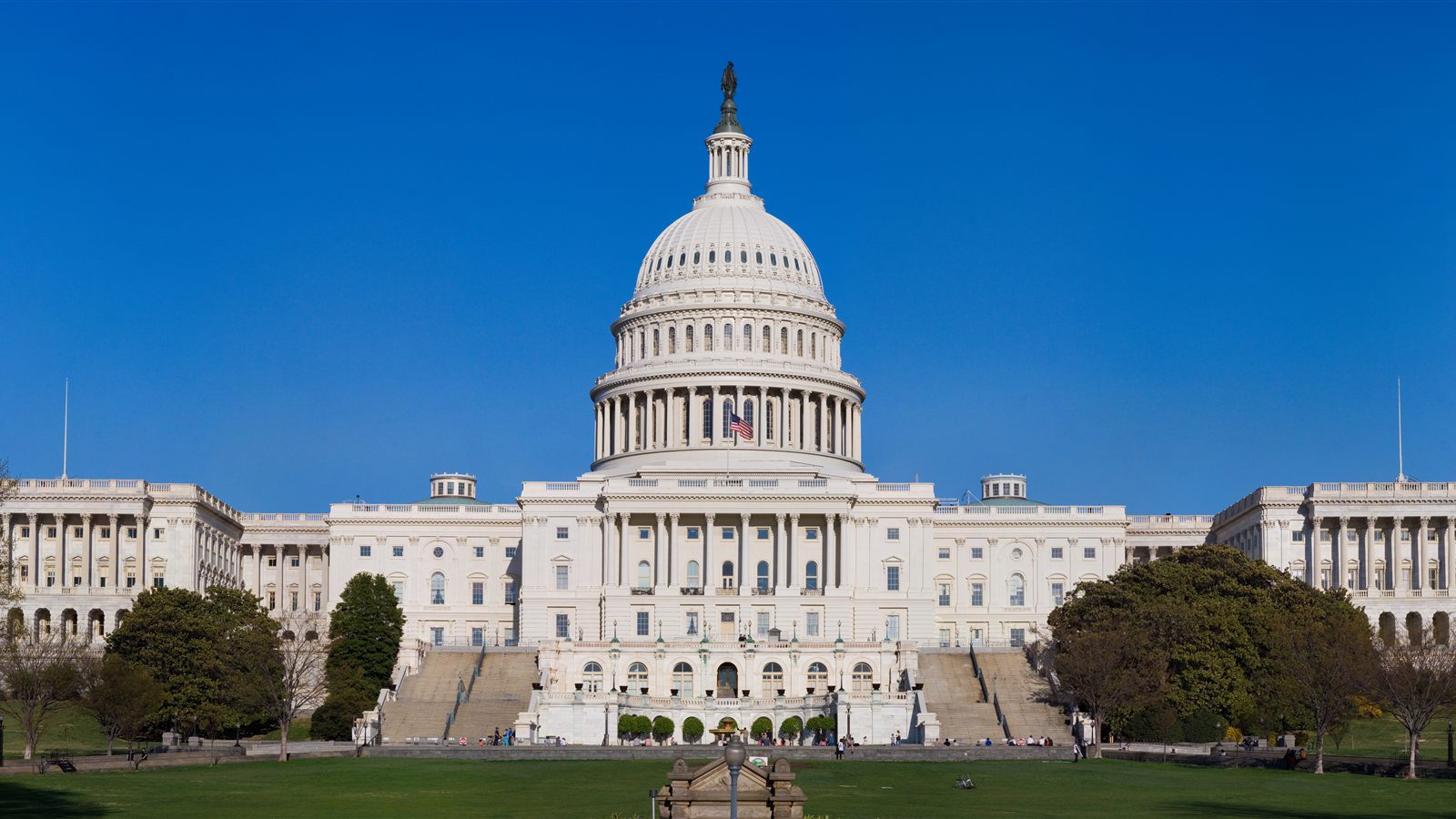
- Hero photo: "Capitol Building Full View" by Noclip, via Wikimedia Commons, public domain, cropped to 16:9.
Wondering What The New Law Means For You?
Talk with us about your purchase, sale, or investment plans and how the new housing law may intersect with them.